A burgher town on the Poprad river under the High Tatras: a castle at one end of the main street, a painted wooden Protestant church on the World Heritage List, and a school library that long outgrew its school.Meštianske mesto na rieke Poprad pod Vysokými Tatrami: hrad na konci hlavnej ulice, maľovaný drevený evanjelický kostol v zozname svetového dedičstva a školská knižnica, ktorá dávno prerástla svoju školu.
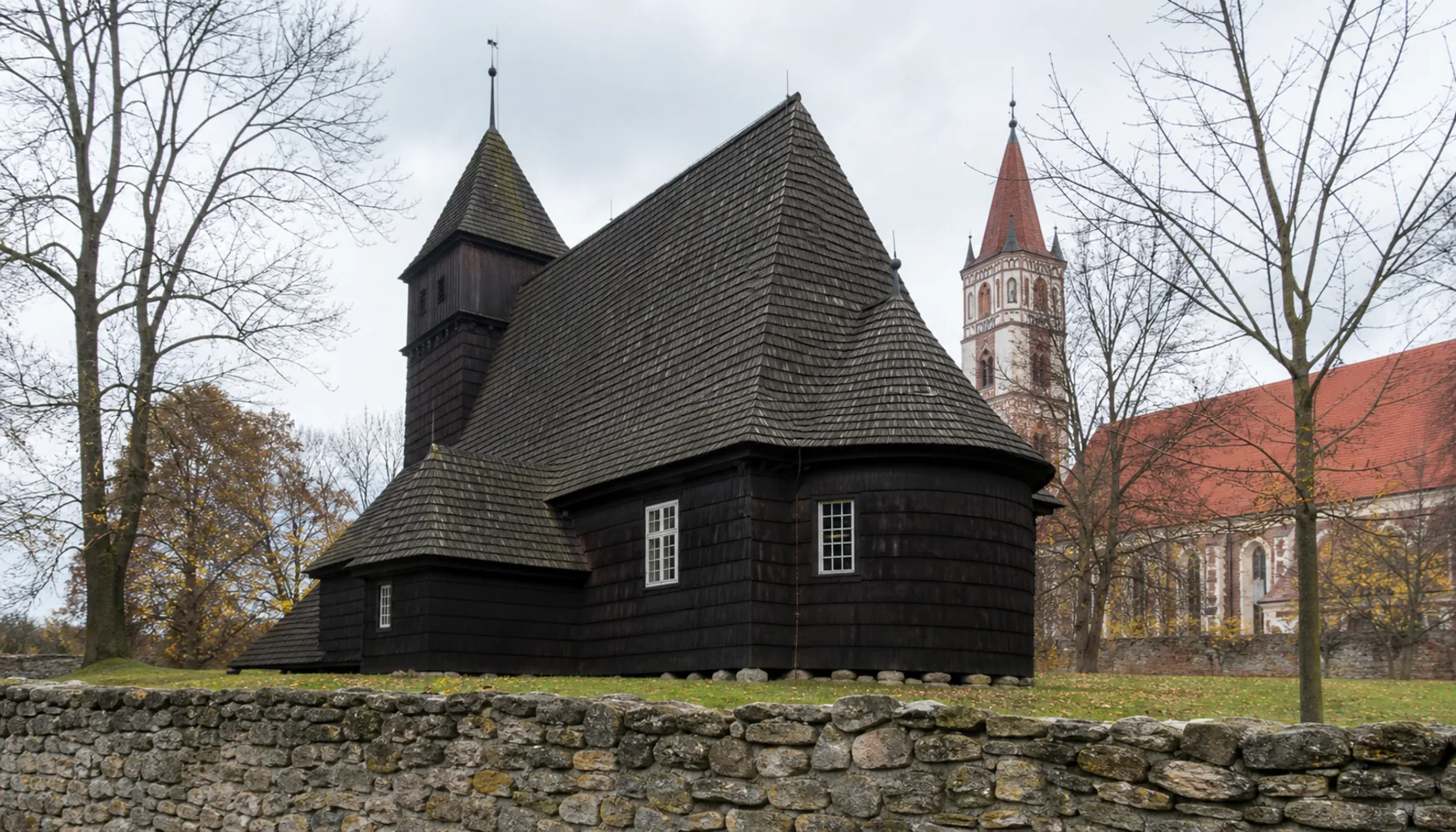
The dark timber walls and shingle roof of the articular church in KežmarokTmavé drevené steny a šindľová strecha artikulárneho kostola v Kežmarku
Where it standsKde leží
Kežmarok stands on the Poprad about fifteen kilometres east of Poprad town, on the northern edge of Spiš, with the High Tatras filling the western skyline. The Belianske Tatry rise to the north-west; the Levoča Hills close the view to the south.Kežmarok leží na rieke Poprad asi pätnásť kilometrov východne od mesta Poprad, na severnom okraji Spiša, s Vysokými Tatrami na západnom obzore. Na severozápade sa dvíhajú Belianske Tatry, na juhu uzatvárajú výhľad Levočské vrchy.
It is a compact place: the castle, the main street and both Protestant churches sit within a few hundred metres of each other.Je to kompaktné mesto: hrad, hlavná ulica aj oba evanjelické kostoly sú od seba pár stoviek metrov.
The storyHistória
Kežmarok grew out of German and Slovak settlements that merged in the thirteenth century and made its money on cloth, crafts and the road to Poland. Its quarrel with Levoča over trade privileges ran for centuries and was fought with lawsuits, embargoes and, more than once, with weapons.Kežmarok vznikol splynutím nemeckých a slovenských osád v 13. storočí a zarábal na súkne, remeslách a ceste do Poľska. Jeho spor s Levočou o obchodné výsady trval stáročia a viedol sa žalobami, blokádami a neraz aj zbraňami.
The other long quarrel was with its own castle. The lords who held it — the Zápoľskýs, then the Thökölys — wanted the town as a subject; the burghers wanted to answer to the king alone. Imre Thököly, who led the last great anti-Habsburg uprising in Hungary, was born in the castle in 1657.Druhý dlhý spor viedlo mesto s vlastným hradom. Páni, ktorí ho držali — Zápoľskovci a po nich Thökölyovci — chceli mať mesto poddanské, mešťania sa chceli zodpovedať iba kráľovi. Imrich Thököly, vodca posledného veľkého protihabsburského povstania v Uhorsku, sa na hrade narodil v roku 1657.
The town was strongly Lutheran, which is why the articular church stands where it does: under the terms agreed in 1681, Protestant congregations were permitted to build only outside the walls, only of wood, and without a tower or an entrance from the street.Mesto bolo silne evanjelické — a preto stojí artikulárny kostol tam, kde stojí: podľa podmienok dohodnutých v roku 1681 smeli evanjelické zbory stavať iba za hradbami, iba z dreva a bez veže a bez vchodu z ulice.
What to seeČo vidieť
The wooden articular church of 1717, put together by tradition without iron nails, is on the World Heritage List with seven other wooden churches of the Carpathians. Inside, the whole shell — walls, ceiling, galleries — is painted, and the organ has carved wooden pipes.Drevený artikulárny kostol z roku 1717, podľa tradície zostavený bez železných klincov, je v zozname svetového dedičstva spolu so siedmimi ďalšími drevenými chrámami Karpát. Vnútri je celý priestor — steny, strop aj empory — maľovaný a organ má vyrezávané drevené píšťaly.
Next to it stands the New Evangelical Church of 1894, a Byzantine-Romantic building to designs by Theophil Hansen, with Thököly's mausoleum inside. The lyceum library — the historic library of the Protestant lyceum, one of the largest school libraries in Central Europe — is a short walk away.Vedľa neho stojí Nový evanjelický kostol z roku 1894, byzantsko-romantická stavba podľa návrhu Theophila Hansena, s Thökölyho mauzóleom vo vnútri. Kúsok odtiaľ je lyceálna knižnica — historická knižnica evanjelického lýcea, jedna z najväčších školských knižníc v strednej Európe.
The castle at the end of the main street is unusual in being a town castle rather than a hilltop one, a walled quadrangle with a Renaissance chapel, and holds the town museum. Each summer a craft festival fills the streets for several days with workshops and stalls.Hrad na konci hlavnej ulice je nezvyčajný tým, že je mestský, nie kopcový — opevnený štvorcový areál s renesančnou kaplnkou — a sídli v ňom mestské múzeum. Každé leto zaplnia ulice na niekoľko dní remeselné trhy s dielňami a stánkami.
Work and industryPráca a priemysel
Cloth and linen made the town's medieval fortune, and textiles remained an industry into the twentieth century. The economy now is engineering, wood processing, food and tourism, with the Tatra resorts within commuting distance.Stredovekým bohatstvom mesta bolo súkno a plátno a textil zostal odvetvím až do 20. storočia. Dnes stojí hospodárstvo na strojárstve, spracovaní dreva, potravinárstve a cestovnom ruchu, pričom tatranské strediská sú na dochádzku.
Kežmarok also works as a cheaper base for the mountains than the resorts themselves, which is a modest industry in its own right: guesthouses, restaurants and the summer festival trade. The castle, the museum and the churches employ a small permanent staff and a larger seasonal one.Kežmarok zároveň slúži ako lacnejšia základňa pre hory než samotné strediská, a aj to je svojím spôsobom odvetvie: penzióny, reštaurácie a letná festivalová sezóna. Hrad, múzeum a kostoly zamestnávajú malý stály a väčší sezónny personál.
Getting thereAko sa tam dostať
Kežmarok is on the railway from Poprad north to Stará Ľubovňa and Plaveč, and buses run frequently from Poprad and out to the Tatra villages. By road it is on the route from Poprad to the Polish border at Lysá Poľana.Kežmarok leží na železnici z Popradu na sever do Starej Ľubovne a Plavča a autobusy premávajú často z Popradu aj do tatranských obcí. Cestou je na trase z Popradu k poľskej hranici na Lysej Poľane.
Explore KežmarokObjavujte Kežmarok
Every part of this place with a page of its own.Každá časť tohto miesta, ktorá má vlastnú stránku.