Invited to mine and to farm in the thirteenth century, they built the mining towns and much of what is now Slovakia's finest architecture — and after 1945 almost all of them were gone.Pozvaní v 13. storočí ťažiť a hospodáriť, postavili banské mestá a veľkú časť toho, čo je dnes najlepšou architektúrou Slovenska — a po roku 1945 takmer všetci zmizli.
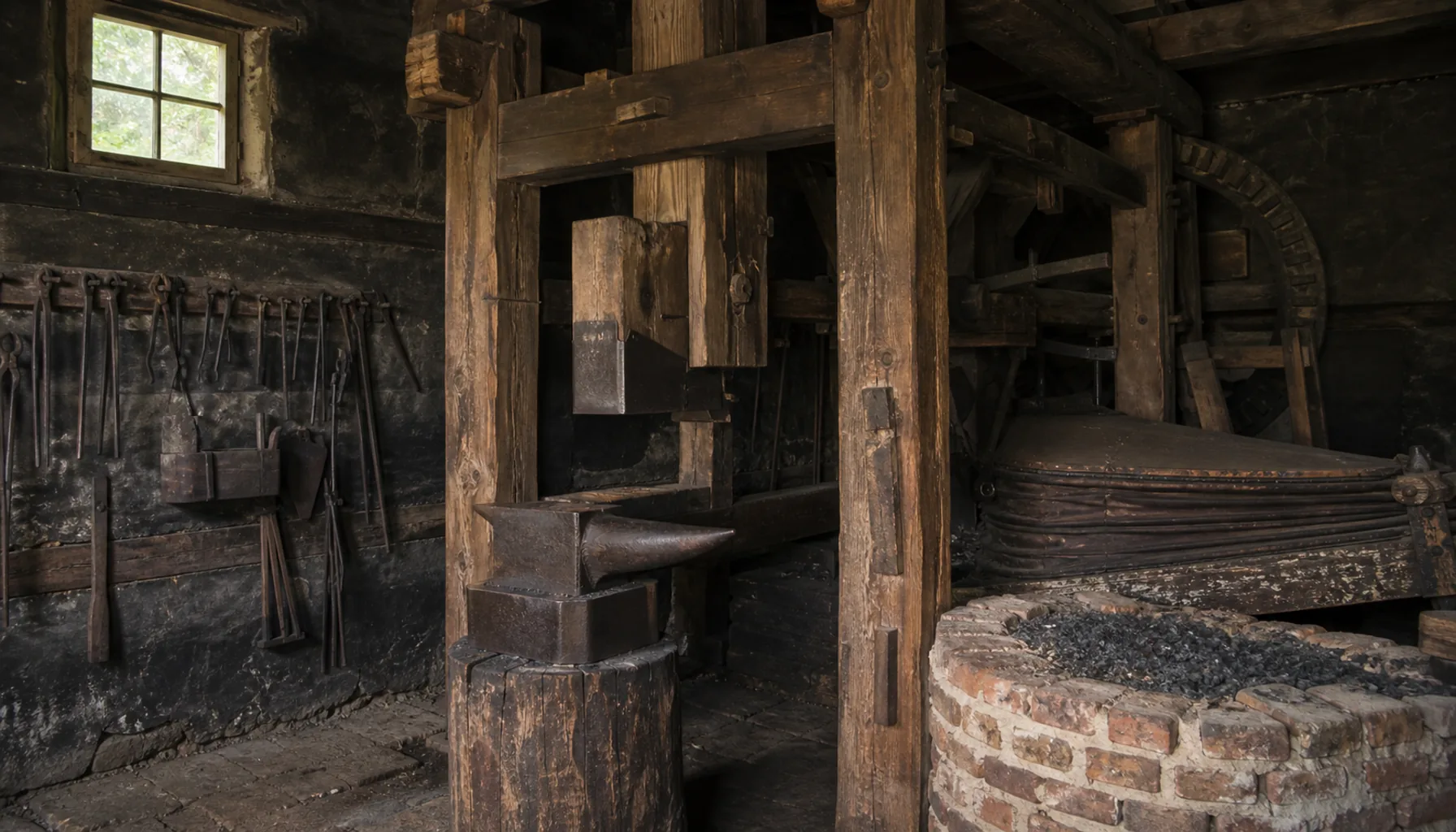
A water-powered hammer forge in the Bodva valley at MedzevVodný hámor v údolí Bodvy v Medzeve
Invited inPozvaní
After the Mongol invasion of the thirteenth century the kings of Hungary recruited German settlers with charters and privileges: miners for the ore, craftsmen and merchants for the towns, farmers for empty land. They arrived in three main areas and stayed distinct in each for seven hundred years.Po mongolskom vpáde v 13. storočí uhorskí králi pozývali nemeckých osadníkov výsadami a listinami: baníkov na rudu, remeselníkov a kupcov do miest, roľníkov na prázdnu pôdu. Prišli do troch hlavných oblastí a v každej zostali sedemsto rokov odlišní.
The Spiš — Zips — was the largest: Kežmarok, Levoča, Spišská Sobota, Gelnica and the towns around them, where German burghers built the squares, the churches and the sgraffito attics this site describes elsewhere. The Hauerland around Kremnica and Nitrianske Pravno was a mining and forest island in the middle of the country. And Pressburg — Bratislava — was a trilingual city where German was one of the three everyday languages until the 1940s.Najväčší bol Spiš: Kežmarok, Levoča, Spišská Sobota, Gelnica a mestá okolo nich, kde nemeckí mešťania postavili námestia, kostoly a sgrafitové atiky, ktoré táto stránka opisuje inde. Hauerland okolo Kremnice a Nitrianskeho Pravna bol banským a lesným ostrovom uprostred krajiny. A Prešporok — Bratislava — bol trojjazyčným mestom, kde bola nemčina do 40. rokov jedným z troch bežných jazykov.
What they builtČo postavili
Medzev in the Bodva valley is the most concentrated survival: a town of water-powered hammer forges whose German-speaking population, the Mantáks, made tools for the whole kingdom, and where several of the forges are preserved.Najsústredenejším prežitkom je Medzev v údolí Bodvy: mesto vodných hámrov, ktorého nemecky hovoriace obyvateľstvo, Mantáci, vyrábalo náradie pre celé kráľovstvo — a kde sa viacero hámrov zachovalo.
Their mark on the country is out of all proportion to their numbers. The mining law that ran Banská Štiavnica and Kremnica, the guild structure of the Spiš towns, the Gothic and Renaissance architecture of the east, and the German-language schools and printing houses were all theirs.Ich stopa v krajine je úplne neúmerná ich počtu. Banské právo, podľa ktorého fungovala Banská Štiavnica a Kremnica, cechová štruktúra spišských miest, gotická a renesančná architektúra východu aj nemecké školy a tlačiarne — všetko bolo ich.
1945Rok 1945
They left at the end of the Second World War. Part of the population was evacuated by the German authorities in 1944 and 1945; most of the rest were expelled or left under the post-war decrees, along with the German populations of Czechoslovakia as a whole. A few thousand people of Carpathian German descent live in Slovakia today, in an ageing community with a cultural association and its own museum in Bratislava.Odišli na konci druhej svetovej vojny. Časť obyvateľstva evakuovali nemecké orgány v rokoch 1944 a 1945, väčšina zvyšku bola vysídlená alebo odišla na základe povojnových dekrétov, spolu s nemeckým obyvateľstvom celého Československa. Na Slovensku dnes žije niekoľko tisíc ľudí karpatskonemeckého pôvodu v starnúcej komunite s kultúrnym spolkom a vlastným múzeom v Bratislave.
What is left is the built environment. A visitor walking the square at Levoča or Kežmarok is looking at a German town in a Slovak country, and the people who made it are not there. That is worth knowing while you look at it.Zostalo zastavané prostredie. Návštevník, ktorý prechádza námestím v Levoči alebo v Kežmarku, sa pozerá na nemecké mesto v slovenskej krajine — a ľudia, ktorí ho postavili, tam nie sú. Pri pohľade naň sa to oplatí vedieť.