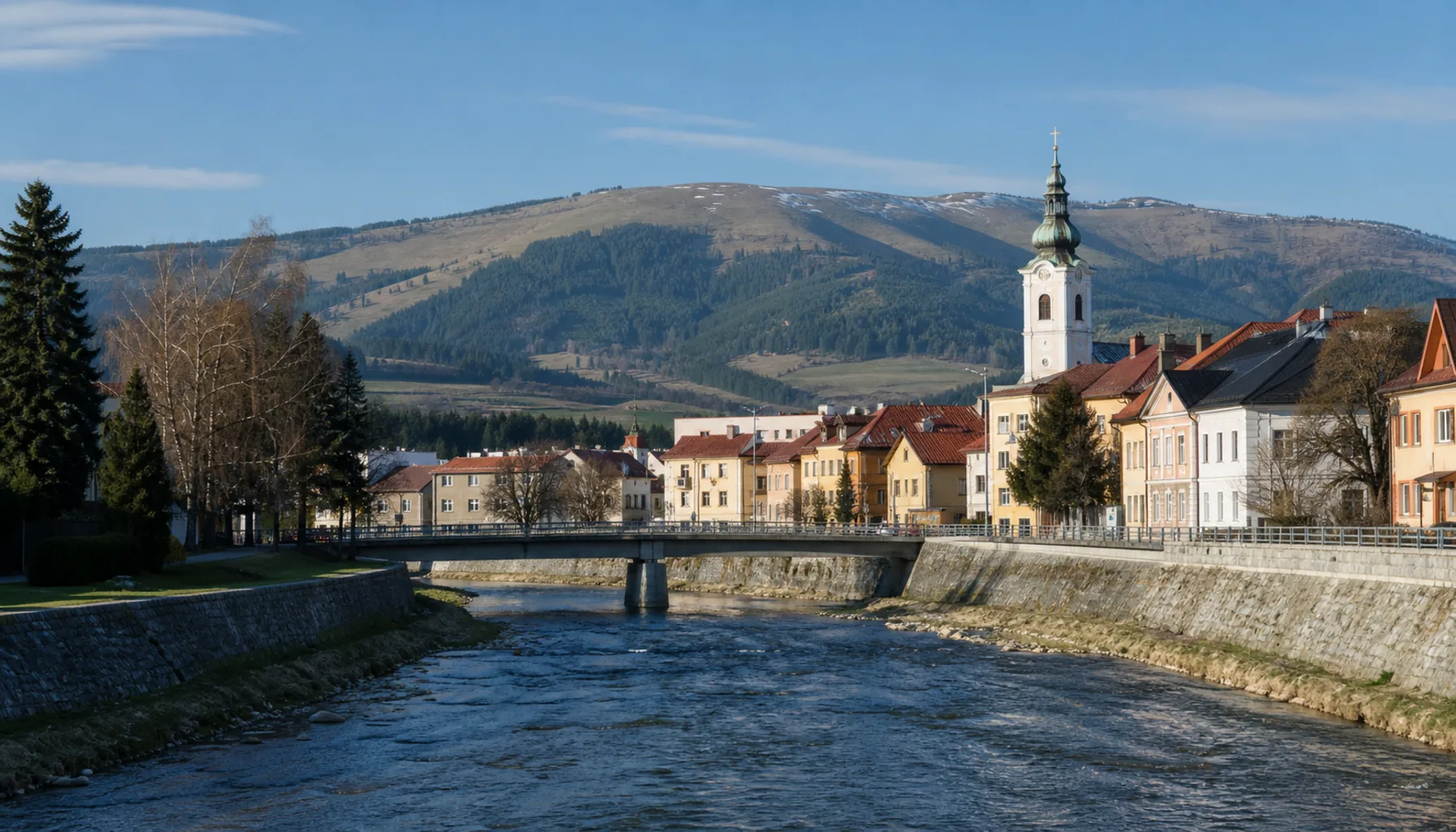
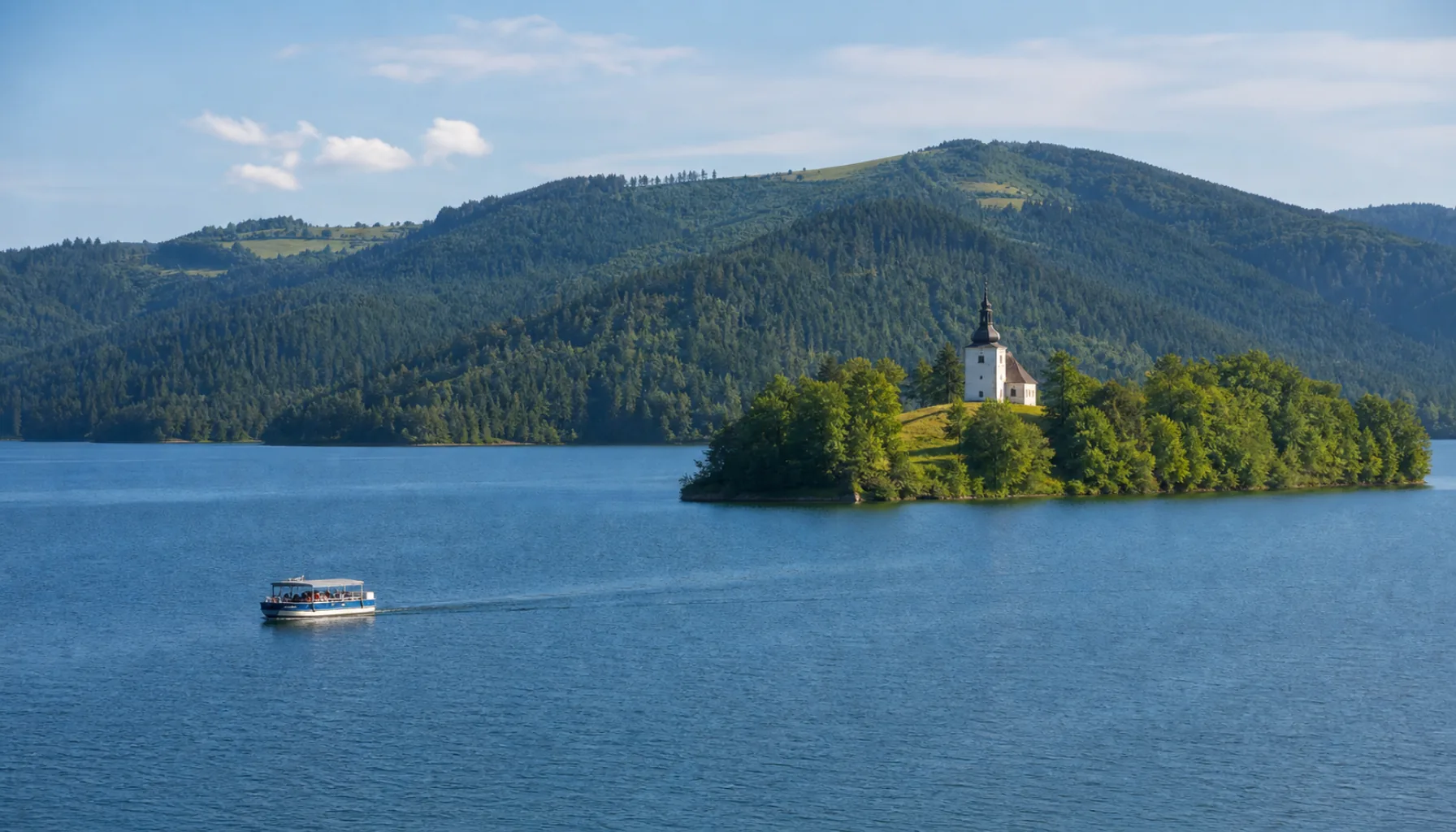
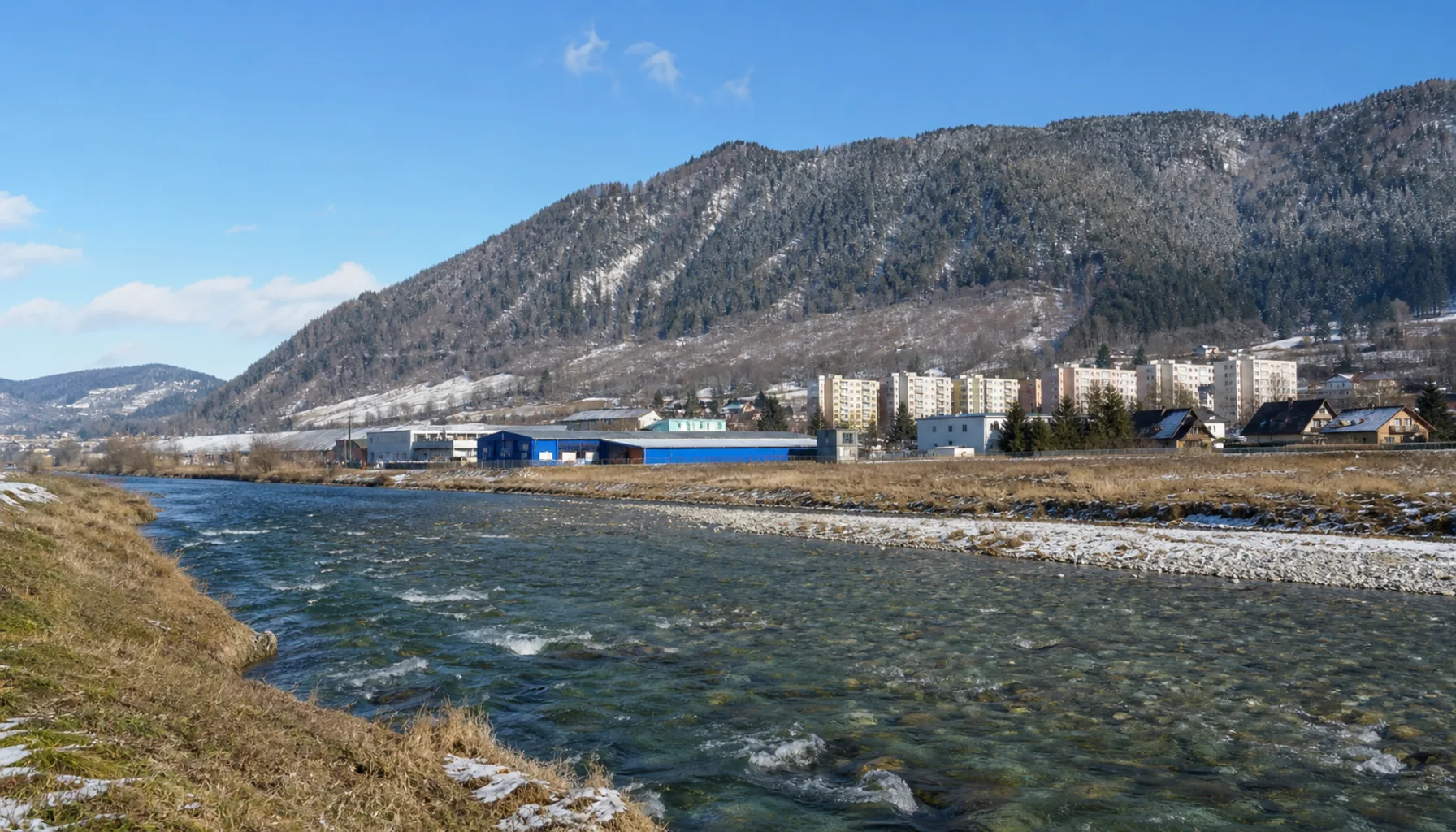
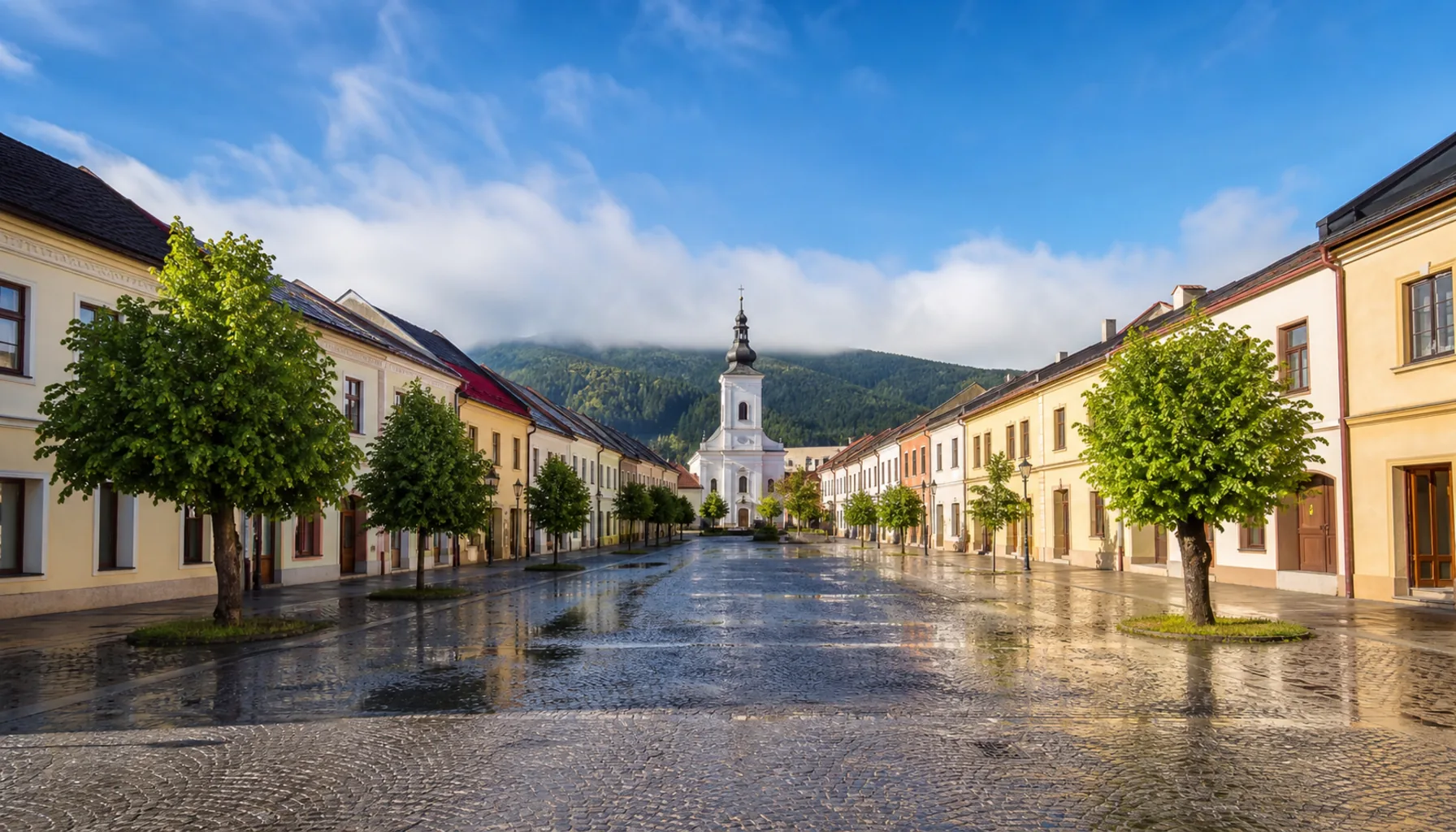
Orava has four towns and they all share one valley: Dolný Kubín at its lower end, Tvrdošín and Trstená up towards the Polish border, and Námestovo on the shore of the reservoir. Each has its own page here.Orava má štyri mestá a všetky sa delia o jednu dolinu: Dolný Kubín na jej dolnom konci, Tvrdošín a Trstenú hore smerom k poľskej hranici a Námestovo na brehu priehrady. Každé z nich tu má vlastnú stránku.
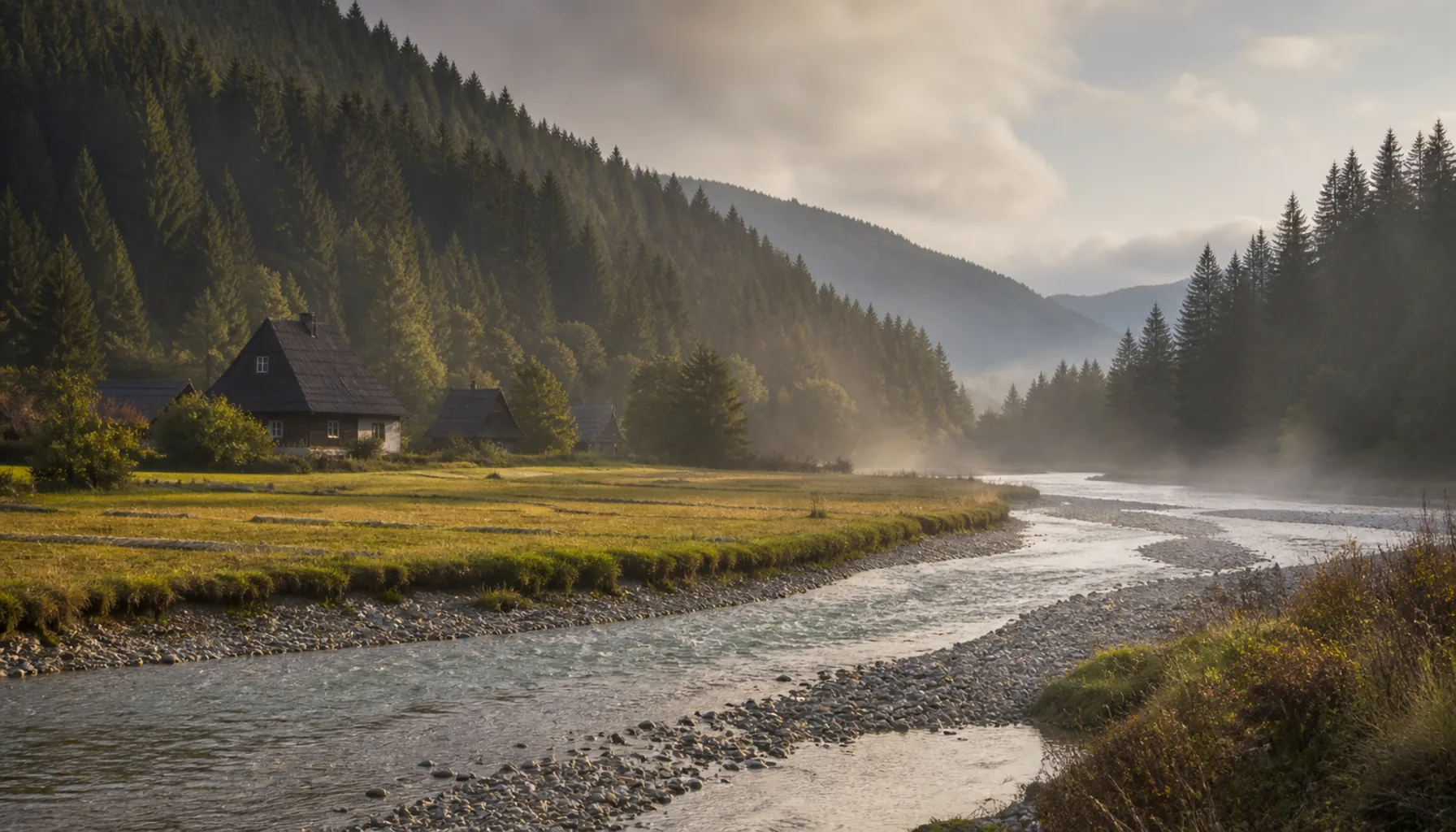
The Orava river between its towns, under spruce forest and hayfieldsRieka Orava medzi svojimi mestami, pod smrekovým lesom a lúkami
One valley, four townsJedna dolina, štyri mestá
Orava is an old land rather than an administrative one. It belongs to the Žilina Region today, but its boundaries were drawn by the river: the Orava rises in the northern uplands on the Polish border and runs south to join the Váh at Kraľovany, and everything in the valley between is Orava. The floor is narrow, the sides are spruce forest and pasture, and the towns sit where the valley opens far enough to hold a market square.Orava je skôr stará krajina než správna jednotka. Dnes patrí do Žilinského kraja, no jej hranice vykreslila rieka: Orava pramení v severných vrchoch pri poľskej hranici a tečie na juh, kde sa v Kraľovanoch vlieva do Váhu — a všetko v doline medzi tým je Orava. Dno doliny je úzke, svahy pokrýva smrekový les a pasienky, a mestá stoja tam, kde sa dolina otvorí natoľko, aby sa do nej zmestilo námestie.
The set piece stands mid-valley at Oravský Podzámok, where Orava Castle climbs its cliff in tiers; it has its own pages on this site and is not retold here. The towns are the other half of the region, and they divide neatly in two. Dolný Kubín and Tvrdošín are old settlements of the lower and middle valley; Trstená and Námestovo belong to the Upper Orava, a high, cold, late-settled basin where the speech of the northern villages is Goral and the Polish border is a short drive away.Hlavný obraz doliny stojí v jej strede, v Oravskom Podzámku, kde sa Oravský hrad vypína po poschodiach na brale; má na tejto stránke vlastné kapitoly a tu ho neopakujeme. Druhou polovicou kraja sú mestá a delia sa presne na dve skupiny. Dolný Kubín a Tvrdošín sú staré sídla dolnej a strednej Oravy; Trstená a Námestovo patria hornej Orave — vysokej, chladnej a neskoro osídlenej kotline, kde sa v severných dedinách hovorí po gorálsky a k poľskej hranici je to na skok.
Cold ground, hard tradesChladná pôda, tvrdé remeslá
Orava was one of the poorest counties of old Upper Hungary. The soil is thin, the growing season short and the winters long, and around 1900 the valley sent an extraordinary share of its men to the mines and mills of Pennsylvania and Ohio; a good deal of what was built here before the First World War was paid for with money sent home. Timber, grazing, rafting logs down the river and carting goods over the Polish passes were the trades that kept people here at all.Orava patrila k najchudobnejším stoliciam starého Uhorska. Pôda je plytká, vegetačné obdobie krátke a zimy dlhé — a okolo roku 1900 odišla z doliny mimoriadne veľká časť mužov do baní a hút v Pensylvánii a Ohiu; nemálo z toho, čo tu vyrástlo pred prvou svetovou vojnou, zaplatili peniaze poslané domov. Remeslami, ktoré tu ľudí vôbec udržali, boli drevo, pastierstvo, plavenie dreva po rieke a povozníctvo cez poľské priesmyky.
The modern valley lives off industry that arrived in the twentieth century and stayed. Electronics is the largest employer — control boards and power supplies at Trstená, contract manufacturing at Námestovo, sockets and distribution boards made on the same Dolný Kubín site since 1947 — with engineering beside it at Krivá, Nižná, Istebné and Trstená, and the ferroalloy furnaces at Široká below the castle. Tourism is the other income: the reservoir in summer, Kubínska hoľa in winter, and the Roháče ridge, the wooden churches and the log villages all year.Dnešná dolina žije z priemyslu, ktorý sem prišiel v 20. storočí a zostal. Najväčším zamestnávateľom je elektrotechnika — riadiace dosky a zdroje v Trstenej, zmluvná výroba elektroniky v Námestove, zásuvky a rozvodnice na tom istom kubínskom mieste od roku 1947 — vedľa nej strojárstvo v Krivej, Nižnej, Istebnom a Trstenej a pece na ferozliatiny v Širokej pod hradom. Druhým príjmom je cestovný ruch: priehrada v lete, Kubínska hoľa v zime a Roháče, drevené kostolíky i drevenice po celý rok.
Using this pageAko túto stránku použiť
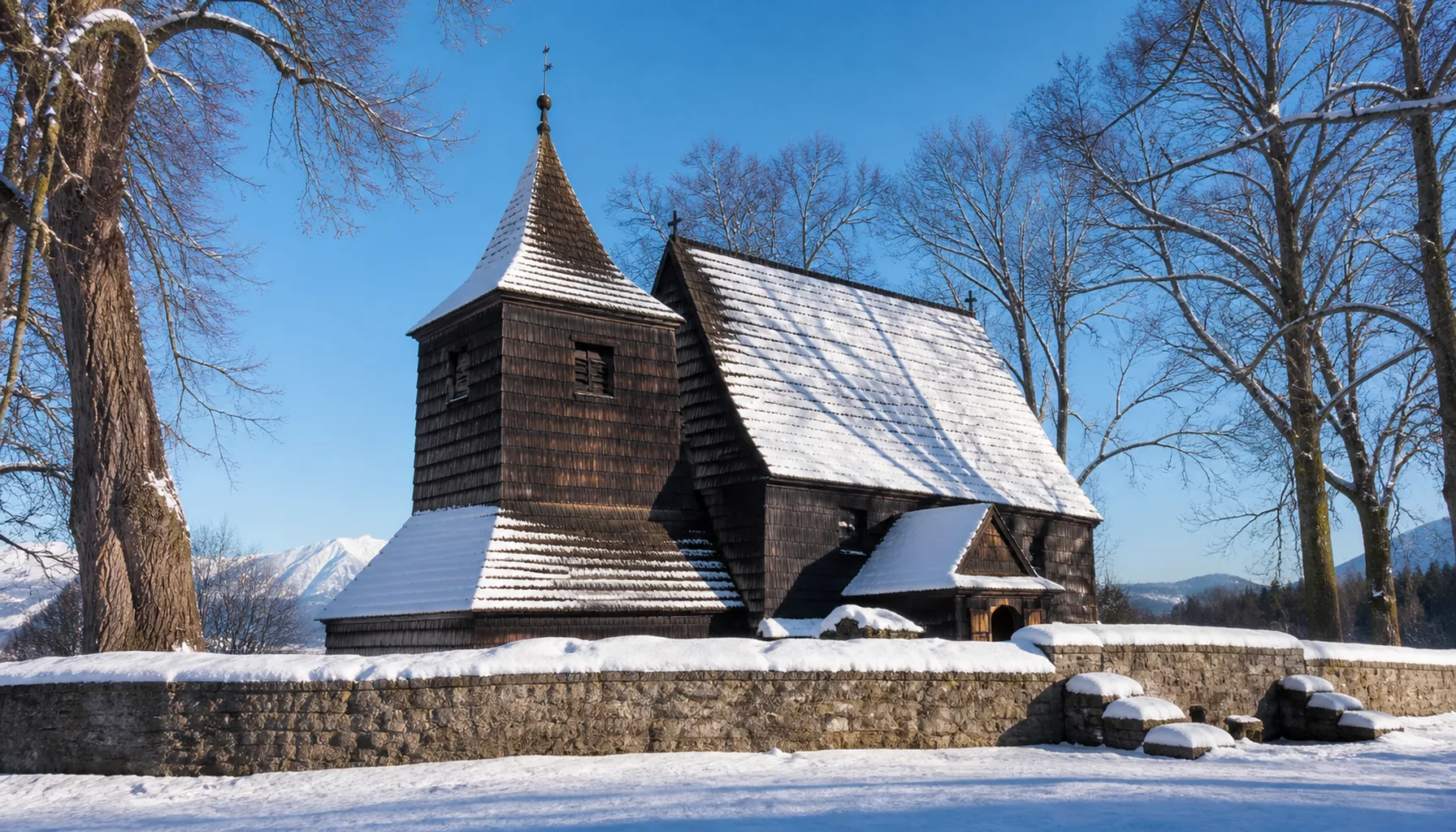
Each town below has its own page: where it stands, what happened there, what is worth seeing, what people do for a living, and how to reach it. Where a town's best-known asset is not actually inside it, the page says so — the open-air Museum of the Orava Village is at Zuberec, the thermal pools are at Oravice, the articular wooden church is at Leštiny, and the castle belongs to Oravský Podzámok.Každé mesto nižšie má vlastnú stránku: kde leží, čo sa tam stalo, čo stojí za pozretie, čím sa tam ľudia živia a ako sa tam dostať. Ak to najznámejšie neleží priamo v meste, stránka to povie — Múzeum oravskej dediny je v Zuberci, termálne bazény v Oraviciach, artikulárny drevený kostol v Leštinách a hrad patrí Oravskému Podzámku.
Nothing here is a booking service. Museum tours, boat crossings to the island gallery, lift operations and church interiors all run to seasons, and Orava's seasons are longer and harder than the map suggests. Confirm directly before you travel.Nič z toho nie je rezervačná služba. Prehliadky múzeí, plavby na ostrovnú galériu, prevádzka vlekov aj sprístupnenie kostolov sa riadia sezónou — a oravské sezóny sú dlhšie a tvrdšie, než by mapa naznačovala. Pred cestou si všetko overte priamo.