A Fortress Built UpwardPevnosť stavaná nahor
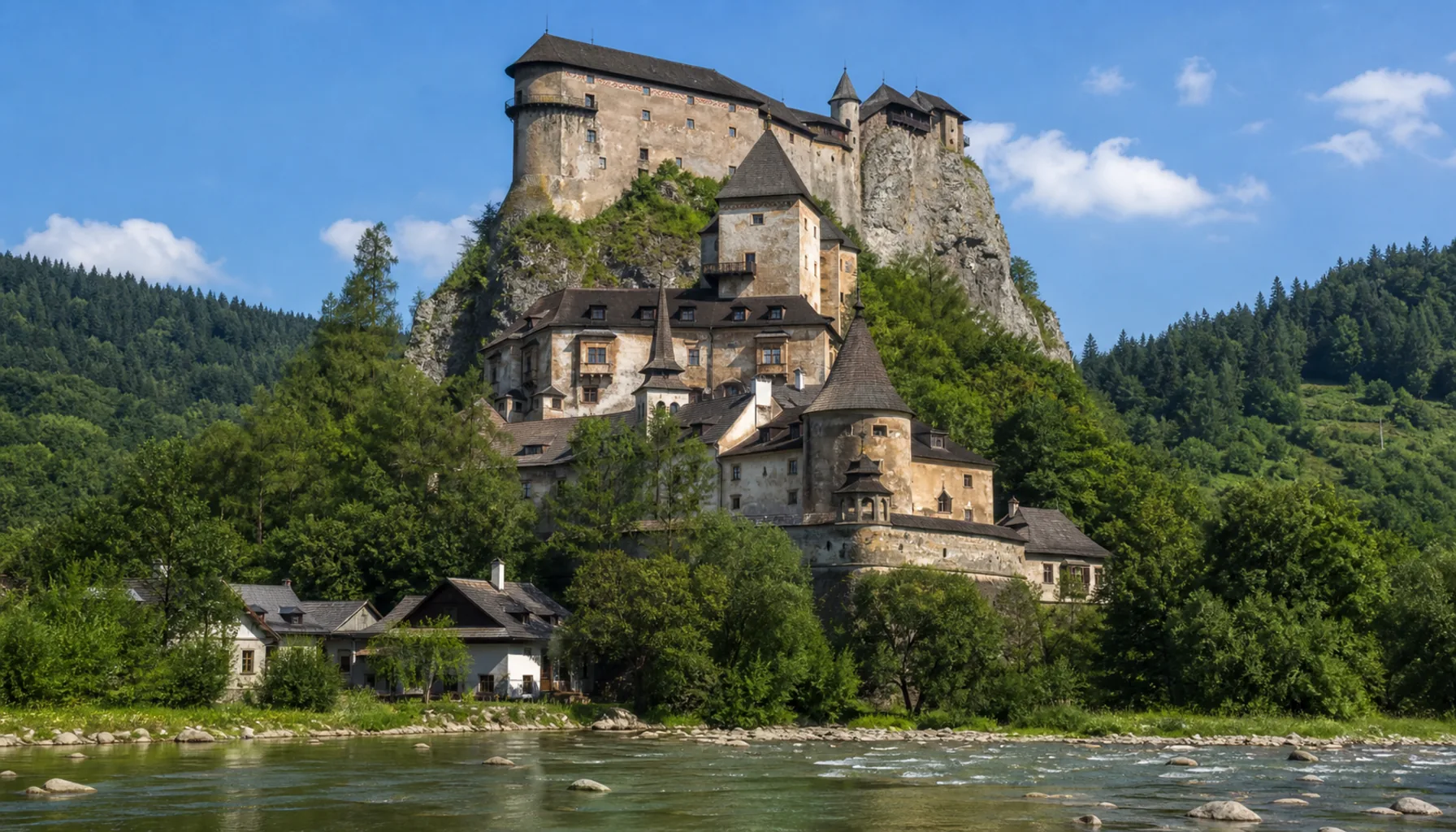
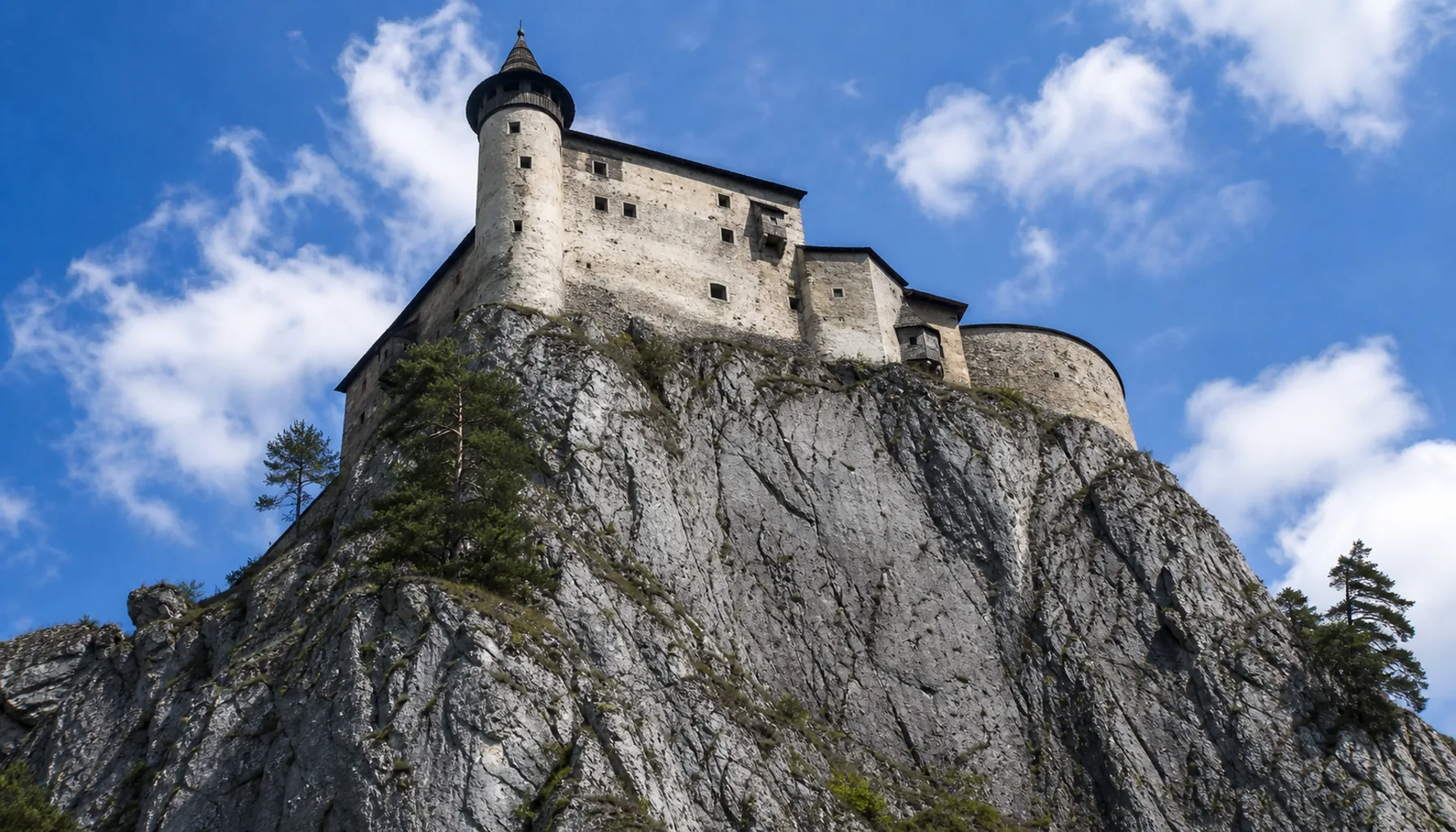
The stone castle on this rock was begun in the thirteenth century, in the years when the kingdom was rebuilding its defences after the Mongol invasions. Its job was plain enough: the valley below carries the road north over the mountains toward Poland, and whoever held the cliff held the traffic on it. For centuries it was a royal castle and the administrative seat of Orava county — the place where the region’s taxes, courts and records lived. What made it unlike any other Slovak castle was the site: the summit rock is narrow, so every later owner who wanted more room had no choice but to build a storey lower down the cliff. The castle grew vertically, and it never stopped looking like it.Kamenný hrad na tomto brale začali stavať v trinástom storočí, v rokoch, keď kráľovstvo obnovovalo svoju obranu po mongolských vpádoch. Jeho úloha bola jednoduchá: údolím pod ním vedie cesta na sever cez hory do Poľska, a kto držal bralo, držal aj dopravu na nej. Po stáročia to bol kráľovský hrad a správne sídlo Oravskej stolice — miesto, kde sídlili dane, súdy a písomnosti celého kraja. Od všetkých ostatných slovenských hradov ho odlišovalo miesto: vrcholová skala je úzka, takže každý ďalší majiteľ, ktorý chcel viac priestoru, musel stavať o poschodie nižšie po skale. Hrad rástol nahor — a tak dodnes aj vyzerá.
The family that shaped it most were the Thurzós. Juraj Thurzó — George Thurzó, Palatine of Hungary and for a time the most powerful man in the kingdom after the king — rebuilt and extended the castle around the turn of the seventeenth century, adding the Renaissance residential ranges on the lower and middle levels that give the stack much of the shape you see today. He is also the palatine who led the investigation into Countess Elizabeth Báthory and had her shut up in her own castle at Čachtice rather than tried in open court — a decision that spared the great families a scandal and left history one of its most durable legends.Rodina, ktorá hrad sformovala najviac, boli Thurzovci. Juraj Thurzo — uhorský palatín a istý čas najmocnejší muž kráľovstva hneď po panovníkovi — hrad prestaval a rozšíril okolo prelomu sedemnásteho storočia; renesančné obytné krídla na dolnej a strednej úrovni, ktoré pridal, dávajú celej sústave veľkú časť dnešnej podoby. Je to zároveň palatín, ktorý viedol vyšetrovanie grófky Alžbety Bátoriovej a dal ju zavrieť na jej vlastnom hrade v Čachticiach namiesto verejného súdu — rozhodnutie, ktoré veľkým rodom ušetrilo škandál a dejinám zanechalo jednu z najtrvácnejších legiend.
When the Thurzó male line died out, the estate did not pass to a single heir. It went instead to a body of co-heirs known as the Orava Composesorate (Oravský komposesorát) — an unusual joint-ownership corporation that held the castle and the Orava estates together, with its own administration, for centuries. That arrangement is a large part of why the castle survived intact: while comparable fortresses were carved up between quarrelling branches of a family and abandoned one wing at a time, Orava had a single standing institution responsible for its roofs. A fire around the turn of the nineteenth century did severe damage; the castle was repaired, and then restored systematically through the twentieth century. That is why you climb through furnished, roofed rooms here instead of open ruins.Keď mužská vetva Thurzovcov vymrela, panstvo neprešlo na jediného dediča. Pripadlo spoločenstvu spoludedičov známemu ako Oravský komposesorát — nezvyčajná spoluvlastnícka korporácia, ktorá po stáročia držala hrad aj oravské panstvá pokope a mala vlastnú správu. Práve toto usporiadanie je veľkou časťou dôvodu, prečo sa hrad zachoval celý: kým porovnateľné pevnosti sa delili medzi znesvárené vetvy rodu a pustli krídlo po krídle, Orava mala jednu trvalú inštitúciu zodpovednú za svoje strechy. Požiar na prelome devätnásteho storočia hrad ťažko poškodil; opravili ho a v dvadsiatom storočí systematicky obnovili. Preto tu stúpate zariadenými zastrešenými miestnosťami, a nie otvorenou zrúcaninou.