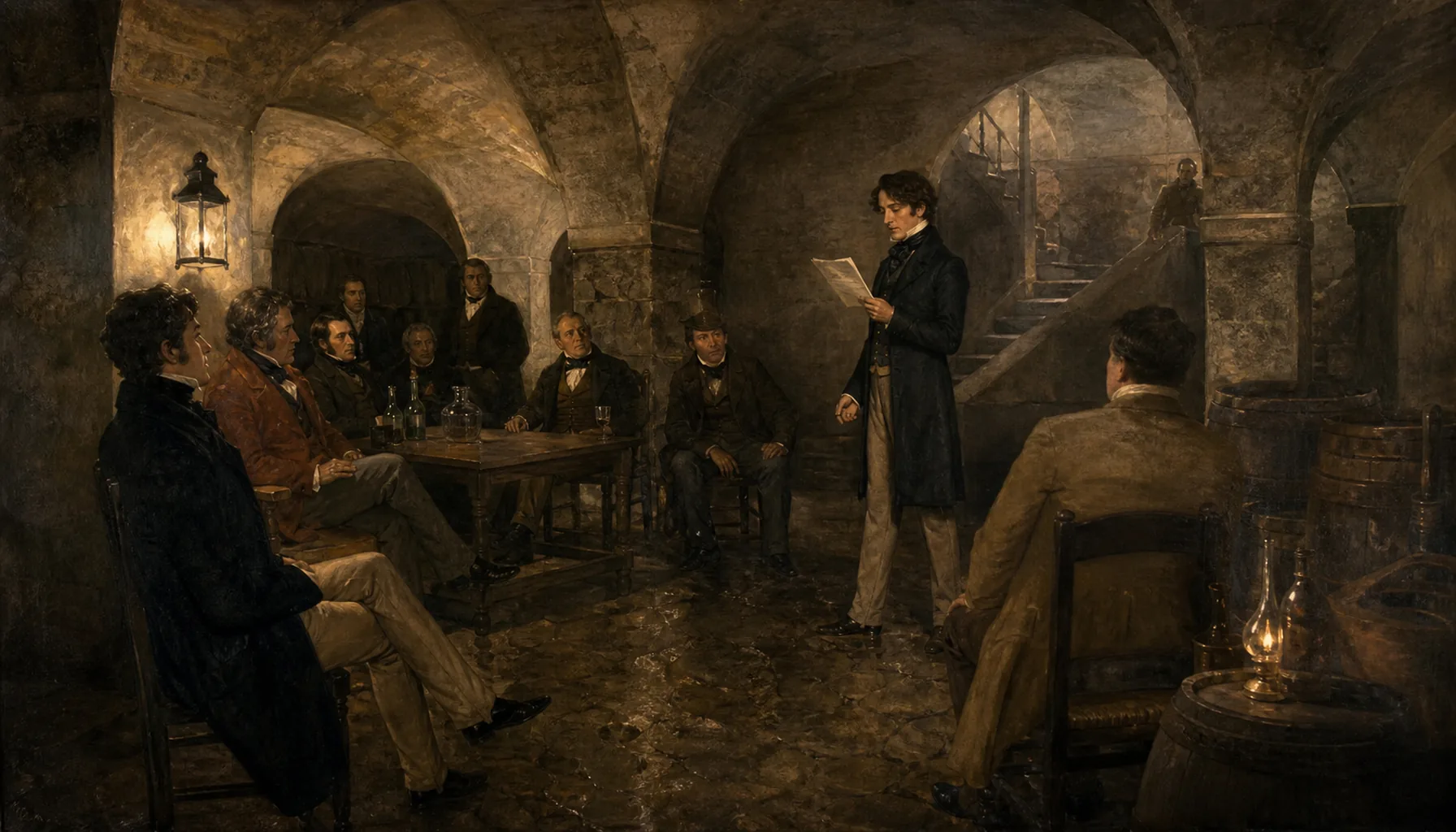
The county built itself a hall to match its new status, raised between 1827 and 1841 and still one of the largest buildings in the town. Its cellar has a famous prisoner. In the spring of 1848, as revolution spread through the Habsburg empire, the Slovak poet Janko Kráľ and the teacher Ján Rotarides went from village to village in Hont telling peasants that serfdom was finished and the land was theirs to take — and the county had them arrested and locked up here. Kráľ was in his mid-twenties and already one of the wildest voices in Slovak poetry; a cell under a county hall is where the Slovak national movement and the Hungarian revolution ran straight into each other.Stolica si k novému postaveniu postavila aj dôstojný stoličný dom — stavali ho v rokoch 1827 až 1841 a dodnes patrí k najväčším budovám v meste. Jeho pivnica má slávneho väzňa. Na jar 1848, keď sa monarchiou šírila revolúcia, chodili slovenský básnik Janko Kráľ a učiteľ Ján Rotarides po hontianskych dedinách a hovorili sedliakom, že poddanstvo sa skončilo a zem patrí im — stolica ich dala zatknúť a zavrieť práve sem. Kráľ mal vtedy niečo cez dvadsať rokov a bol už jedným z najdivokejších hlasov slovenskej poézie; cela pod stoličným domom je miesto, kde sa slovenské národné hnutie a uhorská revolúcia zrazili priamo čelom.