A Market Square That Went Back to TradingTrhovisko, ktoré sa vrátilo k obchodu
Košice is built around one enormous street. Hlavná swells out in the middle to hold a cathedral and a theatre, then narrows again at both ends, and the shape it makes is somewhere between a boulevard and a piazza. Its southern end stops at Námestie osloboditeľov, and for centuries that open ground did the job its name-before-last implies: it was the city's market place, the space where the trade of the eastern kingdom actually happened, until the nineteenth century reorganised it into something more formal.Košice sú postavené okolo jednej obrovskej ulice. Hlavná sa v strede rozšíri, aby sa do nej zmestil dóm aj divadlo, a na oboch koncoch sa opäť zúži — tvar, ktorý pritom vznikne, je čosi medzi bulvárom a piazzou. Jej južný koniec sa končí na Námestí osloboditeľov a to bolo po stáročia presne tým, čím byť malo: mestským trhoviskom, priestorom, kde sa skutočne odohrával obchod celého východu kráľovstva, kým ho devätnáste storočie nepretvorilo na čosi upravenejšie.
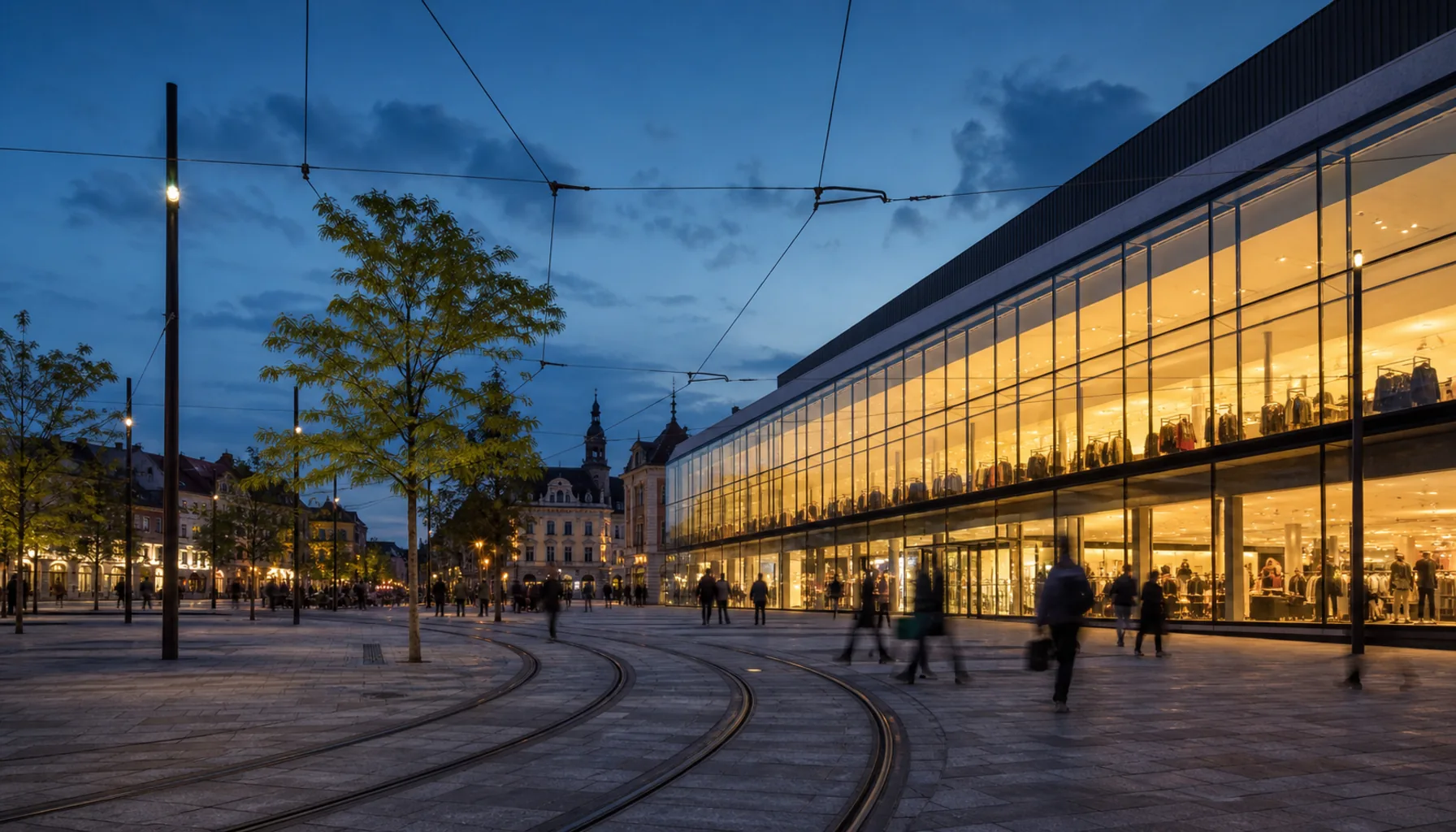
For most of the twentieth century the square was a place you crossed rather than a place you stopped: a junction of trams and buses, a forecourt on the way from the railway station into the old town. Aupark opened here in November 2011, and the effect was less that a mall arrived than that the square was given a reason to exist again. Trading came back to the ground where trading had always been — indoors this time, under a glass wall instead of a canvas awning, but on the same paving.Väčšinu dvadsiateho storočia bolo námestie miestom, ktorým sa prechádzalo, nie miestom, kde sa človek zastavil: uzlom električiek a autobusov, predpolím na ceste zo stanice do starého mesta. Aupark tu otvorili v novembri 2011 a účinok nebol ani tak ten, že pribudlo obchodné centrum, ako skôr ten, že námestie opäť dostalo dôvod existovať. Obchod sa vrátil na miesto, kde vždy bol — tentoraz pod strechou, za sklenenou stenou namiesto plátennej plachty, no na tej istej dlažbe.
That timing matters. Košice already had big retail by then — out on the southern arterial and up on the Terasa plateau — and all of it was built where land was cheap and cars were easy. Aupark was the one that went the other way, into the most expensive and most constrained ground in the east of the country, and accepted the consequences: underground parking, a tight footprint, floors stacked rather than spread. What it bought with that was the only shopping centre in Košice that belongs to the pedestrian city rather than to the ring road.Na tom načasovaní záleží. Košice vtedy už veľký maloobchod mali — na južnom prieťahu aj hore na Terase — a všetok stál tam, kde bola lacná pôda a pohodlné parkovanie. Aupark bol ten, ktorý sa vydal opačným smerom, na najdrahšiu a najzovretejšiu pôdu na východe krajiny, a prijal aj dôsledky: parkovanie pod zemou, tesný pôdorys, podlažia nakladené na seba namiesto rozliatych do šírky. Kúpil si tým jediné košické nákupné centrum, ktoré patrí pešiemu mestu, a nie obchvatu.