Walk North, and the City BeginsVyjdite na sever a začne sa mesto
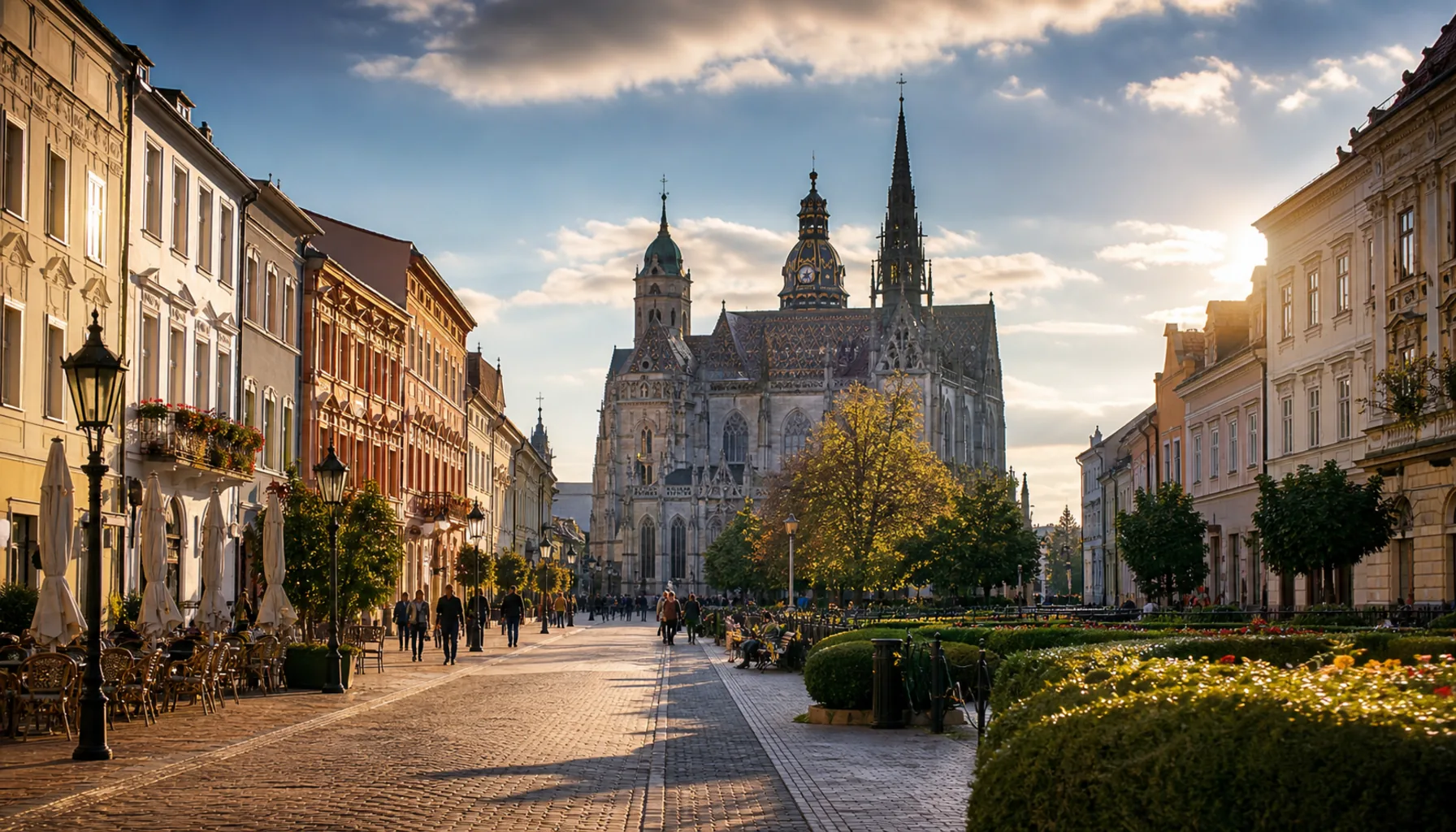
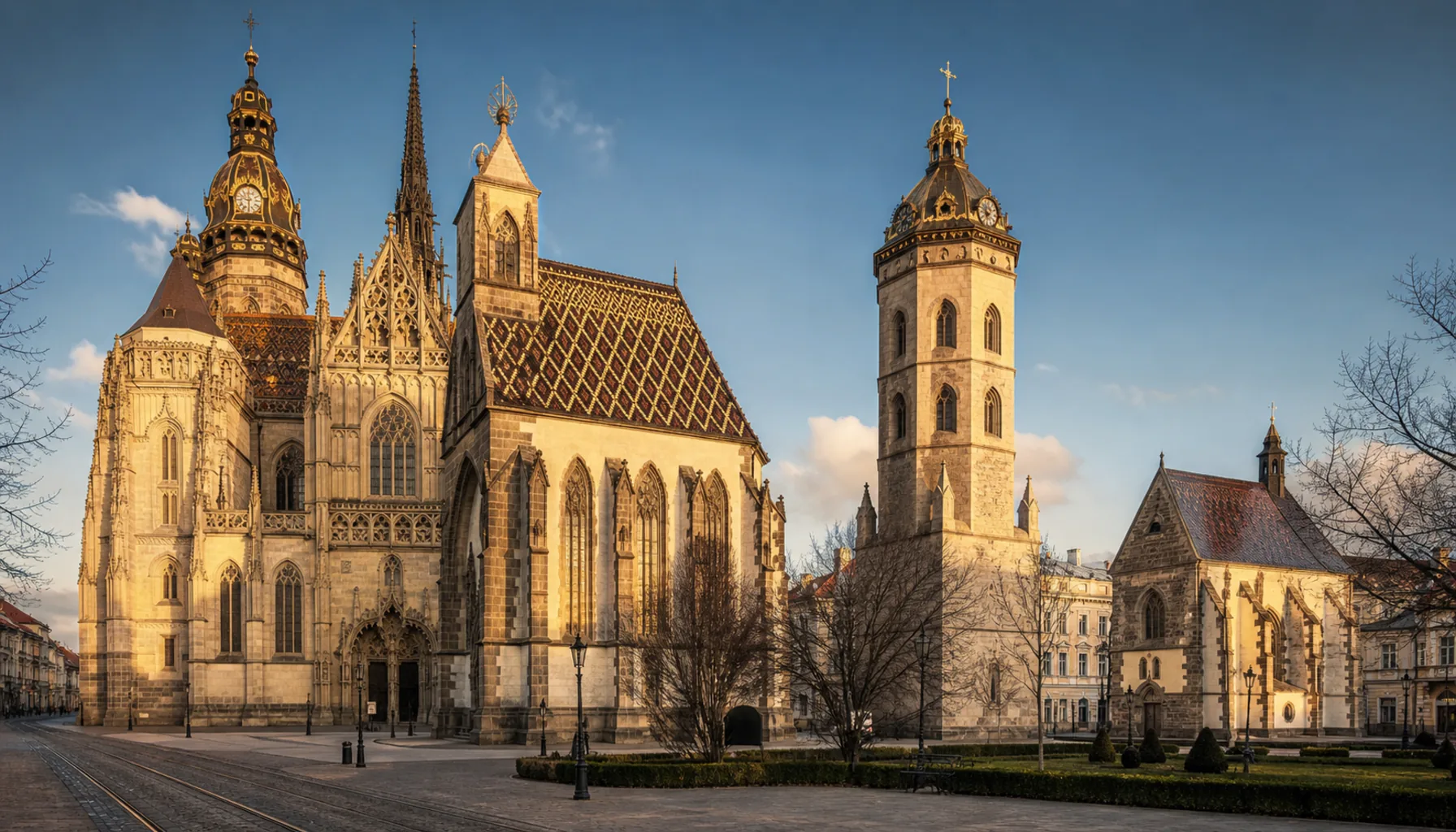
This is the section that matters. Leave the square heading north and you are on Hlavná, and within a few minutes under the Cathedral of St Elisabeth — the largest church in Slovakia and the easternmost cathedral built in the French Gothic manner anywhere in Europe. Beside it stand the slender Urban Tower and the small Chapel of St Michael, so the three medieval buildings sit together in the widest part of the street like a single composition.Toto je tá časť, na ktorej záleží. Z námestia sa vyberte na sever a ste na Hlavnej, o pár minút pod Dómom svätej Alžbety — najväčším kostolom na Slovensku a najvýchodnejšou katedrálou postavenou vo francúzskom gotickom duchu v celej Európe. Vedľa neho stojí štíhla Urbanova veža a malá Kaplnka svätého Michala, takže tri stredoveké stavby tvoria v najširšom mieste ulice jednu spoločnú kompozíciu.
Keep going. The singing fountain plays in the strip of park between the cathedral and the State Theatre; built in 1986, it was the first of its kind in Slovakia, and on a summer evening half the city is sitting around it. Further north the street runs past the plague column, the arcaded courtyards of merchant houses and the underground remains of the medieval Lower Gate, and finishes at Námestie Maratónu mieru — named for the Košice Peace Marathon, first run in 1924 and the oldest marathon in Europe — where the East Slovak Museum keeps the Košice Gold Treasure, nearly three thousand gold coins found walled up in a house on Hlavná in 1935.Pokračujte ďalej. V parkovom páse medzi dómom a Štátnym divadlom hrá spievajúca fontána; postavili ju v roku 1986 ako prvú svojho druhu na Slovensku a v letný večer okolo nej sedí polovica mesta. Severnejšie ulica míňa morový stĺp, arkádové dvory meštianskych domov aj podzemné pozostatky stredovekej Dolnej brány a končí na Námestí Maratónu mieru — pomenovanom podľa Medzinárodného maratónu mieru, prvýkrát bežaného v roku 1924 a najstaršieho maratónu v Európe — kde Východoslovenské múzeum uchováva Košický zlatý poklad, takmer tri tisícky zlatých mincí nájdených v roku 1935 zamurovaných v dome na Hlavnej.
Košice was a European Capital of Culture in 2013, and the most visible legacy is not on the main street at all: a nineteenth-century artillery barracks south-east of the centre was converted into the Kulturpark arts complex, and the city's former municipal swimming hall became a Kunsthalle. Both are walkable from the square, and both are worth the detour if you would rather look at something than buy it.Košice boli v roku 2013 Európskym hlavným mestom kultúry a najviditeľnejšie dedičstvo neleží na hlavnej ulici: z delostreleckých kasární z devätnásteho storočia juhovýchodne od centra vznikol kultúrny areál Kulturpark a z bývalej mestskej plavárne Kunsthalle. Oboje je z námestia dostupné pešo a oboje stojí za zachádzku, ak sa radšej na niečo pozeráte, než by ste to kupovali.