Stacked, Glazed and Deliberately CompactNaskladané, presklené a zámerne kompaktné
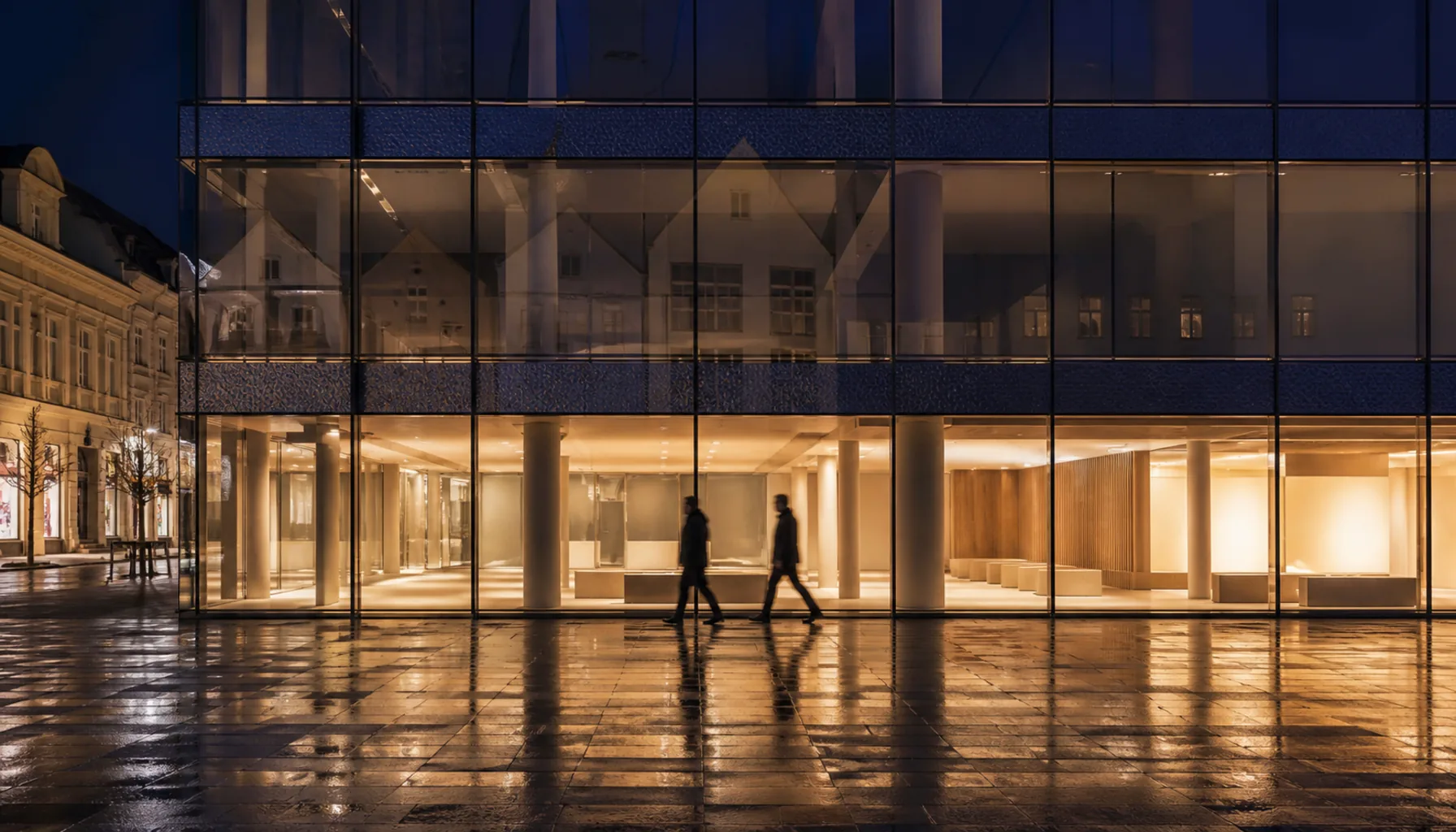
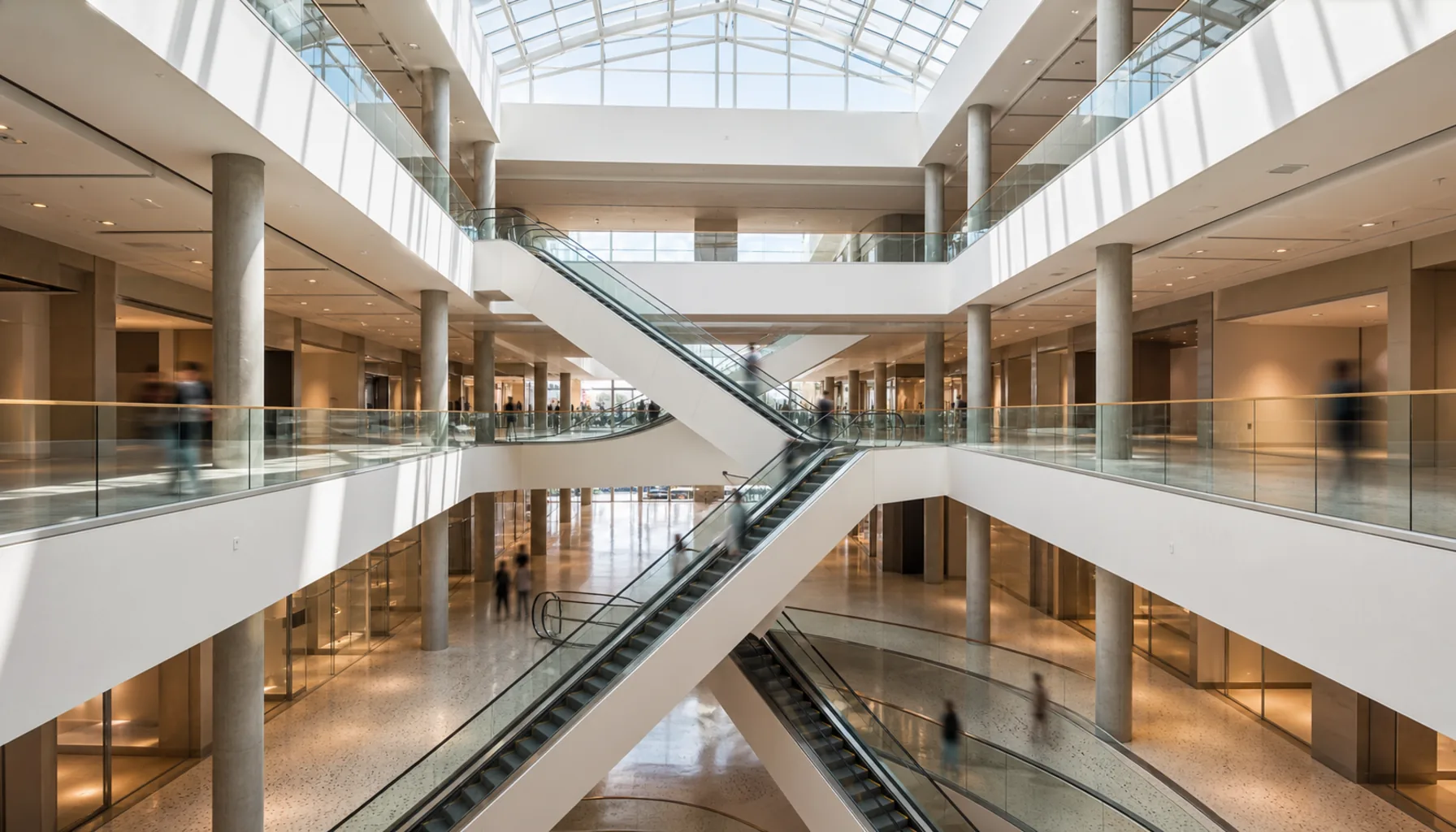
Aupark is a city-block building, and it behaves like one. Rather than sprawling into a single shed with an ocean of asphalt around it, it goes up: retail floors stacked over one another, reached by escalators through a top-lit central void, with the parking pushed below ground on more than one level. The frontage that faces the square is largely glass, so at dusk the whole section of the building reads as a lit interior rather than a wall — which is, in a square that was dark and functional for decades, no small contribution.Aupark je bloková mestská budova a aj sa tak správa. Namiesto toho, aby sa rozlial do jedinej haly obklopenej morom asfaltu, ide do výšky: obchodné podlažia naskladané nad sebou, prepojené eskalátormi cez zhora presvetlené centrálne átrium, s parkovaním zatlačeným pod zem na viac ako jednu úroveň. Priečelie obrátené do námestia je prevažne sklenené, takže za súmraku sa celá táto časť budovy číta ako osvetlený interiér, nie ako stena — čo na námestí, ktoré bolo desaťročia tmavé a čisto úžitkové, nie je malý príspevok.
Inside, the plan is easy to hold in your head — a long central concourse per level with the anchors at the ends, and the escalator run in the middle as the one place you always recognise. It is a mid-sized centre by the standards of the country's biggest, and that is part of the pleasure: you can cross it without a map, and you are never more than a couple of minutes from a door that puts you back on the square. The daylight through the roof glazing does most of the work of making it feel less like a basement and more like a covered street.Vnútri sa pôdorys ľahko udrží v hlave — na každom podlaží jedna dlhá centrálna pasáž s hlavnými nájomníkmi na koncoch a eskalátorové jadro v strede ako jediný bod, ktorý vždy spoznáte. Podľa mierok najväčších centier v krajine ide o stredne veľké centrum a práve v tom je časť pôžitku: prejdete ho bez mapy a nikdy nie ste ďalej než pár minút od dverí, ktoré vás vrátia na námestie. Denné svetlo cez presklenú strechu urobí väčšinu práce za to, aby priestor pôsobil menej ako suterén a viac ako zastrešená ulica.
The other thing the site gives it is transport. Trams and city buses converge on Námestie osloboditeľov because the square has always been a junction; the main railway station and the bus station sit a short walk to the east, along the axis that brings arriving travellers into the centre. For anyone staying in the old town, or changing trains with an hour to spare, this is simply the nearest roof with everything under it.Ďalšou vecou, ktorú mu poloha dáva, je doprava. Na Námestí osloboditeľov sa zbiehajú električky aj mestské autobusy, pretože námestie bolo vždy uzlom; hlavná železničná stanica a autobusová stanica sú kúsok pešo na východ, pozdĺž osi, ktorá privádza prichádzajúcich cestujúcich do centra. Pre každého, kto býva v starom meste alebo prestupuje s hodinou času navyše, je to jednoducho najbližšia strecha, pod ktorou je všetko.