A Mall Named After a FloodplainObchodné centrum pomenované po lužnom lese
The name is the most interesting thing about it, and almost nobody knows where it comes from. Au is the German word for the wet, wooded floodplain of a river — exactly what the Petržalka bank of the Danube was before anyone drained it. When the city laid out a public garden here in the 1770s, on ground cleared from that floodplain forest, the German-speaking town called it the Aupark: the floodplain park. The name was still in use long after the park itself had been renamed for the poet Janko Kráľ.Najzaujímavejšie na ňom je meno — a takmer nikto nevie, odkiaľ pochádza. Au je nemecké označenie pre mokrý, zalesnený lužný breh rieky — presne taká bola petržalská strana Dunaja predtým, než ju niekto odvodnil. Keď tu mesto v sedemdesiatych rokoch 18. storočia založilo na ploche vyklčovanej z lužného lesa verejnú záhradu, po nemecky hovoriace mesto ju nazvalo Aupark: lužný park. Toto pomenovanie sa používalo ešte dlho po tom, čo park sám premenovali po básnikovi Jankovi Kráľovi.
Everything else about the site is twentieth-century. Petržalka — a village of market gardens and beer halls within living memory — was rebuilt from the 1970s as one of the largest prefabricated housing estates in Central Europe, home to a substantial share of the capital's population. The bridge crossing to the Old Town cut the district's northern tip apart from the river, and for decades afterwards there was very little on this bank except flats, roads and the surviving park.Všetko ostatné na tomto mieste je z dvadsiateho storočia. Petržalka — v pamäti žijúcich ešte dedina záhradkárov a pivární — bola od sedemdesiatych rokov prestavaná na jedno z najväčších panelových sídlisk v strednej Európe, domov výraznej časti obyvateľov hlavného mesta. Most do Starého Mesta odrezal severný cíp štvrte od rieky a po desaťročia potom nebolo na tomto brehu takmer nič okrem bytoviek, ciest a prežívajúceho parku.
Aupark arrived in 2001 and filled that gap. It was the largest shopping centre in the country when it opened, and for a long time it was the only full-scale one on the Petržalka side — a district of well over a hundred thousand people that until then had crossed the bridge for almost everything. That, rather than any architectural ambition, is what it was built to do, and it still does it: this is a mall for the district it stands in.Aupark prišiel v roku 2001 a túto medzeru vyplnil. Pri otvorení to bolo najväčšie obchodné centrum v krajine a dlho jediné plnohodnotné na petržalskej strane — v štvrti s výrazne viac než sto tisíc obyvateľmi, ktorá dovtedy chodila takmer za všetkým cez most. Práve na to bol postavený, nie kvôli architektonickým ambíciám, a stále to robí: je to obchodné centrum pre štvrť, v ktorej stojí.
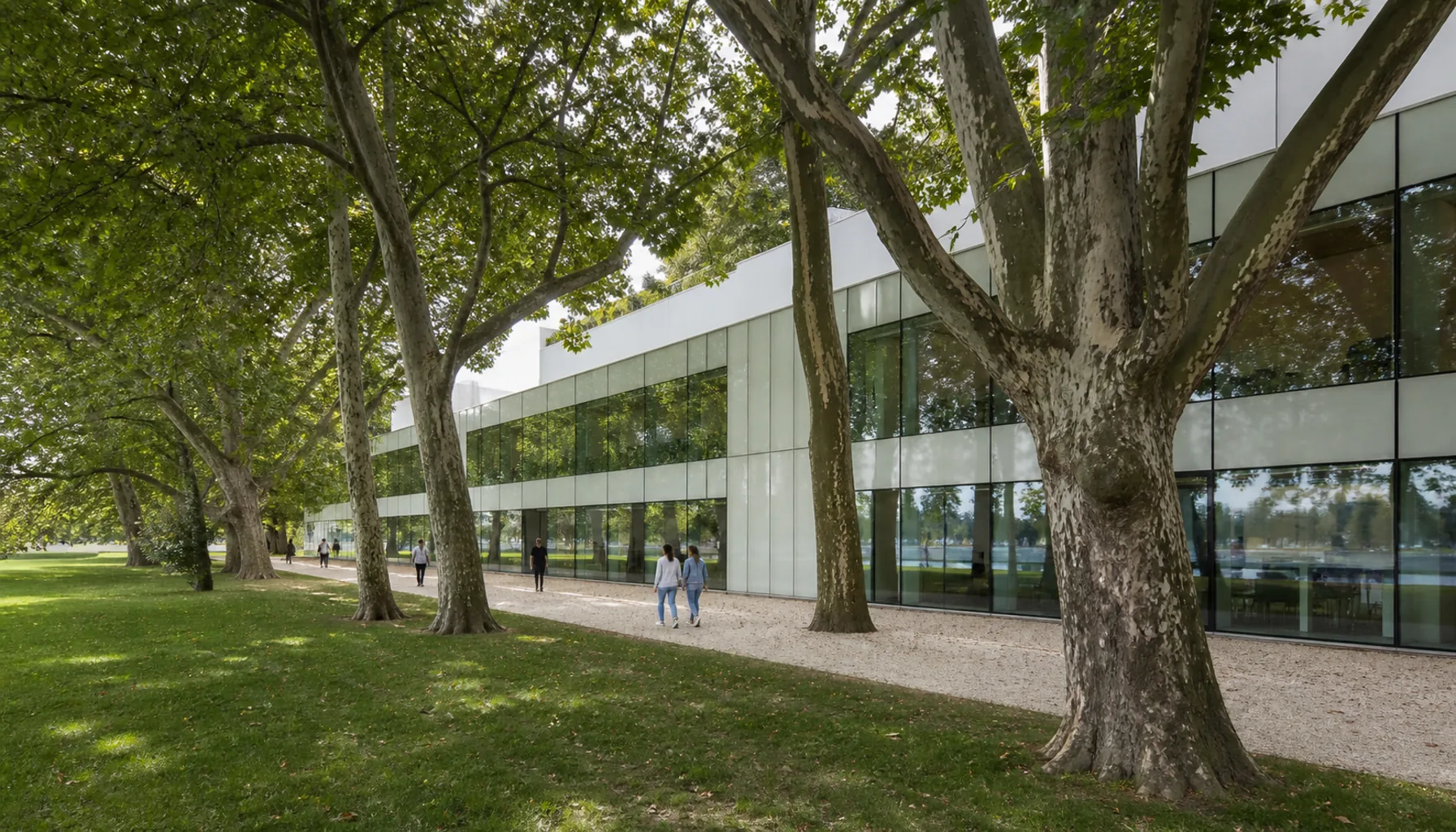
The park was here two hundred and twenty years before the shops. It is still the better reason to come.Park tu bol dvestodvadsať rokov pred obchodmi. Stále je lepším dôvodom, prečo sem prísť.