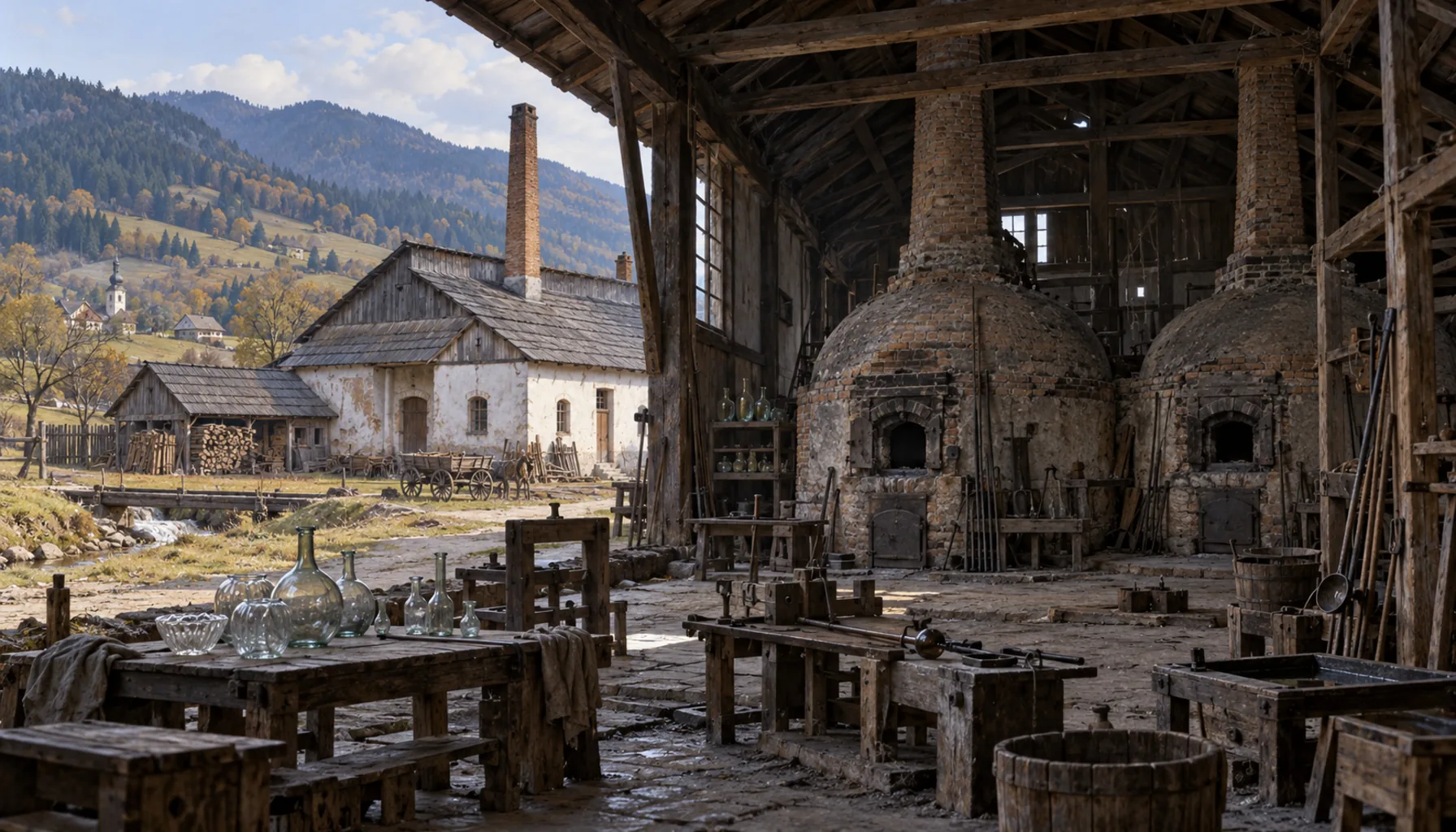
Glassmaking here died before the war did any damage to it. From 1913 the rents demanded for the works and the price of timber rose to the point where the business no longer paid, and on 15 February 1914 the glass furnaces went cold for the last time. What was left was timber: a steam sawmill with eight frame saws and six circular saws, served by its own narrow-gauge forest railway of 760 millimetres, the standard gauge of Slovak logging lines. And from the beginning of the twentieth century a great many people simply left, going abroad for work, as they did from every poor upland district in the kingdom.Sklárstvo tu skončilo skôr, než mu stihla ublížiť vojna. Od roku 1913 stúpli nájmy za huty a cena dreva natoľko, že sa výroba prestala oplácať, a 15. februára 1914 sklárske pece naposledy vyhasli. Zostalo drevo: parná píla s ôsmimi gátrami a šiestimi cirkulárkami, obsluhovaná vlastnou úzkorozchodnou lesnou železnicou s rozchodom 760 milimetrov, aký mali slovenské lesné dráhy. A od začiatku 20. storočia veľa ľudí jednoducho odišlo za prácou do sveta, ako sa odchádzalo z každého chudobného horského kraja v Uhorsku.