An Italian Plan in a Slovak BasinTaliansky pôdorys v slovenskej kotline
In the last third of the fourteenth century, Louis I the Great — the Angevin king of Hungary, and from 1370 king of Poland as well — had a castle built at Zvolen. It was not a frontier fortress and was never meant to be one. It was a royal hunting seat, put exactly where the king wanted to hunt: at the mouth of the great forests that fill the Zvolen basin and climb the flanks of Poľana.V poslednej tretine štrnásteho storočia dal Ľudovít Veľký — anjouovský kráľ Uhorska a od roku 1370 aj kráľ Poľska — postaviť vo Zvolene zámok. Nebola to pohraničná pevnosť a ani sa ňou nikdy stať nemala. Bolo to kráľovské poľovnícke sídlo postavené presne tam, kde chcel kráľ poľovať: pri ústí veľkých lesov, ktoré vypĺňajú Zvolenskú kotlinu a stúpajú po bokoch Poľany.
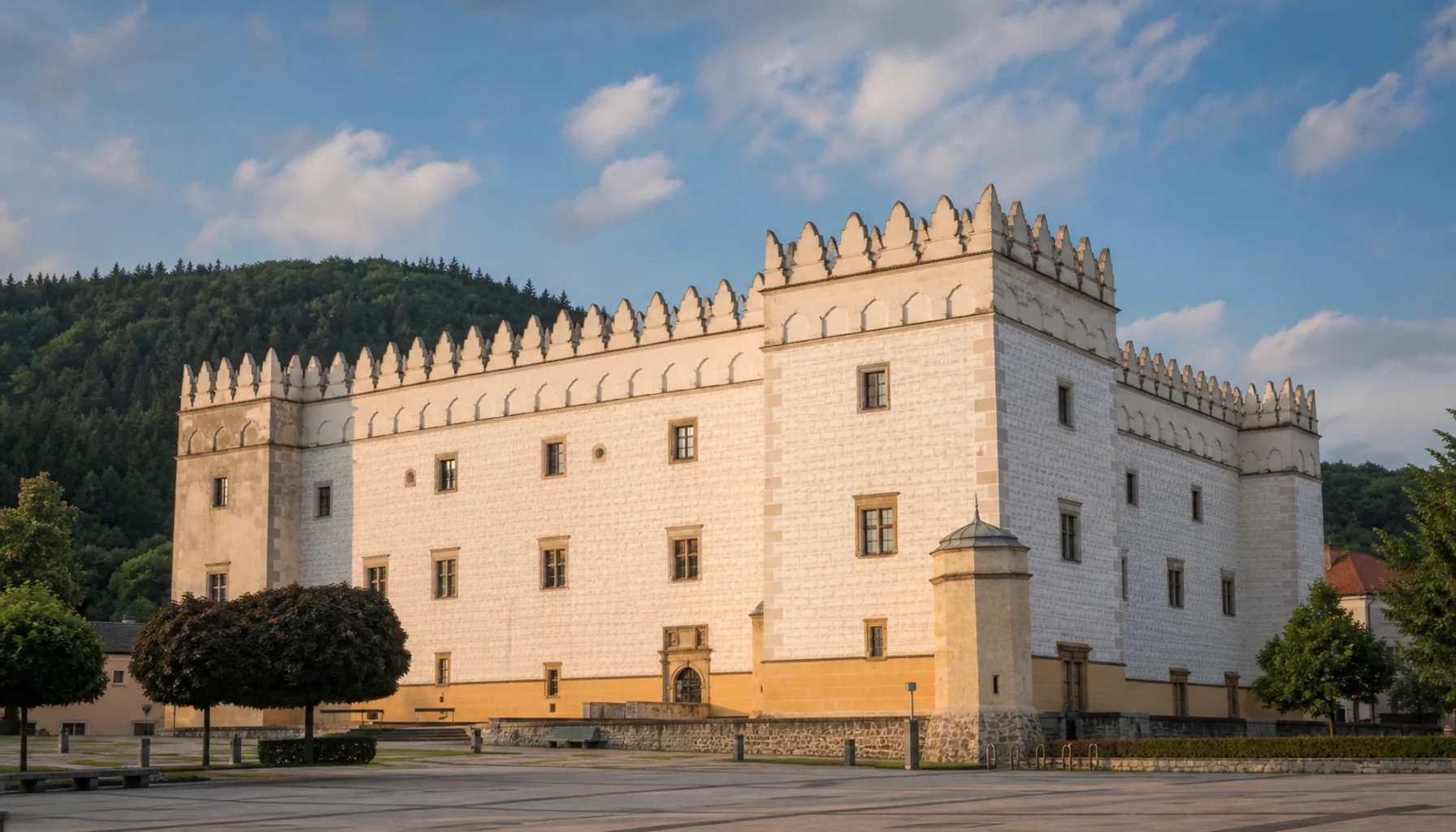
That purpose shows in the ground plan, and the ground plan is what makes Zvolen unusual. Instead of a crag, the builders took level ground at the edge of the town; instead of the rambling, rock-following outline of a Slovak hill castle, they laid out an Italian castello — a compact rectangular block of four wings around a central arcaded courtyard, with towers at the corners. The Angevins had come north from Naples a generation or two earlier and never entirely stopped being Italian. What stands at Zvolen is that Italian eye, translated into Central European stone.Tento zámer vidno na pôdoryse — a práve pôdorys robí Zvolen výnimočným. Namiesto brala si stavitelia vybrali rovinu na okraji mesta; namiesto rozvetveného obrysu, ktorý sa u slovenských hradov vinie po skale, vytýčili taliansky castello — kompaktný obdĺžnikový blok štyroch krídel okolo stredného arkádového nádvoria s vežami v nárožiach. Anjouovci prišli na sever z Neapola o generáciu či dve skôr a nikdy celkom neprestali byť Talianmi. Zvolenský zámok je práve toto talianske oko, preložené do stredoeurópskeho kameňa.
Two centuries later the castle had to become what it was never designed to be. As the Ottoman advance pushed up from the south through the sixteenth century, Zvolen was rebuilt for defence: bastions were thrown out around it, and the roofline was replaced by the crenellated Renaissance attic that is still the first thing you recognise from outside. The expense had a clear reason — the road through Zvolen led to the central Slovak mining towns and their silver and gold, and whoever held Zvolen sat on that road. The castle began as royal property, was later pledged away and passed through noble hands — among them the Thurzó family and, later, the Eszterházy, who held it into modern times.O dve storočia neskôr sa zámok musel stať tým, čím nikdy nemal byť. Ako sa v priebehu šestnásteho storočia od juhu tlačil osmanský postup, Zvolen prestavali na obranu: okolo neho vyrástli bastióny a strešnú korunu nahradila cimburím zakončená renesančná atika, ktorú zvonku spoznáte ako prvú. Náklady mali jasný dôvod — cesta cez Zvolen viedla do stredoslovenských banských miest, k ich striebru a zlatu, a kto držal Zvolen, sedel na tejto ceste. Zámok začínal ako kráľovský majetok, neskôr ho panovník založil a prechádzal cez ruky šľachtických rodov — medzi nimi Turzovcov a po nich Esterháziovcov, ktorí ho držali až do moderných čias.