A Manor for the Mining Country's LordsKaštieľ pre pánov banského kraja
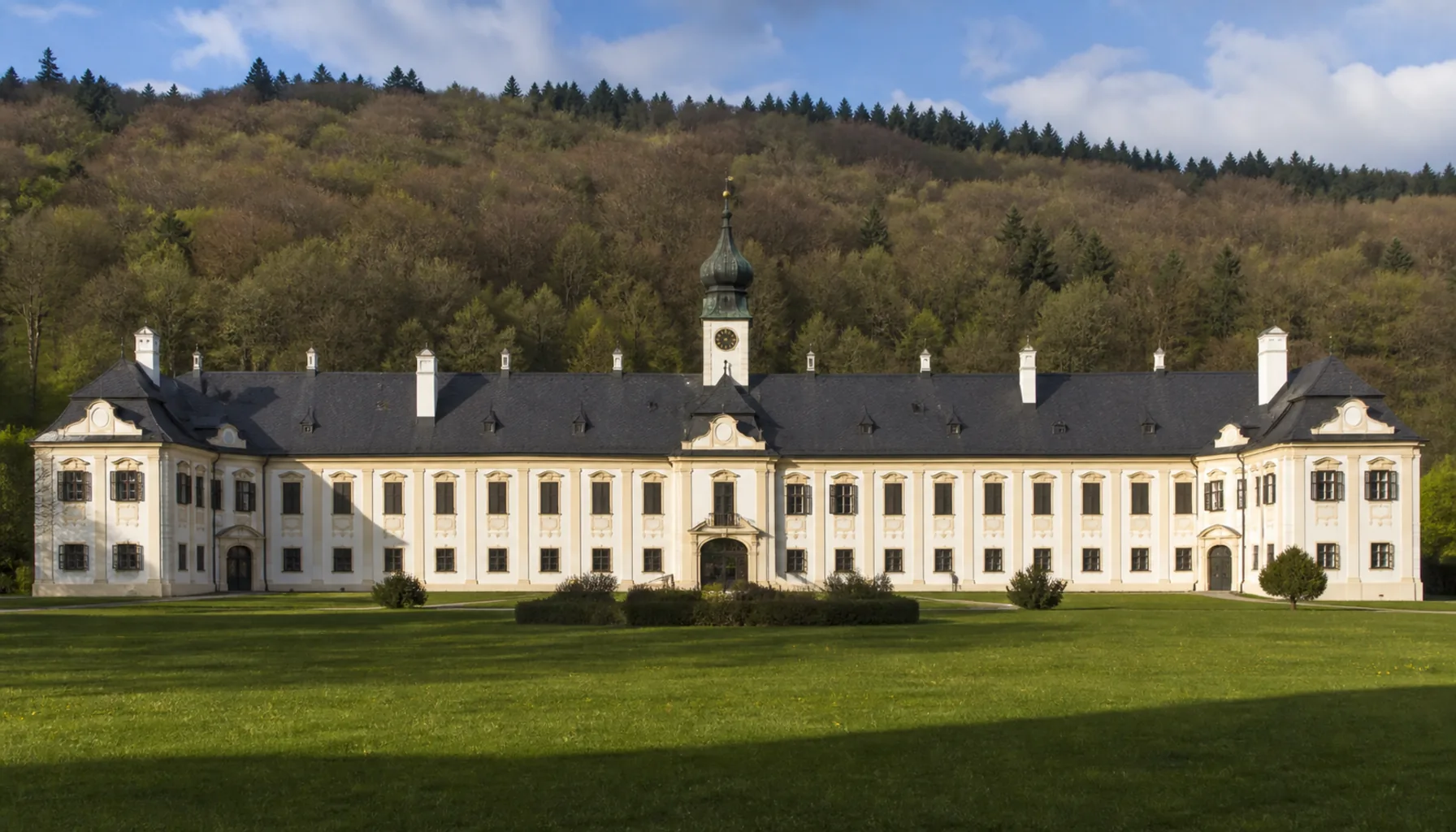
This is the hinterland of Banská Štiavnica, the old silver-mining town that made the Štiavnica hills rich and left them wooded, hollow and beautiful. The estate here belonged to the Koháry family, and in the middle of the eighteenth century they replaced an older house with the baroque manor that stands today — a long, low, symmetrical building meant to be seen from the front and lived in behind.Sme v zázemí Banskej Štiavnice, starého strieborného banského mesta, ktoré Štiavnické vrchy obohatilo a zanechalo zalesnené, vydolované a krásne. Tunajšie panstvo patrilo rodu Kohárycov a v polovici osemnásteho storočia nahradili starší dom barokovým kaštieľom, ktorý tu stojí dodnes — dlhá, nízka, súmerná stavba, ktorá sa má vidieť spredu a bývať za jej priečelím.
In the early nineteenth century the Koháry line ran out in the male succession, and the estate passed by marriage to the house of Saxe-Coburg and Gotha. That family was, in the phrase of the time, the stud farm of Europe: through a run of marriages its members ended up on or beside the thrones of Belgium, Portugal, Britain and Bulgaria. Svätý Anton became one of their country houses, and the man who later ruled Bulgaria as Ferdinand knew these woods well.Začiatkom devätnásteho storočia vymrela mužská vetva Kohárycov a panstvo prešlo sobášom na rod Sasko-Coburg-Gothajský. Tá rodina bola, ako sa vtedy hovorilo, žrebčincom Európy: radom sobášov sa jej členovia ocitli na trónoch alebo pri trónoch Belgicka, Portugalska, Británie a Bulharska. Svätý Anton sa stal jedným z ich vidieckych sídel a muž, ktorý neskôr vládol Bulharsku ako Ferdinand, tieto lesy dobre poznal.
The Coburgs held it until the middle of the twentieth century, and what they did here above all was hunt. The estate ran deep into the forests of the Štiavnica hills, and the house filled with the apparatus of that life — trophies, guns, sporting pictures, the paperwork of managed woodland. When the family left, the house kept the theme: today it is Slovakia's museum of hunting and forestry, shown alongside the historic interiors.Coburgovci ho držali do polovice dvadsiateho storočia a robili tu predovšetkým jedno: poľovali. Panstvo siahalo hlboko do lesov Štiavnických vrchov a dom sa zaplnil výbavou takého života — trofejami, zbraňami, poľovníckymi obrazmi, papiermi obhospodarovaného lesa. Keď rodina odišla, dom si tému ponechal: dnes je slovenským múzeom poľovníctva a lesníctva, sprístupneným popri historických interiéroch.