The Neighbour Nobody Could Live WithSused, s ktorým sa nedalo žiť
The lord of Divín in the second half of the seventeenth century was Imrich Balaša, and Novohrad has never quite forgotten him. He is remembered as a lúpežný rytier — a robber knight — a nobleman who used a frontier castle and a private garrison to prey on the estates around him: seized cattle, seized carts, seized people. Complaints accumulated. In a country already at war on two fronts, a magnate raiding his own neighbours was a problem the crown could not indefinitely ignore.Pánom Divína bol v druhej polovici sedemnásteho storočia Imrich Balaša a Novohrad naň dodnes celkom nezabudol. Zostal v pamäti ako lúpežný rytier — šľachtic, ktorý pohraničný hrad a vlastnú posádku využíval na plienenie okolitých panstiev: zhabaný dobytok, zhabané vozy, zajatí ľudia. Sťažnosti sa kopili. V krajine, ktorá už tak bojovala na dvoch frontoch, bol magnát olupujúci vlastných susedov problémom, ktorý koruna nemohla donekonečna prehliadať.
The reckoning came in 1683. Imperial troops moved on Divín, took the castle, and then did what armies rarely bother to do afterwards: they demolished it. The point was not to win the siege but to make sure there could never be another one — that this particular hilltop would never again hold a garrison answerable to nobody. It worked. Divín was never rebuilt, and within a generation the family were living in a comfortable house on the flat.Účtovanie prišlo v roku 1683. Cisárske vojská vytiahli na Divín, hrad dobyli a potom urobili to, čo si armády po víťazstve zvyčajne nedávajú za námahu: zbúrali ho. Nešlo o to vyhrať obliehanie, ale o to, aby už žiadne ďalšie nebolo — aby tento konkrétny kopec nikdy viac nedržal posádku, ktorá sa nikomu nezodpovedá. Zabralo to. Divín už nikto neobnovil a do jednej generácie bývala rodina v pohodlnom dome v rovine.
The Ottomans only occupied Divín. It took its own emperor to destroy it.Osmani Divín len obsadili. Zničiť ho musel až vlastný cisár.
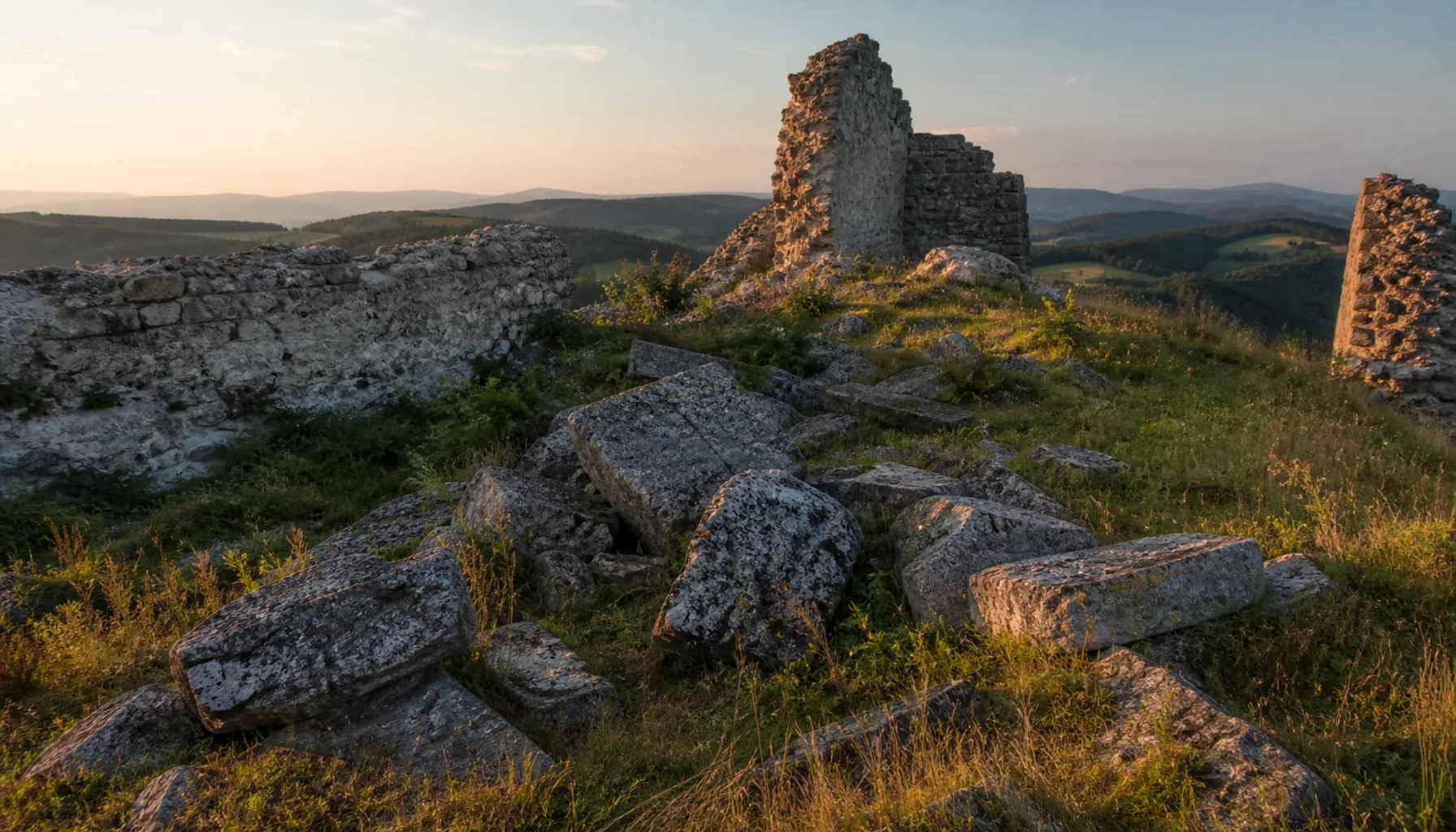
Stories of this kind harden as they are retold, and the Imrich Balaša of local tradition is a blacker figure than any document alone would support. But the outline is not in doubt: a frontier lordship, a private army, an emperor’s patience running out, and a castle deliberately unmade. Standing in the upper ward, among wall faces that were pushed over rather than allowed to fall, you are looking at the physical record of that decision.Príbehy tohto druhu pri prerozprávaní tvrdnú a Imrich Balaša ľudovej tradície je černejšia postava, než by uniesli samotné listiny. Obrys však nie je sporný: pohraničné panstvo, súkromné vojsko, dochádzajúca cisárova trpezlivosť a hrad zámerne rozobratý. Keď stojíte na hornom nádvorí medzi lícami múrov, ktoré niekto zvalil, namiesto toho, aby ich nechal spadnúť, pozeráte sa na hmotný záznam tohto rozhodnutia.