The Frontier and the Mining CountryPohraničie a banský kraj
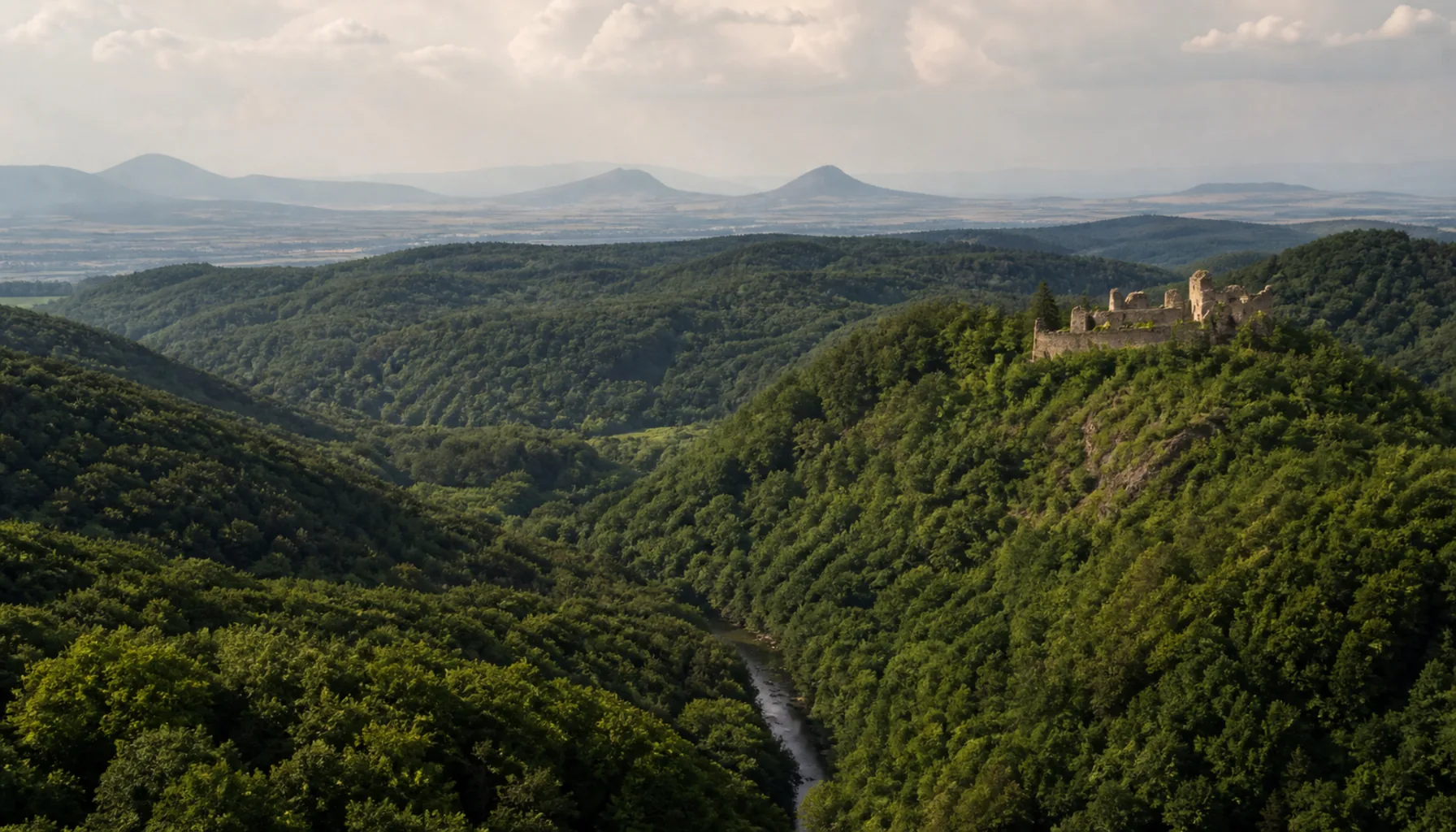
Čabraď stands between two worlds: the Ottoman frontier to the south and east, and the silver towns to the north whose wealth it was built to protect. Both are within a day’s reach.Čabraď stojí medzi dvoma svetmi: osmanským pohraničím na juh a východ a striebornými mestami na severe, ktorých bohatstvo mala chrániť. Oba sú na dosah jedného dňa.
Modrý KameňModrý Kameň
The nearest of the frontier castles proper — taken by the Ottomans in 1575, rebuilt as a baroque house, and now holding the puppet and toy museum. An easy indoor counterweight to a long walk.Najbližší zo skutočných pohraničných hradov — dobytý Osmanmi v roku 1575, prestavaný na barokový dom a dnes s múzeom bábok a hračiek. Príjemná vnútorná protiváha k dlhej chôdzi.
Fiľakovo CastleFiľakovský hrad
Further east, the fortress the Ottomans actually held for four decades. It explains why anyone bothered to wrap a remote Gothic castle in artillery bastions.Ďalej na východ pevnosť, ktorú Osmani štyri desaťročia naozaj držali. Vysvetľuje, prečo sa niekomu vôbec oplatilo obopnúť odľahlý gotický hrad delostreleckými baštami.
Svätý AntonSvätý Anton
North, in the mining country Čabraď was built to screen — a furnished manor house with a park, and the complete opposite kind of visit.Na sever, v banskom kraji, ktorý mala Čabraď kryť — zariadený kaštieľ s parkom a úplne opačný typ návštevy.
RevišteRevište
Another castle of the mining region’s defences, this one guarding the river road along the Hron — smaller, easier to reach, and also being put back together by volunteers.Ďalší hrad z obrany banského kraja, tento strážil cestu popri Hrone — menší, ľahšie dostupný a tiež ho skladajú späť dobrovoľníci.