A Glass Dome Standing In for a Vanished KeepSklenená kupola namiesto zaniknutého hradu
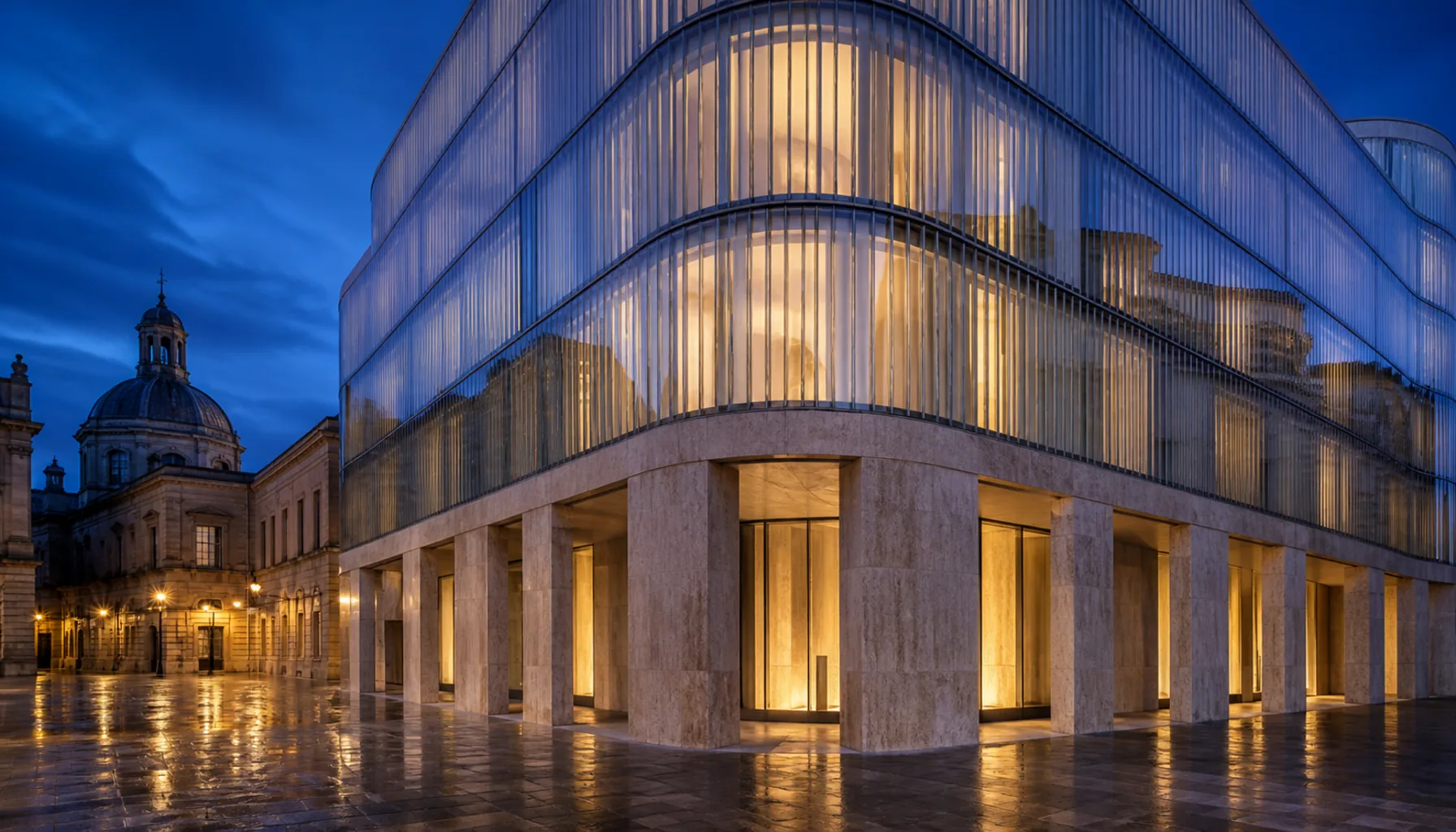
The design does something braver than pretending to be old. Its stated idea is that the building should be an illusion of the castle that is no longer there: a heavy travertine base, picking up the pale stone of the city theatre a little way along the square, carrying a rounded, ribbed glass upper form that reads from the pavement as a lantern rather than a wall. It is why the name fits. At night the glass lights from within and the mass above the stone all but disappears.Návrh spravil niečo odvážnejšie, než že by predstieral starobylosť. Jeho deklarovanou myšlienkou je, že budova má byť ilúziou hradu, ktorý tu už nie je: ťažká travertínová podnož, ktorá preberá svetlý kameň mestského divadla o kus ďalej na námestí, nesie zaoblený, rebrovaný sklenený nadstavec, ktorý sa z chodníka číta skôr ako lampáš než ako stena. Preto názov sedí. V noci sklo svieti zvnútra a hmota nad kameňom takmer zmizne.
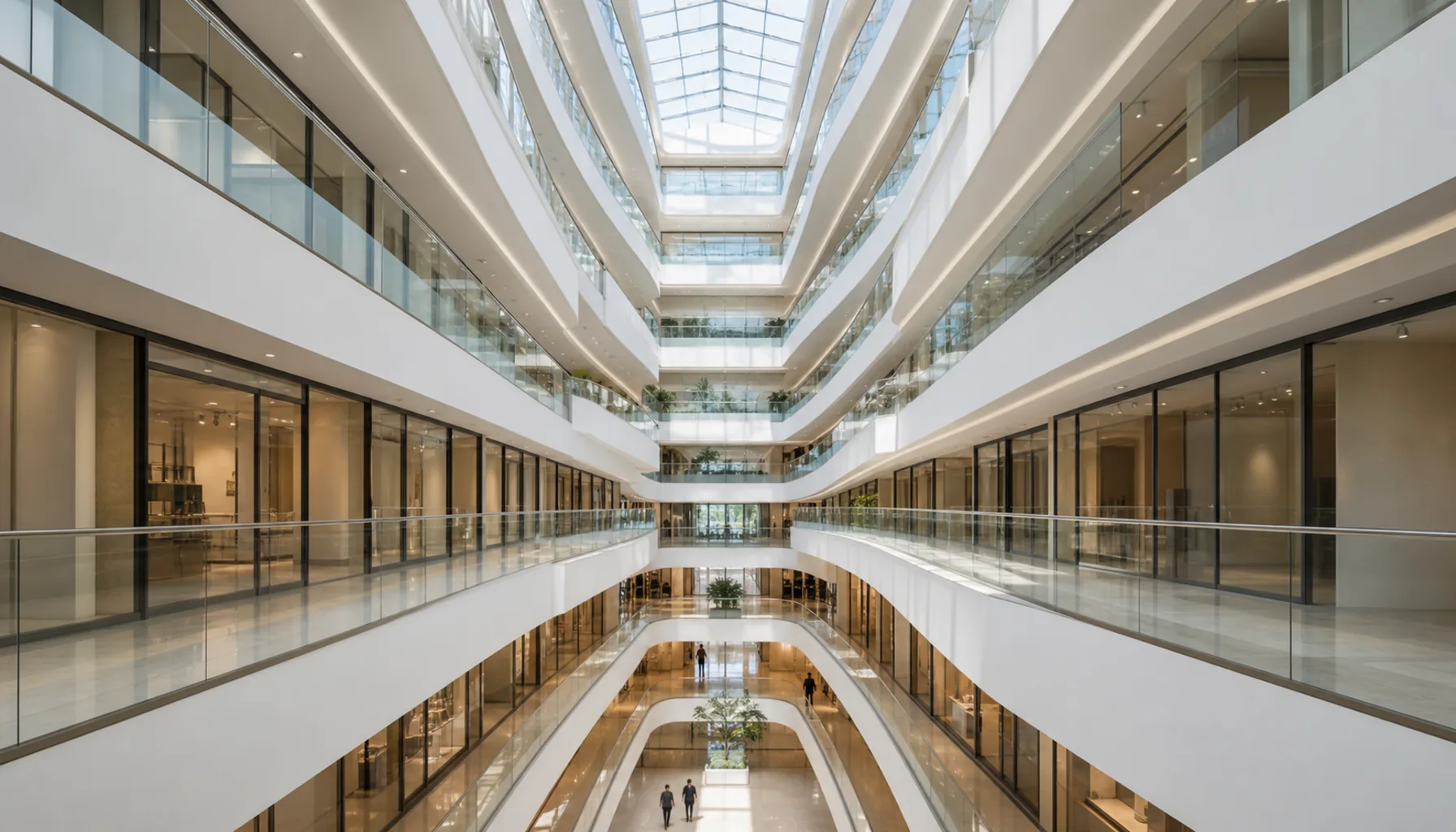
Practically, the centre works as a stack rather than a sprawl — the only way to fit this much floor area onto a city-centre plot. Retail levels are piled one above another around the atrium, with the car parking driven underground beneath them, so the building occupies far less of the square than its floor area suggests. Circulation is vertical: you ride up rather than walk out. The entrances matter as much as the shape. One opens straight onto the square; another connects to the Farské schody, so the centre is threaded into the ordinary route between the lower square and the old town rather than sitting off to one side of it.Prakticky funguje centrum ako stoh, nie ako rozliata plocha — inak sa toľko podlažnej plochy na pozemok v centre mesta nevmestí. Obchodné podlažia sú naskladané nad sebou okolo átria a parkovanie je zvedené pod ne, takže budova zaberá z námestia oveľa menej, než by jej plocha napovedala. Pohyb je zvislý: skôr sa veziete hore, než by ste vychádzali von. Vstupy sú rovnako dôležité ako tvar. Jeden ústi priamo na námestie, druhý sa napája na Farské schody, takže centrum je navlečené na bežnú trasu medzi dolným námestím a starým mestom, a nie odsunuté nabok.
The castle it imitates is not a metaphor. Part of it is downstairs, under glass.Hrad, ktorý napodobňuje, nie je metafora. Jeho časť je o poschodie nižšie, pod sklom.
Opinion in the city has never fully converged. Defenders point out that it put a large retail programme inside the walkable centre instead of on a bypass, that it kept the trade in the old town, and that it saved and showed an archaeological find that would otherwise have stayed a line in a report. Critics answer that the scale and the glass are simply too much beside an arcaded square, and that a historic building was lost to get there. Both arguments are easy to follow standing on the pavement outside, which is a fair test of an honest building.Názory v meste sa nikdy celkom nezjednotili. Obhajcovia pripomínajú, že veľký obchodný program sa dostal do pešieho centra namiesto na obchvat, že obchod ostal v starom meste a že sa zachránil a sprístupnil archeologický nález, ktorý by inak zostal riadkom v správe. Kritici odpovedajú, že mierka a sklo sú vedľa podlubného námestia jednoducho priveľa a že za to padla historická budova. Oba argumenty sa dajú ľahko sledovať už len tak, že si stanete na chodník pred budovou — a to je celkom slušná skúška poctivej architektúry.