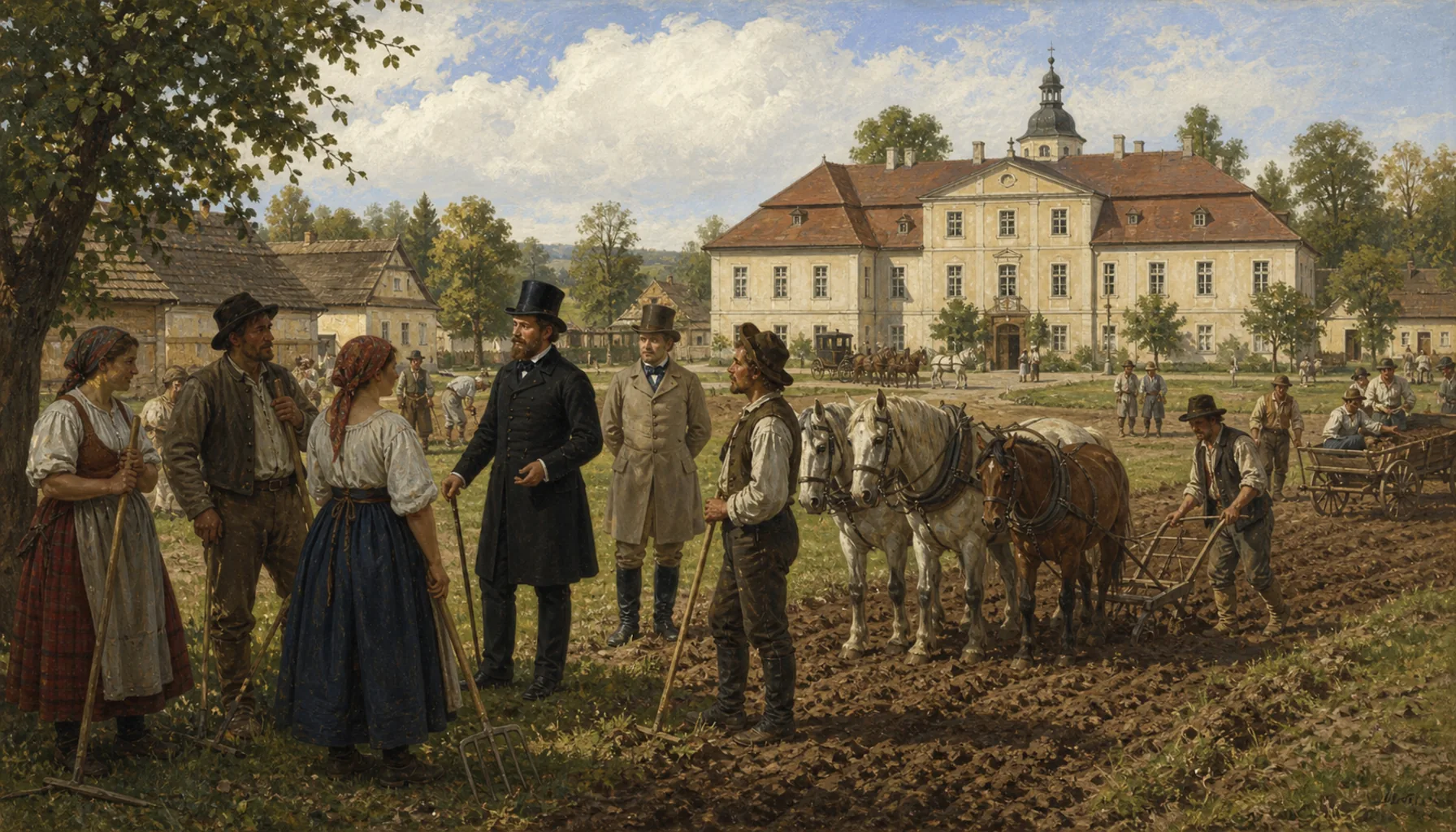
The revolution of 1848 abolished serfdom in Hungary: the people who had worked the manor's land as subjects became its neighbours, and the estate had to hire and pay for labour like any other farm. The Brunsvik connection to the village faded in the same century — Therese, born in Pressburg (today's Bratislava) in 1775, spent her later life opening the kingdom's first nursery schools from 1 July 1828 and died in Pest in 1861 — and by the 1860s Dolná Krupá belonged to the Chotek family. Countess Mária Henrieta Choteková was born in the manor here on 24 November 1863. The house had changed families, but it was about to become far more famous than it had ever been.Revolúcia roku 1848 zrušila poddanstvo: z ľudí, ktorí obrábali panskú pôdu ako poddaní, sa stali susedia a panstvo si muselo robotu najímať a platiť ako každý iný veľkostatok. Väzba Brunsvikovcov na obec sa v tom istom storočí vytratila — Terézia, narodená roku 1775 v Prešporku, teda v dnešnej Bratislave, otvárala od 1. júla 1828 prvé opatrovne v krajine a roku 1861 zomrela v Pešti — a v šesťdesiatych rokoch 19. storočia patrila Dolná Krupá Chotekovcom. Grófka Mária Henrieta Choteková sa v tunajšom kaštieli narodila 24. novembra 1863. Dom vymenil rod, no práve sa chystal presláviť sa viac než kedykoľvek predtým.