Myjava · The KopaniceMyjava · Kopanice

Culture in MyjavaKultúra na Myjave

The town at the centre of the scattered-farmstead country, where the first Slovak National Council sat in 1848 and where the hills still supply the material for a June festival.Mesto v strede kopaničiarskeho kraja, kde v roku 1848 zasadala prvá Slovenská národná rada a kde okolité kopanice dodnes dodávajú látku júnovému festivalu.

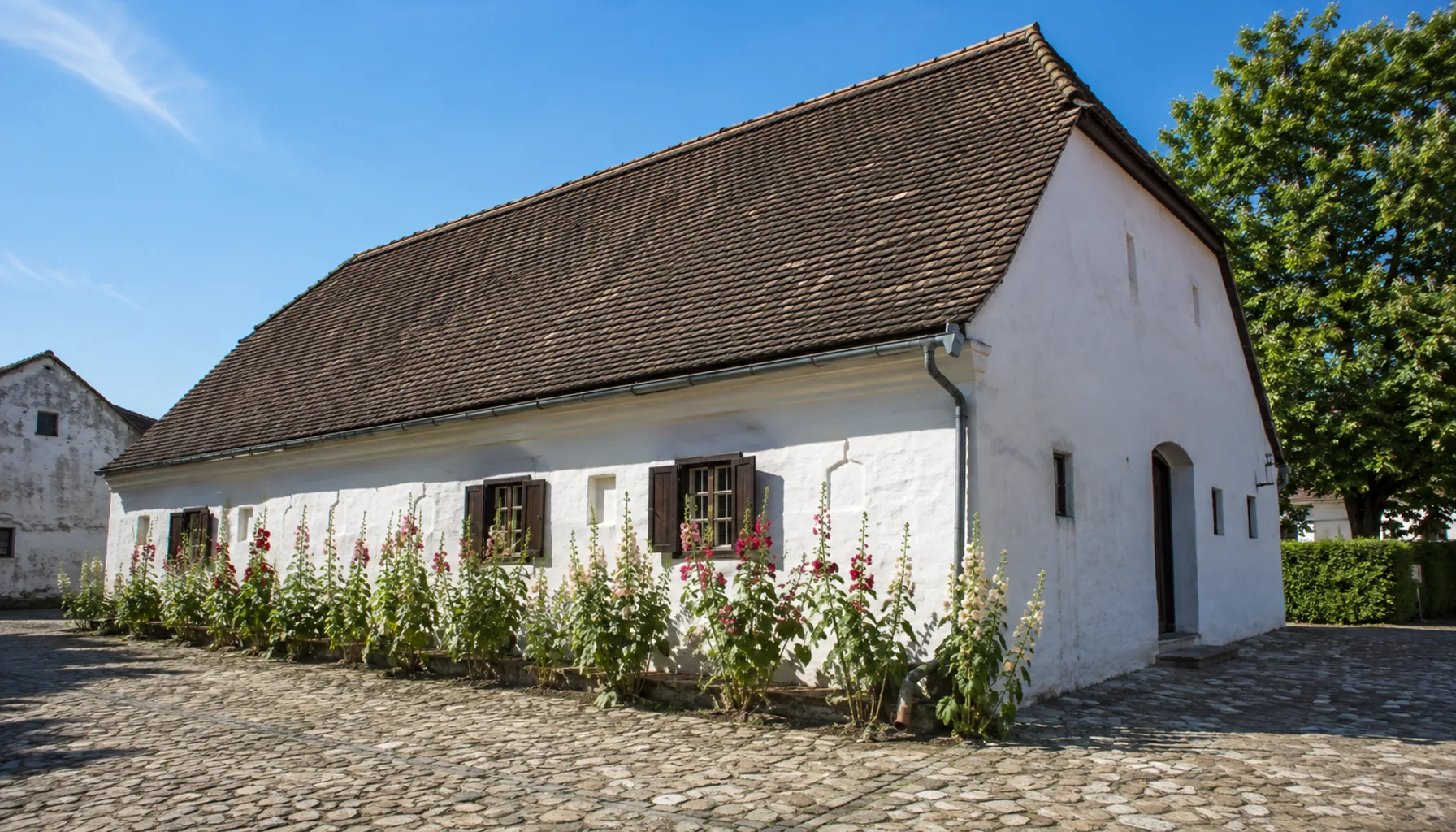
The house of the widow Anna Kolényová in Myjava, where the first Slovak National Council was constituted in September 1848; it holds the town's museum today.Dom vdovy Anny Kolényovej v Myjave, kde sa v septembri 1848 ustanovila prvá Slovenská národná rada; dnes v ňom sídli múzeum.

The year in MyjavaRok na Myjave

The fixed point in Myjava's year is the international folklore festival held here in the middle of June since 1959. It is one of the largest in Slovakia and unusual in one important respect: the material comes from the hills around the town rather than from a national programme, so what you watch on the amphitheatre stage is what the Kopanice actually had. The town fills for several days and the programme runs in the streets as well as at the amphitheatre.Pevným bodom myjavského roka je medzinárodný folklórny festival, ktorý sa tu koná v polovici júna od roku 1959. Patrí k najväčším na Slovensku a je nezvyčajný v jednej dôležitej veci: látka pochádza z kopaníc okolo mesta, nie z celoštátneho programu, takže to, čo vidíte na javisku amfiteátra, je to, čo tento kraj naozaj mal. Mesto sa na niekoľko dní zaplní a program beží aj v uliciach, nielen v amfiteátri.

Around it the year is a small town's year — school and club seasons, markets, and commemorations at the town's monuments in September and in the spring. The town publishes its own calendar and that is what to consult; we name nothing else here, because dates and programmes move and a page like this does not.Okrem toho je rok taký, aký býva v malom meste — školské a záujmové sezóny, trhy a pripomienky pri mestských pamätníkoch v septembri a na jar. Mesto zverejňuje vlastný kalendár a práve ten treba pozrieť; nič ďalšie tu nemenujeme, lebo dátumy a programy sa posúvajú a takáto stránka nie.

Where culture livesKde žije kultúra

The house of the widow Anna Kolényová, where the first Slovak National Council made its headquarters in September 1848, has been a museum since 1968 — the Museum of Slovak National Councils. It tells the story of that autumn and the history of the Kopanice, and it is the reason most visitors come into the town itself rather than passing through on their way to the hills.Dom vdovy Anny Kolényovej, kde mala v septembri 1848 sídlo prvá Slovenská národná rada, je od roku 1968 múzeom — Múzeum Slovenských národných rád. Rozpráva o tej jeseni a o dejinách kopaníc a je dôvodom, prečo väčšina návštevníkov zájde do samotného mesta a neprejde len okolo na ceste do kopcov.

The other institutions are the ordinary ones — a cultural centre, a library, a school of art for children, and the folk ensembles and music groups a festival town of this kind naturally sustains. We do not name them, for the usual reason. The amphitheatre is the largest room the town has and it stands empty most of the year, which is what an amphitheatre in a town of ten thousand does.Ostatné inštitúcie sú tie obvyklé — kultúrne stredisko, knižnica, základná umelecká škola a folklórne súbory a hudobné skupiny, ktoré si festivalové mesto tohto druhu prirodzene udržiava. Nemenujeme ich, z obvyklého dôvodu. Amfiteáter je najväčšou sálou, akú mesto má, a väčšinu roka stojí prázdny, čo amfiteáter v desaťtisícovom meste robieva.

The buildings that carry itBudovy, ktoré ju nesú

Myjava has no medieval past, and that is the first thing to understand about it. The town was founded in 1586 on empty upland belonging to the Čachtice estate, by people getting away from Ottoman raiding in the south, with a second wave from the Orava and Váh country. Instead of gathering into one village with a square, families took a strip of forest on a ridge, cleared it and built a single farmstead on it — a kopanica — and hundreds of them ended up scattered across the hills. Those white houses standing alone among plum orchards are the real architecture of the region.Myjava nemá stredoveké dejiny a to treba pochopiť ako prvé. Mesto vzniklo v roku 1586 na prázdnej vrchovine patriacej čachtickému panstvu, osídlili ho ľudia utekajúci pred osmanskými nájazdmi z juhu a druhá vlna prišla z Oravy a Považia. Namiesto toho, aby sa zišli do jednej dediny s námestím, brali si rodiny pás lesa na hrebeni, vyklčovali ho a postavili si na ňom jediný statok — kopanicu — a stovky z nich sa rozsypali po kopcoch. Tie biele domy stojace osamote medzi slivkovými sadmi sú skutočnou architektúrou kraja.

The two churches say the rest. Under the Lutheran pastor Daniel Krman the town began building a church in 1697; it took until 1729 and its tower went up in 1723, and then in 1731 the Counter-Reformation took it away from the people who had built it. It is the Roman Catholic church of St Stephen today, and Myjava still calls it Krman's church. After Joseph II's Patent of Toleration of 1781 the Lutherans built again, in 1784 and 1785, and between 1854 and 1856 they added the tower that dominates the town.Zvyšok povedia dva kostoly. Pod evanjelickým farárom Danielom Krmanom začalo mesto v roku 1697 stavať kostol; trvalo to do roku 1729, veža vyrástla v roku 1723 — a v roku 1731 ho protireformácia vzala tým, ktorí ho postavili. Dnes je to rímskokatolícky kostol svätého Štefana a Myjava mu stále hovorí Krmanov kostol. Po tolerančnom patente Jozefa II. z roku 1781 stavali evanjelici znova, v rokoch 1784 a 1785, a v rokoch 1854 až 1856 pridali vežu, ktorá mestu dominuje.

The commemorative architecture is exceptional for a place this size. Myjava put up its own Štefánik memorial in 1921, a cubist block with reliefs and a bust, the oldest Štefánik monument in the country. Ten kilometres away on the bare ridge of Bradlo, above Brezová pod Bradlom, stands the great terraced barrow of local stone that Dušan Jurkovič designed and that was finished in 1928 over the grave of Milan Rastislav Štefánik. It is one of the finest pieces of commemorative architecture in Slovakia and the single best reason to come to this corner of the country.Pamätníková architektúra je na miesto tejto veľkosti výnimočná. Myjava postavila vlastný pomník Štefánikovi už v roku 1921, kubistický blok s reliéfmi a bustou, najstarší Štefánikov pomník v krajine. Desať kilometrov odtiaľ, na holom hrebeni Bradla nad Brezovou pod Bradlom, stojí veľká terasovitá mohyla z miestneho kameňa, ktorú navrhol Dušan Jurkovič a dokončili v roku 1928 nad hrobom Milana Rastislava Štefánika. Je to jedno z najlepších diel pamätníkovej architektúry na Slovensku a jediný najlepší dôvod prísť do tohto kúta krajiny.
Why the songs were written downPrečo sa tie piesne zapísali

The Kopanice were Lutheran, literate and organised through their congregations, which is exactly why the National Council came here in 1848 and why the country around listened when it did. Those same congregations were the only institution that reached every farmstead, and the reading habit they left behind is part of the answer to why so much of this region's music, dialect and dress was written down at all.Kopanice boli evanjelické, gramotné a organizované cez cirkevné zbory — presne preto sem v roku 1848 prišla národná rada a preto ju okolitý kraj počúval. Tie isté zbory boli jedinou inštitúciou, ktorá dosiahla na každý statok, a čitateľský návyk, ktorý po nich zostal, je časťou odpovede na otázku, prečo sa hudba, nárečie a odev tohto kraja vôbec zapísali.

The other reason is less comfortable. The crafts that had kept these hills alive lost their markets at the end of the nineteenth century — above all the pytlikári, who made the sieve-cloth used in flour mills and sold it right across the monarchy — and the Kopanice emptied westwards, to the United States and above all to a small town called Little Falls in New York State, which became the largest single Myjava colony abroad. The folklore of this region was collected so thoroughly because everybody could see the life that produced it draining away. Many kopanice are weekend houses now.Druhý dôvod je menej príjemný. Remeslá, ktoré tieto kopce živili, prišli koncom devätnásteho storočia o odbyt — predovšetkým pytlikári, ktorí robili sitové plátno pre mlyny a predávali ho po celej monarchii — a kopanice sa vyprázdňovali na západ, do Spojených štátov a najmä do mestečka Little Falls v štáte New York, ktoré sa stalo najväčšou myjavskou kolóniou v zahraničí. Folklór tohto kraja sa zbieral tak dôkladne práve preto, že každý videl, ako život, ktorý ho vytvoril, odteká. Mnohé kopanice sú dnes chalupami na víkend.

← Myjava← Myjava

WatchPozrite si

Sixteen videos for Culture in Myjava.Šestnásť videí — Kultúra na Myjave.