Lednické Rovne · The White CarpathiansLednické Rovne · Biele Karpaty
Culture in Lednické RovneKultúra v Lednických Rovniach
A glassmaking village whose manor house holds the Slovak Glass Museum, whose park was laid out around 1800, and whose furnaces have been alight since 1892.Sklárska obec, v ktorej kaštieli sídli Slovenské sklárske múzeum, park pochádza z čias okolo roku 1800 a pece horia od roku 1892.
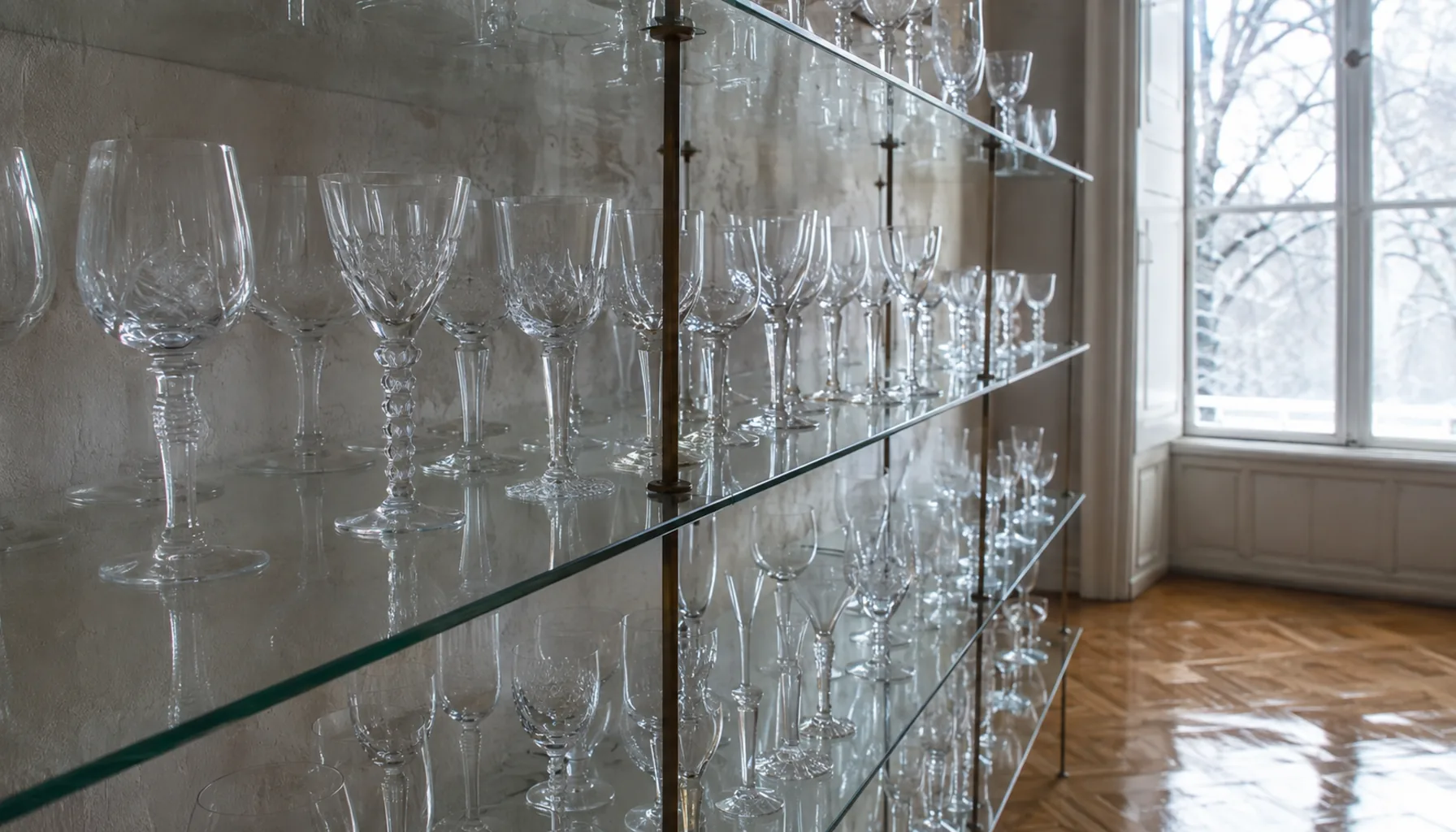
Hand-blown stemware on the shelves of the glass museum in the Lednické Rovne manor house, lit by a tall window on a winter afternoon.Ručne fúkané poháre na policiach sklárskeho múzea v kaštieli v Lednických Rovniach, vo svetle vysokého okna v zimné popoludnie.
The year in Lednické RovneRok v Lednických Rovniach
This is a village with a factory known well beyond Slovakia, and its year runs on the two together: the works, the museum in the manor house, and the park between them. What is on in any given season — exhibitions, concerts in the manor, the village's own events in the park — is set locally and changes, so the village's and the museum's own listings are the thing to check. We name nothing here that we cannot stand behind.Je to obec s fabrikou, ktorú poznajú ďaleko za hranicami Slovenska, a rok tu beží na oboch naraz: na sklárni, na múzeu v kaštieli a na parku medzi nimi. Čo je práve v ktorej sezóne — výstavy, koncerty v kaštieli, obecné podujatia v parku — sa určuje miestne a mení sa, takže treba pozrieť prehľad podujatí obce a múzea. Neuvádzame tu nič, za čím by sme si nevedeli stáť.
One practical warning is the sort of thing a page like this can usefully give: check opening times before you travel. A village museum does not keep city hours, and the manor is not open simply because the gate to the park is.Jedno praktické upozornenie je presne to, čo takáto stránka povedať vie: pred cestou si overte otváracie hodiny. Dedinské múzeum nemá mestské hodiny a kaštieľ nie je otvorený len preto, že je otvorená brána do parku.
Where culture livesKde žije kultúra
The Slovak Glass Museum opened in the manor house in 1988, the building having been rebuilt for the purpose — an industry putting its own history on show in the house its founder had bought. It covers the history of glassmaking here, the technology of it, and a collection of Slovak glass from the nineteenth century to the present. For a village of this size it is a serious institution, and it is the reason most visitors come.Slovenské sklárske múzeum otvorili v kaštieli v roku 1988, keď budovu na ten účel prestavali — priemysel vystavil vlastné dejiny v dome, ktorý kúpil jeho zakladateľ. Ukazuje históriu sklárstva tu, jeho technológiu a zbierku slovenského skla od devätnásteho storočia po súčasnosť. Na obec tejto veľkosti je to vážna inštitúcia a je dôvodom, prečo sem väčšina návštevníkov prichádza.
The park around the manor is the other half. Count Aspremont laid it out around 1800; it is large and old and planted with exotic trees, and it doubles as the village's public green space. In it stands the neo-Renaissance mausoleum Jozef Schreiber built for himself — he died here in March 1902 and was buried in it. Beyond those two the village keeps the ordinary provision, a cultural house, a library, groups and clubs, which we leave unnamed for the usual reason.Druhou polovicou je park. Gróf Aspremont ho dal založiť okolo roku 1800; je veľký, starý a vysadený exotickými drevinami a slúži ako verejná zeleň obce. Stojí v ňom novorenesančné mauzóleum, ktoré si dal postaviť Jozef Schreiber — zomrel tu v marci 1902 a je v ňom pochovaný. Okrem toho má obec obvyklé vybavenie, kultúrny dom, knižnicu, súbory a kluby, ktoré tu z tých istých dôvodov neuvádzame menovite.
The buildings that carry itBudovy, ktoré ju nesú
There are two seats here, one on a rock and one on the flats, and the move between them is the story. Lednica castle was built in the second half of the thirteenth century, in the wave of stone castles raised after the Mongol invasion of 1241, to watch the way over the White Carpathians into Moravia. It ended badly: kuruc soldiers held it in Rákóczi's uprising, and in 1710 imperial troops burned it so that it could never shelter rebels again. The Turks, who get the blame for most Slovak ruins, had nothing to do with this one. Nobody rebuilt it, and the ruin on its crag is a half-hour walk up from the village of Lednica, freely accessible.Sídla sú tu dve, jedno na skale a jedno na rovine, a príbehom je presun medzi nimi. Lednický hrad postavili v druhej polovici trinásteho storočia, vo vlne kamenných hradov, ktoré vyrástli po mongolskom vpáde roku 1241, aby strážil cestu cez Biele Karpaty na Moravu. Skončil zle: v Rákócziho povstaní ho držali kuruci a v roku 1710 ho cisárske vojsko vypálilo, aby už nikdy nemohol poskytnúť útočisko povstalcom. Turci, ktorých viní ľudová pamäť z väčšiny slovenských zrúcanín, s touto nemali nič spoločné. Nikto ho neobnovil a zrúcanina na brale je pol hodiny chôdze z dediny Lednica, voľne prístupná.
The estate had long since come down to the manor house on the flats — Renaissance in the later sixteenth century, enlarged in Baroque and given a classicist face in the nineteenth. Most of the rest of the village is younger and was built by one man: after buying the estate in 1890, Jozef Schreiber put up workers' housing, a school and the whole infrastructure of a company village around his furnaces. The village as it stands is essentially his, which is a plain fact about who builds Slovak places, and how recently.Panstvo sa dovtedy už dávno presťahovalo do kaštieľa na rovine — renesančného z konca šestnásteho storočia, barokovo rozšíreného a v devätnástom storočí klasicisticky upraveného. Väčšina zvyšku obce je mladšia a postavil ju jeden človek: Jozef Schreiber po kúpe panstva v roku 1890 postavil okolo svojich pecí robotnícke domy, školu a celú infraštruktúru fabrickej obce. Obec, ako dnes stojí, je v podstate jeho, a to je jednoduchý fakt o tom, kto a ako nedávno stavia slovenské sídla.
The Abduction, filmed in the parkÚnos, nakrútený v parku
In 1910 Eduard Schreiber, of the same glassmaking family, shot a short story film in the manor park here. It was called Únos, The Abduction; it was the only film he ever made, and it is generally counted as the first feature film shot on Slovak soil. Cinema arrived in this country in a village park, paid for by a glass fortune.V roku 1910 nakrútil Eduard Schreiber z tej istej sklárskej rodiny v tunajšom parku kaštieľa krátky hraný film. Volal sa Únos, bol to jediný film, aký kedy urobil, a všeobecne sa pokladá za prvý hraný film nakrútený na slovenskej pôde. Kinematografia prišla do tejto krajiny v dedinskom parku a zaplatilo ju sklo.
That is a small thing in itself, and it says a great deal about what such a fortune could pay for in a village of a few hundred people: a park of exotic trees, a house full of glass, English engraving machines bought in 1896, and a film camera. The same money left the skills behind, and that is the part still working — a share of the range is blown and finished by hand, so the village still contains glassmakers, cutters and decorators, and the craft has been handed on inside one place for well over a century.Sama osebe je to maličkosť a veľa hovorí o tom, čo si takýto majetok mohol v obci s pár stovkami obyvateľov dovoliť: park s exotickými drevinami, dom plný skla, anglické rytecké stroje kúpené v roku 1896 a filmovú kameru. Tie isté peniaze tu nechali aj remeslo, a to je časť, ktorá stále funguje — časť sortimentu sa dodnes fúka a dokončuje ručne, takže v obci sú sklári, brusiči aj maliari skla a remeslo sa na jednom mieste odovzdáva vyše storočia.