Ilava · The middle VáhIlava · Stredné Považie

Culture in IlavaKultúra v Ilave

A district town whose castle is a working prison, whose church tower rises over the wall, and whose culture has always had to happen around that fact.Okresné mesto, ktorého hrad je väznicou, ktorého kostolná veža vyčnieva nad múrom a ktorého kultúra sa vždy musela odohrávať okolo tejto skutočnosti.

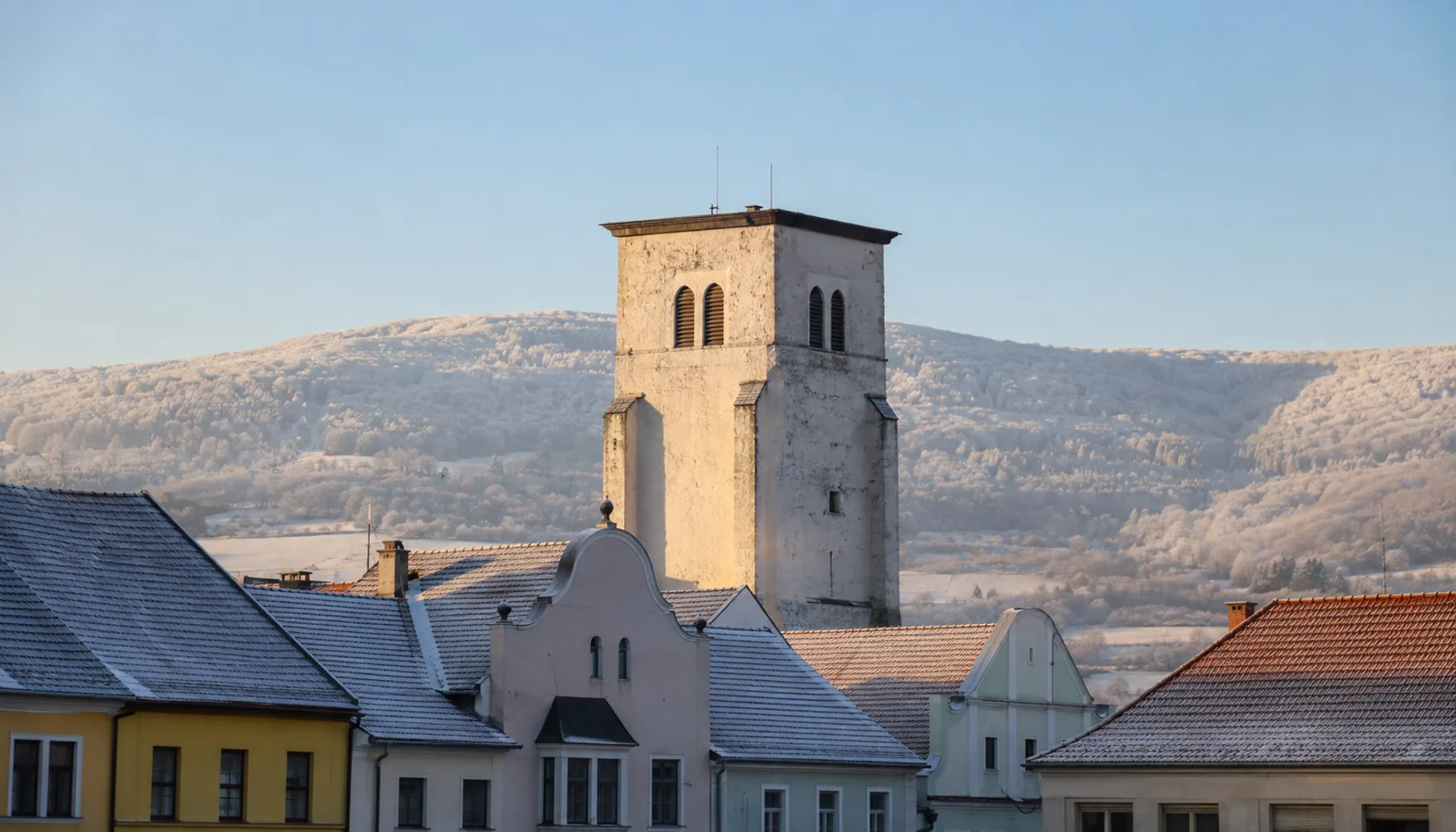
Ilava's town tower, which lost its Baroque roof in the fire of 1894 and was never re-roofed to the old shape, over the frosted roofs of the square.Mestská veža v Ilave, ktorá pri požiari v roku 1894 prišla o barokovú strechu a už ju nedostala späť, nad zamrznutými strechami námestia.

The year in IlavaRok v Ilave

Ilava's year was once built on fairs, and it lost them in a single bad season. In 1432 a Hussite army trying to reach Moravia found the bridges at Trenčín pulled down and forced the ford here; the battle was fought on the fields towards Košeca, still called na rudom, the red field. The town burned, sank from the rank of a city to a mere market town, and its fairs were moved to Dubnica. Sigismund had to order them back in 1435. It is a small story that explains why the larger town on this stretch of river is the one next door.Rok v Ilave kedysi stál na jarmokoch a mesto o ne prišlo počas jedinej zlej sezóny. V roku 1432 husitské vojsko, ktoré sa chcelo dostať na Moravu, našlo trenčianske mosty zborené a prebrodilo Váh práve tu; bitka sa odohrala na poliach smerom ku Košeci, ktoré sa dodnes volajú na rudom, červené pole. Mesto vyhorelo, kleslo z hodnosti mesta na obyčajné mestečko a jeho jarmoky preniesli do Dubnice. Žigmund ich musel v roku 1435 prikázať vrátiť. Je to malý príbeh, ktorý vysvetľuje, prečo je väčším mestom na tomto úseku rieky to susedné.

The nineteenth century gave the town a different kind of calendar — a fire brigade from 1875, savings and credit societies, a choir and an amateur theatre — and Czechoslovakia added the Sokol and Orol gymnastic clubs and films shown in the Sokol hall. That is the shape of what a small district town does with its year, and Ilava still does it. For the current programme check the town's own listings, not a page written once.Devätnáste storočie dalo mestu iný druh kalendára — hasičský zbor od roku 1875, sporiteľné a úverové spolky, spevokol a ochotnícke divadlo — a Československo pridalo Sokol a Orol a filmy premietané v sokolovni. Taký je tvar toho, čo malé okresné mesto robí so svojím rokom, a Ilava to robí dodnes. Aktuálny program hľadajte v mestských zoznamoch podujatí, nie na stránke napísanej raz.

Where culture livesKde žije kultúra

The house of culture built in 1988 is the main hall, and around it Ilava keeps the ordinary provision of a district seat: a library, a school of art for children, clubs and amateur groups working from municipal rooms. We name none of them: programmes and premises change, and a wrong name is worse than none.Hlavnou sálou je dom kultúry postavený v roku 1988 a okolo neho má Ilava obvyklé vybavenie okresného sídla: knižnicu, základnú umeleckú školu, kluby a ochotnícke súbory pôsobiace v mestských priestoroch. Menovite ich neuvádzame, lebo programy aj priestory sa menia a nesprávne meno je horšie než žiadne.

Be clear about the one building a visitor will want to see. The historic core — castle, monastery, everything inside the walls — is a working prison and is not open. What a passer-by gets is the outside: long whitewashed walls with the monastery church tower rising over them in the middle of a small town — an odd and memorable town centre, worth the detour on its own terms. The prison is also one of the town's larger employers, which is an unusual thing to be able to say about a district seat.O jednej budove, ktorú bude chcieť vidieť každý návštevník, treba hovoriť jasne. Historické jadro — hrad, kláštor, všetko za múrmi — je fungujúca väznica a nie je prístupné. Okoloidúci dostane vonkajšok: dlhé obielené múry s vežou kláštorného kostola, ktorá sa nad nimi dvíha uprostred malého mesta. Je to zvláštny a nezabudnuteľný stred mesta a stojí za zachádzku aj sám osebe. Väznica je zároveň jedným z väčších zamestnávateľov v meste, čo je o okresnom sídle nezvyčajné tvrdenie.

The buildings that carry itBudovy, ktoré ju nesú

The castle is first mentioned in 1446 and is not the crag fortress the word suggests: four wings with corner towers and a water moat, standing on flat ground beside the river, put up shortly before that date by a magnate who had seized this part of the Trenčín estate. The stone Gothic church and probably the lowest storey of the town tower belong to the same century. Older writers liked to credit the Knights Templar with it; there is no evidence for that, and 1446 is where the written record begins.Hrad sa prvý raz spomína v roku 1446 a nie je to skalná pevnosť, akú by to slovo napovedalo: štyri krídla s nárožnými vežami a vodnou priekopou na rovine pri rieke, postavené krátko predtým magnátom, ktorý sa zmocnil tejto časti trenčianskeho panstva. Kamenný gotický kostol a pravdepodobne aj najspodnejšie podlažie mestskej veže patria do toho istého storočia. Starší autori ho radi pripisovali templárom; nijaký dôkaz pre to niet a písomný záznam sa začína rokom 1446.

At the end of the seventeenth century the Trinitarians were brought here — an order founded to buy Christians out of captivity — and from 1692 they built a monastery, converting the upper castle into it in 1694. It was their first house in the whole Kingdom of Hungary; they lectured on philosophy and ran a hospital, and between Trenčín and Žilina there were only three monasteries on the entire Váh. Joseph II dissolved them in the 1780s. Barracks came next, then a cloth manufactory, and from 1856 a prison without a break. Everything that has happened in Ilava since is happening inside a building the monks left behind — and for most of the twentieth century, under two regimes, the name of the town carried a second meaning in ordinary Slovak speech.Koncom sedemnásteho storočia sem priviedli trinitárov — rád založený na vykupovanie kresťanov zo zajatia — a od roku 1692 stavali kláštor, na ktorý v roku 1694 prestavali horný hrad. Bol to ich prvý dom v celom Uhorsku; prednášali filozofiu, viedli špitál a medzi Trenčínom a Žilinou boli na celom Považí len tri kláštory. Jozef II. ich v osemdesiatych rokoch 18. storočia zrušil. Nasledovali kasárne, potom súkenná manufaktúra a od roku 1856 väznica bez prerušenia. Všetko, čo sa v Ilave odvtedy deje, sa deje vnútri budovy, ktorú tu nechali mnísi — a väčšinu dvadsiateho storočia, za dvoch režimov, malo meno mesta v bežnej slovenčine druhý význam.

The town tower is worth a look for what fire does to a skyline: in 1894 a fire took its Baroque roof off, and the roof was never rebuilt as it had been, which is why the tower looks blunt today. At Klobušice, now a quarter of Ilava, stands the tomb of Gábor Baross, the Hungarian transport minister who nationalised the railways and cut fares far enough for ordinary people to travel.Mestská veža stojí za pohľad pre to, čo oheň urobí so siluetou: v roku 1894 jej požiar vzal barokovú strechu a tá už nikdy nebola obnovená do pôvodnej podoby, preto veža dnes vyzerá zrezane. V Klobušiciach, dnes mestskej časti Ilavy, stojí hrobka Gábora Barossa, uhorského ministra dopravy, ktorý zoštátnil železnice a znížil cestovné natoľko, že cestovať mohli aj obyčajní ľudia.

The town that turned heavy industry downMesto, ktoré odmietlo ťažký priemysel

In the 1930s, when Czechoslovak arms firms were shopping for sites along the Váh, Ilava's own leaders turned heavy industry down. Dubnica nad Váhom, Považská Bystrica and Púchov took the plants instead, grew, and pulled people in; Ilava did not. The town's published history calls that decision incapacity and indifference and blames it for everything that followed. It is a rare thing for a town to write down in its own history that it made the wrong choice.V tridsiatych rokoch, keď si československé zbrojovky vyberali miesta pozdĺž Váhu, predstavitelia Ilavy ťažký priemysel odmietli. Závody dostali Dubnica nad Váhom, Považská Bystrica a Púchov, rástli a priťahovali ľudí; Ilava nie. Vlastné vydané dejiny mesta nazývajú to rozhodnutie neschopnosťou a ľahostajnosťou a vinia ho zo všetkého, čo nasledovalo. Je zriedkavé, aby si mesto vo vlastných dejinách zapísalo, že sa rozhodlo zle.

The consequences shaped the culture as much as the economy. Ilava got a hospital in 1965, panel blocks and the house of culture, but no large employer; it lost the district office to Považská Bystrica and its secondary schools to Dubnica and Pruské. Between 1990 and 2006 only four blocks of flats were built here. The district came back in 1996 and light industry from 2003, but in a town that never got its factory the choir, the hall and the library carry more of the weight than they would elsewhere.Dôsledky formovali kultúru rovnako ako hospodárstvo. Ilava dostala v roku 1965 nemocnicu, panelové domy a dom kultúry, ale nijakého veľkého zamestnávateľa; okresný úrad stratila v prospech Považskej Bystrice a stredné školy v prospech Dubnice a Pruského. V rokoch 1990 až 2006 tu postavili iba štyri bytové domy. Okres sa vrátil v roku 1996 a ľahký priemysel od roku 2003, no v meste, ktoré nikdy nedostalo svoju fabriku, nesú spevokol, sála a knižnica väčšiu ťarchu než inde.

← Ilava← Ilava

WatchPozrite si

Sixteen videos for Culture in Ilava.Šestnásť videí — Kultúra v Ilave.