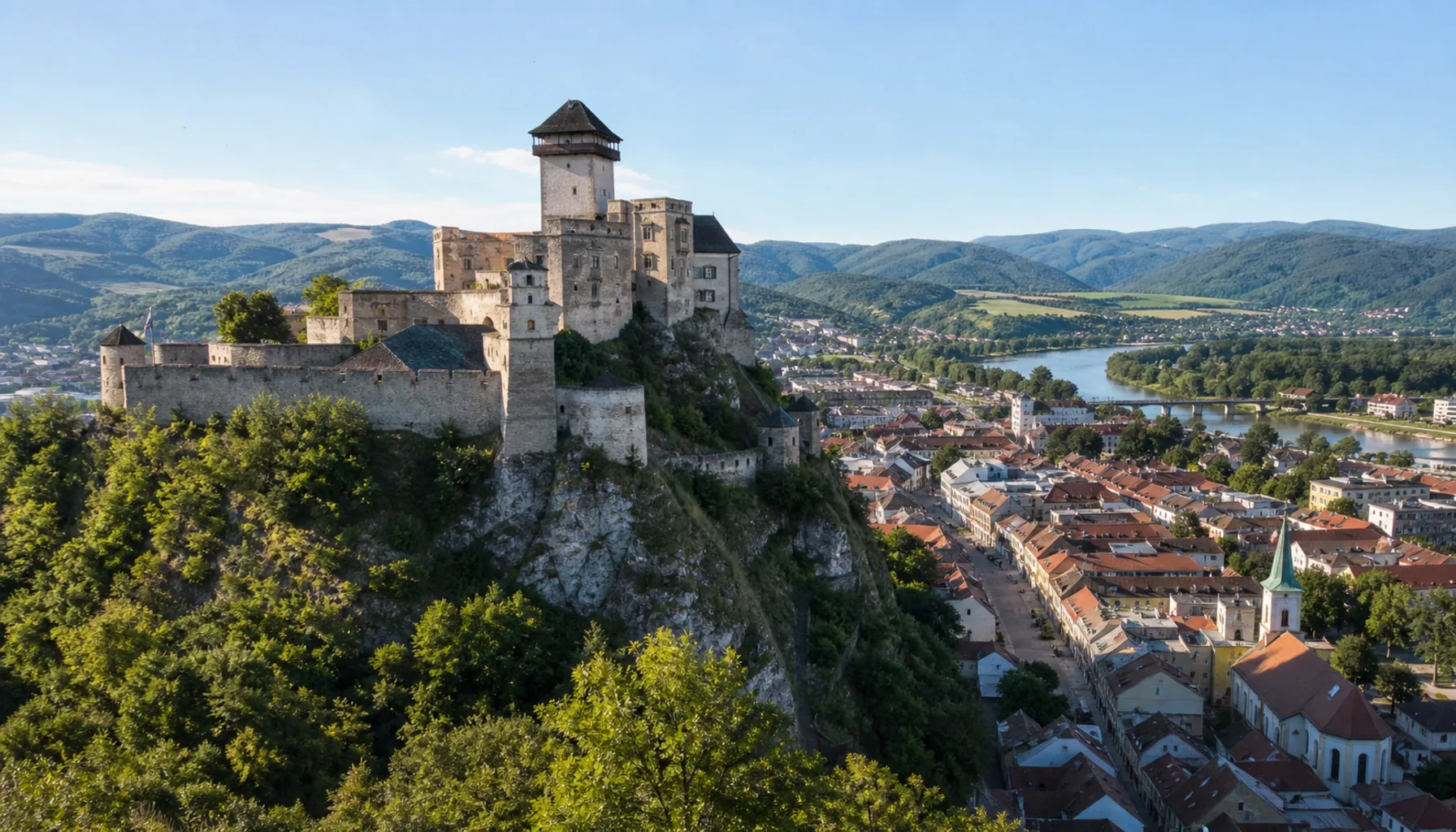
The Gate of the VáhBrána Považia
The rock was in use long before there was a castle on it. Roman troops operating north of the Danube wintered at a place they called Laugaricio, and in the year 179 soldiers of a detachment stationed here had an inscription cut into the cliff to mark a victory over the Germanic tribes. It is the northernmost Roman inscription beyond the empire's Danube frontier, and the oldest naming of a place on Slovak soil to survive in the spot it names.Skala slúžila dávno predtým, než na nej stál hrad. Rímske vojská pôsobiace severne od Dunaja prezimovali na mieste, ktoré nazývali Laugaricio, a v roku 179 dali vojaci tunajšieho oddielu vytesať do brala nápis na pamiatku víťazstva nad germánskymi kmeňmi. Je to najsevernejší rímsky nápis za dunajskou hranicou ríše a najstaršie pomenovanie miesta na slovenskom území, aké sa zachovalo priamo tam, kde bolo vytesané.
The stone castle came later. A fortified seat is recorded on the crag by the eleventh century, and it grew through the Middle Ages into a royal stronghold controlling the road up the Váh — the natural highway between the Danube plain and the mountains. Its most famous master arrived at the turn of the fourteenth century: Matúš Čák Trenčiansky, an oligarch who assembled some seventy castles and ruled most of what is now western and central Slovakia almost as an independent prince. He held out against the king from these walls until his death in 1321, and Slovak memory still calls him the Lord of the Váh and the Tatras.Kamenný hrad prišiel neskôr. Opevnené sídlo je na brale doložené už v jedenástom storočí a počas stredoveku vyrástlo na kráľovskú pevnosť ovládajúcu cestu proti prúdu Váhu — prirodzenú tepnu medzi podunajskou rovinou a horami. Jeho najznámejší pán prišiel na prelome štrnásteho storočia: Matúš Čák Trenčiansky, oligarcha, ktorý zhromaždil asi sedemdesiat hradov a vládol väčšine dnešného západného a stredného Slovenska takmer ako samostatné knieža. Z týchto múrov vzdoroval kráľovi až do svojej smrti v roku 1321 a slovenská pamäť ho dodnes volá pánom Váhu a Tatier.
After him the castle passed through royal hands and then to the great families of the kingdom — the Zápoľský line, later the Ilešházi, who held it into the modern era. Each left a palace: the residential wings that ring the upper courtyard are named for Louis, for Barbara, for Zápoľský. Then came 1790. A fire that broke out in the town below climbed the rock, gutted the roofs and left the whole complex a shell. For a century and a half Trenčín was a romantic ruin; systematic restoration began in the twentieth century and has been running, wing by wing, ever since.Po ňom prešiel hrad cez kráľovské ruky k veľkým rodom kráľovstva — k Zápoľskovcom a neskôr k Ilešháziovcom, ktorí ho držali až do novoveku. Každý po sebe zanechal palác: obytné krídla lemujúce horné nádvorie nesú mená po Ľudovítovi, po Barbore a po Zápoľskovcoch. Potom prišiel rok 1790. Požiar, ktorý vypukol v meste pod hradom, vyšplhal sa po skale, pohltil strechy a z celého komplexu zostal len obal. Poldruha storočia bol Trenčín romantickou zrúcaninou; systematická obnova sa začala v dvadsiatom storočí a krídlo po krídle pokračuje dodnes.