A Watch on the Váh RoadStráž nad cestou popri Váhu
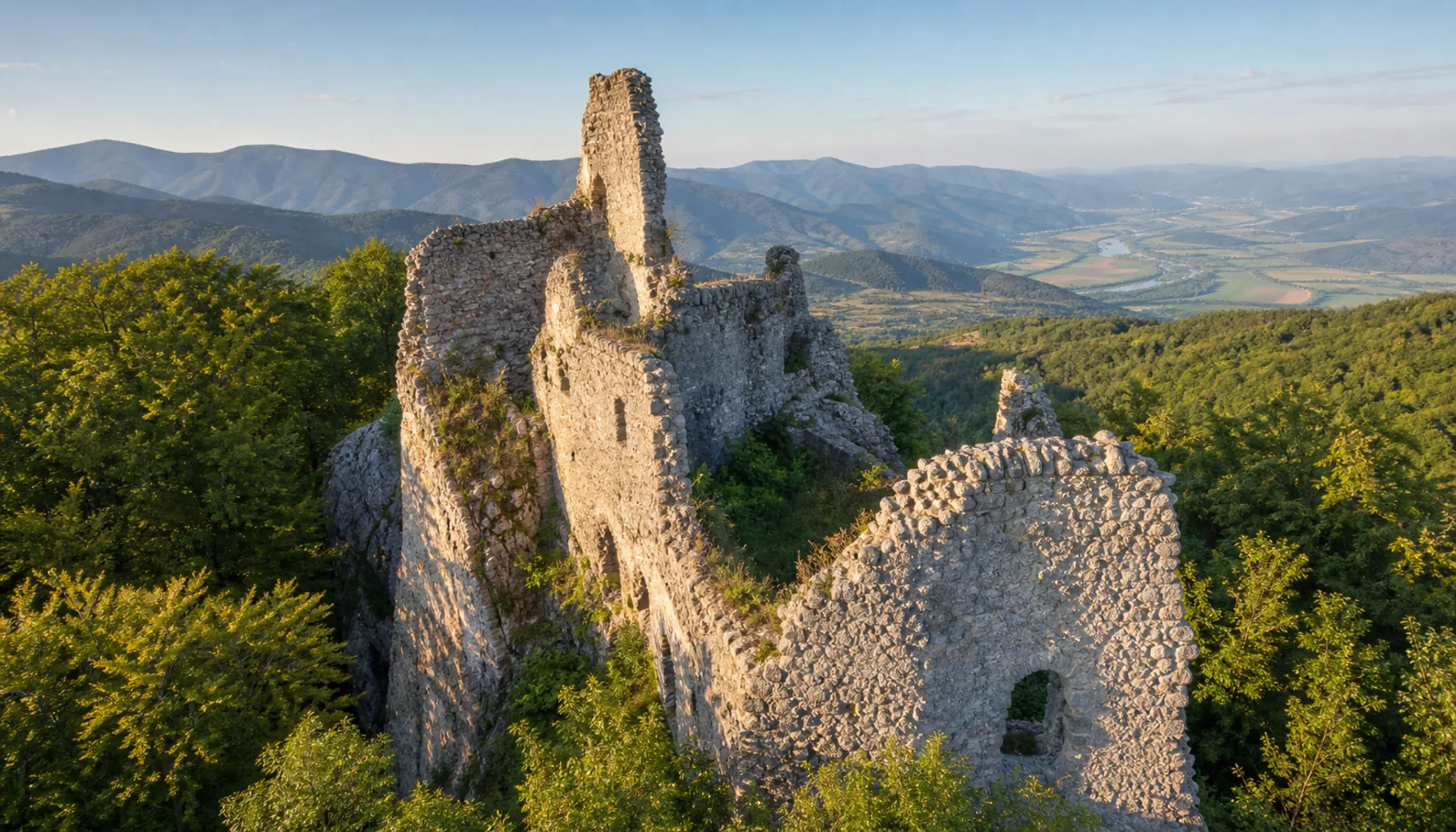
Tematín stands on a wooded ridge of the Považský Inovec, on the eastern side of the Váh valley, high above the villages of Lúka, Hrádok and Modrová in the Nové Mesto nad Váhom district of the Trenčín region. It was founded in the thirteenth century, in the wave of stone castles raised across the kingdom after the Mongol invasion of 1241 — by a generation that had learned, expensively, what wooden fortifications were worth. Its job was the road: the route up the Váh, which every army and every merchant heading north had to follow.Tematín stojí na zalesnenom hrebeni Považského Inovca, na východnej strane údolia Váhu, vysoko nad obcami Lúka, Hrádok a Modrová v okrese Nové Mesto nad Váhom v Trenčianskom kraji. Vznikol v trinástom storočí, vo vlne kamenných hradov, ktoré v kráľovstve vyrástli po mongolskom vpáde v roku 1241 — zásluhou generácie, ktorá si draho overila, akú cenu majú drevené opevnenia. Jeho úlohou bola cesta: trasa popri Váhu, ktorou musela prejsť každá armáda i každý kupec smerujúci na sever.
In the early fourteenth century it was among the strongholds that fell under the sway of Matúš Čák of Trenčín, the oligarch who for a time ran the north-west of the kingdom as though it were his own country. After him the castle passed through a succession of magnate families, as such places did — inherited, divided, mortgaged and exchanged. From the seventeenth century it is associated with the Bercsényi family, and above all with Mikuláš Bercsényi, one of the chief commanders of the Rákóczi uprising.Začiatkom štrnásteho storočia patril medzi pevnosti, ktoré sa dostali pod moc Matúša Čáka Trenčianskeho, oligarchu, čo istý čas spravoval severozápad kráľovstva ako vlastnú krajinu. Po ňom prešiel hrad radom magnátskych rodov, ako to na takýchto miestach býva — dedil sa, delil, zálohoval a vymieňal. Od sedemnásteho storočia sa spája s rodom Berčéniovcov a predovšetkým s Mikulášom Berčénim, jedným z hlavných veliteľov Rákócziho povstania.
Imperial troops burnt the castle out around 1710, in the closing years of that uprising, and it was never rebuilt. For two centuries afterwards Tematín was a textbook romantic ruin — roofless, root-bound, quietly disappearing under beech and scrub. Since the 2000s a volunteer civic association has run summer work camps here, clearing rubble and consolidating the wall crowns, and the castle has become one of the better-known volunteer restoration sites in western Slovakia.Okolo roku 1710, v posledných rokoch tohto povstania, hrad vypálili cisárske vojská a už nikdy nebol obnovený. Nasledujúce dve storočia bol Tematín učebnicovou romantickou zrúcaninou — bez striech, prerastený koreňmi, potichu miznúci pod bukmi a krovím. Od začiatku dvadsiateho prvého storočia tu dobrovoľnícke občianske združenie organizuje letné pracovné tábory, odpratáva sutinu a spevňuje koruny múrov — a hrad sa stal jedným zo známejších miest dobrovoľníckej obnovy na západnom Slovensku.