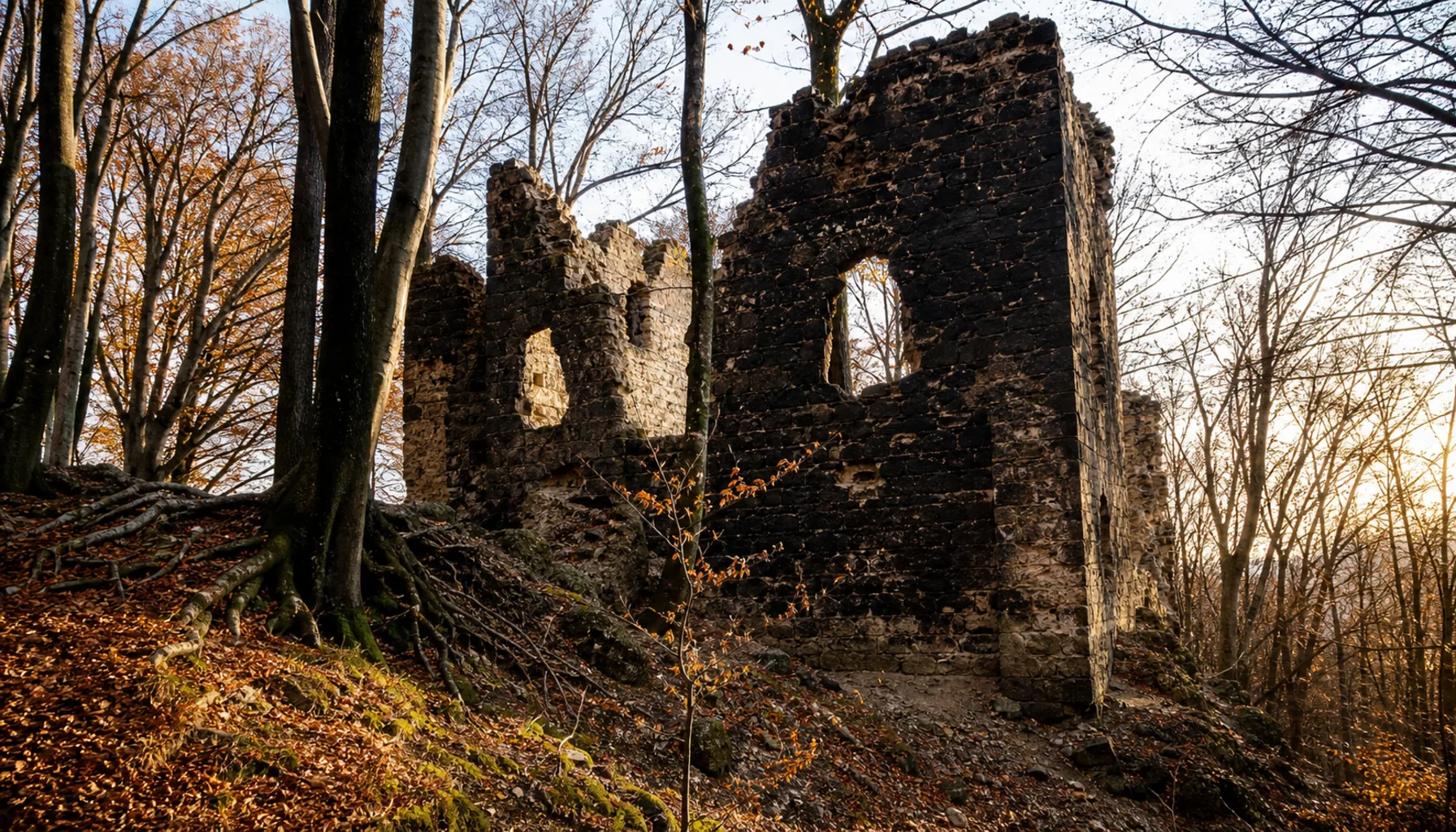
The Burning of TematínVypálenie Tematína
This is not folklore. As the histories tell it, Tematín ended in the last act of a real war. By the seventeenth century the castle was in the hands of the Bercsényi family, and Mikuláš Bercsényi — Miklós, in the form the documents use — became one of the chief commanders of the Rákóczi uprising, the great anti-Habsburg revolt of the early eighteenth century. A castle on a ridge above the Váh road was, once again, worth taking.Toto nie je povesť. Ako to podávajú dejiny, Tematín skončil v poslednom dejstve skutočnej vojny. V sedemnástom storočí bol hrad v rukách rodu Berčéniovcov a Mikuláš Berčéni — v podobe, ktorú používajú listiny, Miklós — sa stal jedným z hlavných veliteľov Rákócziho povstania, veľkého protihabsburského povstania zo začiatku osemnásteho storočia. Hrad na hrebeni nad cestou popri Váhu opäť raz stál za dobytie.
When the rising began to fail, imperial columns worked their way up the valley and the castles of its commanders were dealt with one after another. Around 1710 Tematín was burnt out. The record is thinner than the story deserves — how long the place held, who was inside it, what was carried off — but the outcome is not in doubt. The castle was never repaired, never reoccupied, and never had a roof over it again.Keď povstanie začalo upadať, cisárske kolóny postupovali hore údolím a s hradmi jeho veliteľov sa vysporiadali jeden po druhom. Okolo roku 1710 Tematín vyhorel. Záznamy sú chudobnejšie, než by si ten príbeh zaslúžil — ako dlho sa hrad držal, kto bol vnútri, čo z neho odviezli — no výsledok pochybnosti nevzbudzuje. Hrad už nikdy neopravili, nikdy sa doň nikto nenasťahoval a nikdy viac nemal nad sebou strechu.
The fire took a day. The forest took two hundred years. Getting it back has taken volunteers, one summer at a time.Oheň si vzal jeden deň. Les si vzal dvesto rokov. Získať ho späť trvá dobrovoľníkom leto za letom.
What followed was the ordinary fate of an abandoned hill castle. The beech wood came up the slopes and over the walls, the vaults fell in, and for two centuries Tematín was a shape among the trees that people in the valley could point to. Then, in our own century, the volunteers came back for it — clearing, sorting, mixing mortar, putting the wall tops back, one summer at a time. It is a far slower kind of history than the burning, and it is the reason the burning is not the end of the story.Nasledoval obyčajný osud opusteného hradu na kopci. Bukový les vystúpil po svahoch a prerástol múry, klenby sa prepadli a dve storočia bol Tematín len tvarom medzi stromami, na ktorý vedeli ľudia v údolí ukázať. Až v našom storočí sa preň dobrovoľníci vrátili — odpratávali, triedili, miešali maltu a vracali koruny múrov na miesto, leto za letom. Je to oveľa pomalší druh dejín než vypálenie — a práve preto vypálenie nie je koncom príbehu.