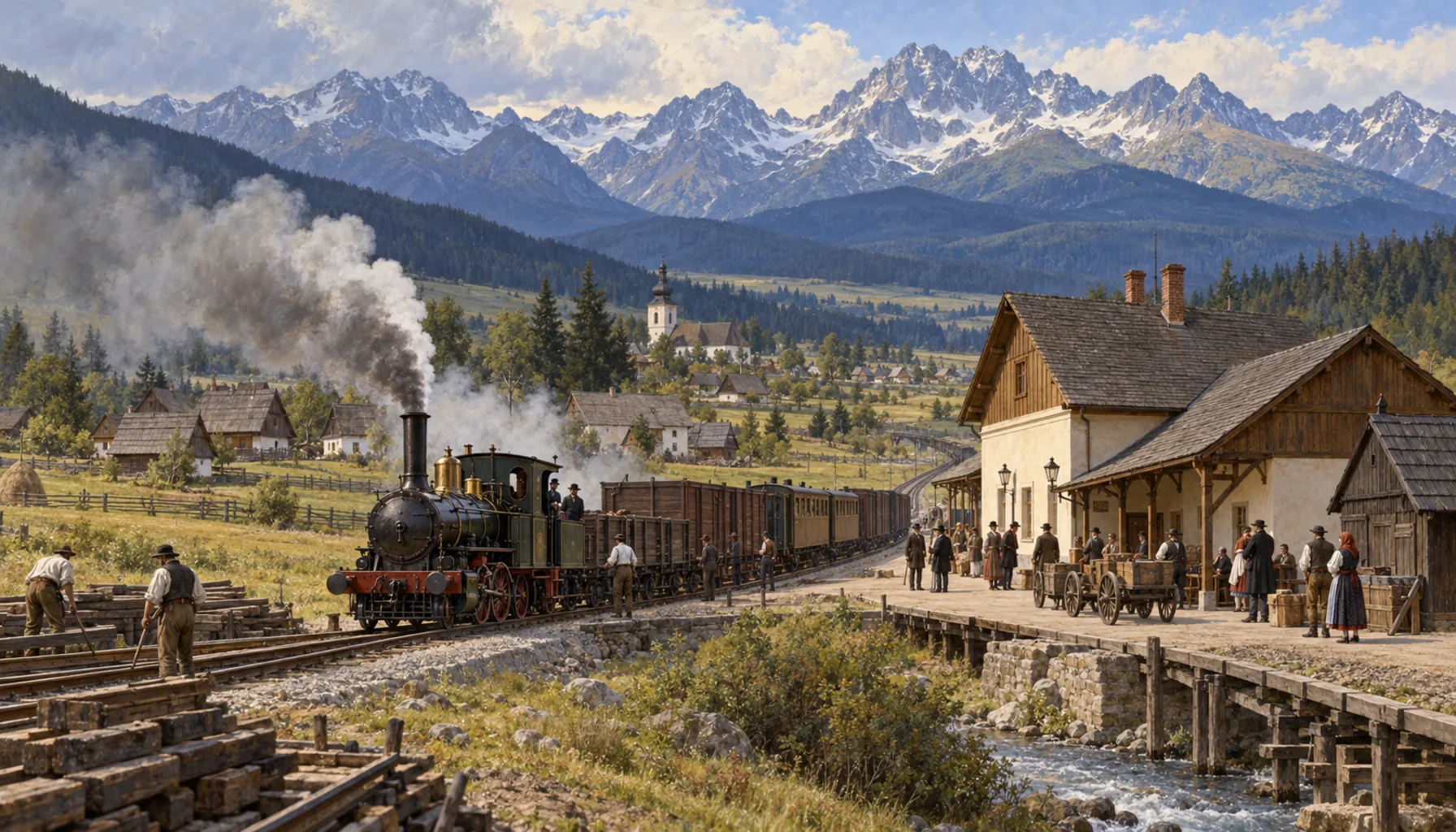
The Košice–Bohumín railway was driven up this valley and over the Štrba saddle in 1871, and Važec got a station of its own. The village's economy turned over inside a decade. Timber that had gone down the Váh on rafts now went out by wagon, and rafting faded within a generation; railway work became a normal trade for a Važec man, as it still is. The same line brought the first outsiders who came to look at the village rather than to buy something from it — and what they came to look at was a whole settlement built of wood, laid out along one street, with two great mountain ranges facing each other over it.Roku 1871 prerazila dolinou a cez štrbské sedlo Košicko-bohumínska železnica a Važec dostal vlastnú stanicu. Hospodárstvo obce sa za desaťročie obrátilo naruby. Drevo, ktoré predtým išlo po Váhu na pltiach, sa teraz vozilo vagónmi a pltníctvo do jednej generácie zaniklo; práca na železnici sa stala pre Važčana bežným remeslom a je ňou dodnes. Tá istá trať priviezla aj prvých cudzích, ktorí sa neprišli nič kúpiť, ale pozerať — a pozerať prišli na celú dedinu z dreva, postavenú pozdĺž jednej ulice, s dvoma veľkými pohoriami oproti sebe nad ňou.