Vranov nad Topľou · Where the Topľa leaves the hillsVranov nad Topľou · Kde Topľa opúšťa vrchy

Culture in Vranov nad TopľouKultúra vo Vranove nad Topľou

A Pauline pilgrimage church with a painted vault at the middle of a market town that multiplied its size around a pulp mill in a single generation.Pavlínsky pútnický kostol s maľovanou klenbou uprostred trhového mesta, ktoré sa v priebehu jednej generácie okolo celulózky niekoľkonásobne zväčšilo.

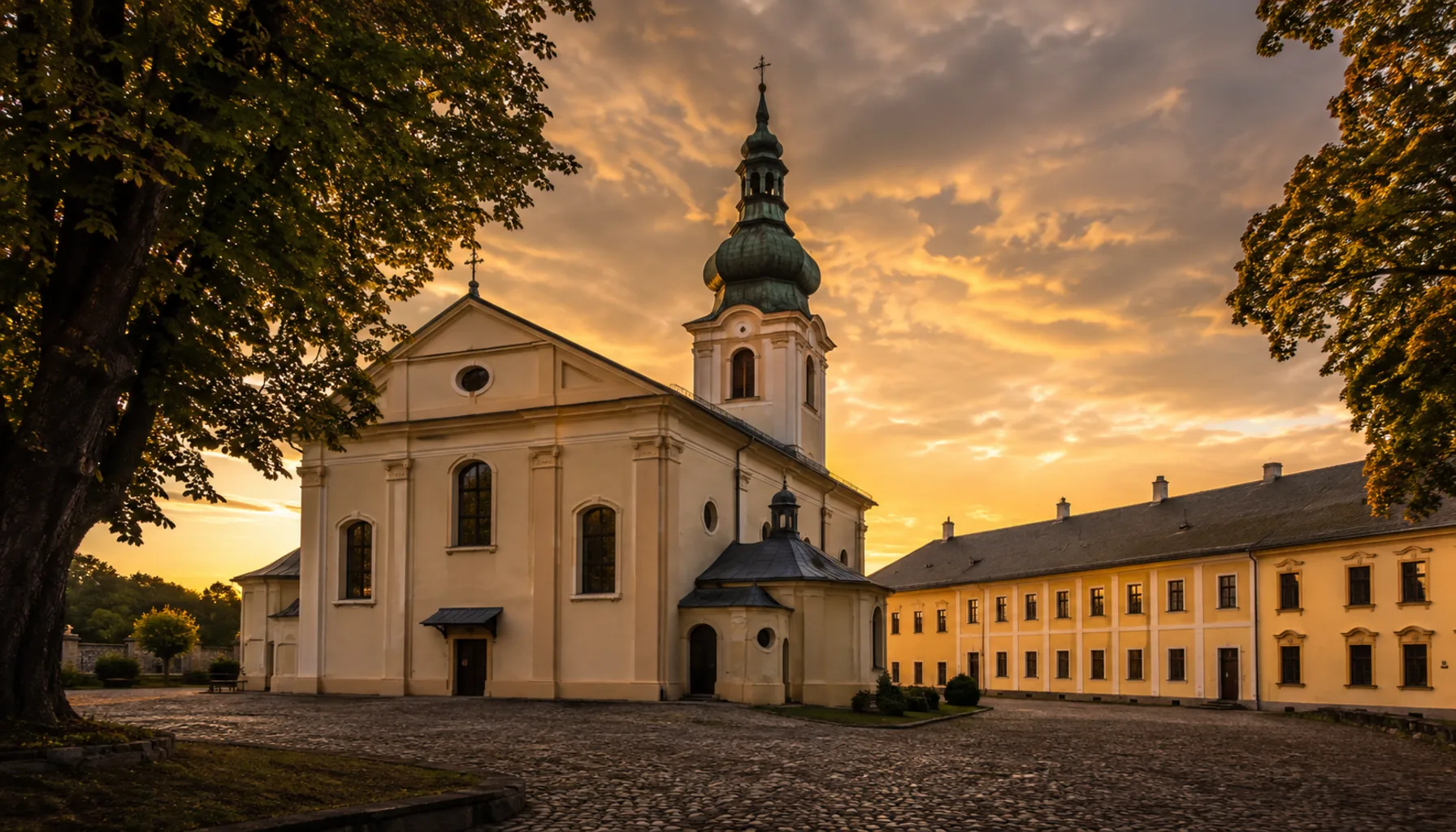
The Pauline pilgrimage church at the centre of Vranov nad Topľou, with the Rosary chapel and the monastery ranges beside it.Pavlínsky pútnický kostol v strede Vranova nad Topľou s Ružencovou kaplnkou a kláštornými krídlami.

The year in Vranov nad TopľouRok vo Vranove nad Topľou

Vranov was a market town of craftsmen with five annual fairs and a market every Monday, and the market is still its function: it is where a wide district of villages spread over the low hills does its business. The calendar around that is a district seat's - market days, a summer town celebration, school and club events at the cultural centre - and the town's own listings are the place to check the dates, which move from year to year.Vranov bol remeselníckym trhovým mestom s piatimi výročnými jarmokmi a s trhom každý pondelok a trh je jeho funkciou dodnes: sem chodí vybavovať svoje veci široký okres dedín roztrúsených po nízkych kopcoch. Kalendár okolo toho je kalendárom okresného sídla - trhové dni, letné mestské slávnosti, školské a záujmové podujatia v kultúrnom dome - a termíny, ktoré sa rok čo rok posúvajú, si treba overiť v mestských oznamoch.

Two fixed points stand out. The Pauline church at the centre is a Marian pilgrimage place, and has been since the Baroque Rosary chapel was built beside it, so the pilgrimage draws people into the town from the whole district. And from July the district's summer moves twenty kilometres north to the Domaša reservoir, whose recreation settlements fill for two months and empty again in September - a swing severe enough to shape the working year of a good many families here.Vyčnievajú dva pevné body. Pavlínsky kostol v centre je mariánskym pútnickým miestom, a je ním odvtedy, čo vedľa neho postavili barokovú Ružencovú kaplnku, takže púť privádza do mesta ľudí z celého okresu. A od júla sa leto okresu sťahuje dvadsať kilometrov na sever k Domaši, ktorej rekreačné osady sa na dva mesiace zaplnia a v septembri opäť vyprázdnia - výkyv dosť prudký na to, aby utváral pracovný rok mnohých rodín.

Where culture livesKde žije kultúra

The town keeps the institutions of a district seat: a cultural centre with a hall and a programme, a library, a school of art for children, and the choirs, amateur theatre and folk groups that go with them. We name none of them individually, because programmes and premises change faster than a page like this does. The church and monastery at the centre are, as they have been for three hundred years, where anything ceremonial in Vranov happens.Mesto si drží inštitúcie okresného sídla: kultúrny dom so sálou a programom, knižnicu, základnú umeleckú školu a k tomu zbory, ochotnícke divadlo a folklórne skupiny. Nemenujeme ich jednotlivo, lebo programy a priestory sa menia rýchlejšie než takáto stránka. Kostol a kláštor v centre sú, ako už tristo rokov, miestom, kde sa vo Vranove odohráva všetko slávnostné.

For collections, the obvious stop is up the valley. Hanušovce nad Topľou, on the road and the railway towards Prešov, has a Baroque manor house with a regional museum in it, and it is the natural half-day out of Vranov. The villages of the district, thinly spread over the hills, keep a good deal of timber building and more than one wooden church - worth the detour, and worth asking about locally, since a village church is often opened by a keyholder rather than standing open.Za zbierkami sa treba vybrať hore dolinou. Hanušovce nad Topľou, na ceste a železnici smerom na Prešov, majú barokový kaštieľ a v ňom vlastivedné múzeum a sú prirodzeným poldenným výletom z Vranova. Dediny okresu, riedko rozsypané po kopcoch, si zachovali dosť drevených stavieb a nejeden drevený kostolík - stojí za zachádzku a za to, spýtať sa na mieste, lebo dedinský chrám často otvára kostolník a nebýva trvale prístupný.

The buildings that carry itBudovy, ktoré ju nesú

The one genuinely old ensemble in the centre is the Pauline church of the Nativity of the Virgin Mary, with its monastery and the Rosary chapel beside it. Its core is older still - the Franciscans had a friary here before 1472 - and the Paulines, the only monastic order ever founded in Hungary, were invited in 1672. Fire took the town, the church and the monastery together in 1718; the rebuilding ran from 1735 to 1745, and in 1754 Countess Zsuzsanna Szirmay brought in Johann Lucas Kracker, one of the best fresco painters then working in central Europe, to paint the interior. In 2008 the church was given the title of minor basilica.Jediným naozaj starým súborom v centre je pavlínsky kostol Narodenia Panny Márie s kláštorom a Ružencovou kaplnkou vedľa neho. Jeho jadro je ešte staršie - františkáni tu mali kláštor už pred rokom 1472 - a pavlínov, jediný mníšsky rád založený v Uhorsku, sem pozvali v roku 1672. V roku 1718 vzal oheň mesto, kostol aj kláštor naraz; prestavba trvala od roku 1735 do roku 1745 a v roku 1754 povolala grófka Zuzana Szirmayová Johanna Lucasa Krackera, jedného z najlepších vtedajších stredoeurópskych freskárov, aby vymaľoval interiér. V roku 2008 dostal kostol titul menšej baziliky.

Vranov never had walls or a castle of its own; the fortresses that controlled the district stood on the hills around it. The nearest, Čičva, was built between 1309 and 1316 to guard the pass the charters call the Polish Gate, and it is worth knowing how it ended, because the district will tell you the Turks did it. They did not: imperial troops demolished it in 1711, after the last of the anti-Habsburg uprisings, and volunteers have been consolidating what is left of it since 2014.Vranov nikdy nemal hradby ani vlastný hrad; pevnosti, ktoré okres ovládali, stáli na kopcoch okolo neho. Najbližšia, Čičva, vznikla v rokoch 1309 až 1316, aby strážila priesmyk, ktorý listiny volajú Poľskou bránou, a oplatí sa vedieť, ako skončila, lebo v okrese vám povedia, že ju zničili Turci. Nezničili: cisárske vojsko ju dalo zbúrať v roku 1711, po poslednom z protihabsburských povstaní, a dobrovoľníci to, čo z nej zostalo, konzervujú od roku 2014.

Two churches, two confessionsDva kostoly, dve konfesie

For a century this small market town had two churches, two languages and two confessions, which was ordinary in upper Hungary and is invisible today. In 1570 István Báthory, the kingdom's chief justice, founded a Lutheran grammar school here, and in 1580 his wife Fruzsina Drugeth had a church built for the town's Protestants; by 1671 the older church at the lower end of the town was known simply as the Slovak church.Toto malé trhové mesto malo celé storočie dva kostoly, dva jazyky a dve konfesie, čo bolo v Hornom Uhorsku obyčajné a dnes to nevidno. V roku 1570 tu krajinský sudca Štefan Báthory založil luteránske gymnázium a v roku 1580 dala jeho manželka Fruzsina Drugethová postaviť kostol pre mestských protestantov; v roku 1671 sa staršiemu kostolu na dolnom konci mesta hovorilo jednoducho slovenský kostol.

What happened next is why only one ensemble survives. In 1672 kuruc troops pulled the Slovak church down and the patron handed the surviving church to the Catholics; Countess Mária Esterházy invited the Paulines in the same year. Their monastery was plundered in 1676, Imre Thököly expelled them altogether in 1682 and gave their church to the Protestants, and only in 1686 did Count Ferenc Barkóczy bring them back. The building that now holds the middle of Vranov is the outcome of that fifteen-year argument.To, čo nasledovalo, je dôvodom, prečo sa zachoval len jeden súbor. V roku 1672 kuruci slovenský kostol zbúrali a patrón odovzdal ten zvyšný katolíkom; v tom istom roku pozvala grófka Mária Esterházyová pavlínov. Ich kláštor v roku 1676 vyplienili, Imrich Thököly ich v roku 1682 celkom vyhnal a ich kostol dal protestantom a až v roku 1686 ich gróf František Barkóczy priviedol späť. Stavba, ktorá dnes drží stred Vranova, je výsledkom tohto pätnásťročného sporu.

← Vranov nad Topľou← Vranov nad Topľou

WatchPozrite si

Sixteen videos for Culture in Vranov nad Topľou.Šestnásť videí — Kultúra vo Vranove nad Topľou.