Stropkov · The upper OndavaStropkov · Horná Ondava
Culture in StropkovKultúra v Stropkove
A Gothic parish church, the surviving wing of a Renaissance manor beside it, a monastery on the skyline - and almost everything else built after the front passed in 1944.Gotický farský kostol, zachované krídlo renesančného kaštieľa vedľa neho, kláštor na obzore - a takmer všetko ostatné postavené až po prechode frontu v roku 1944.
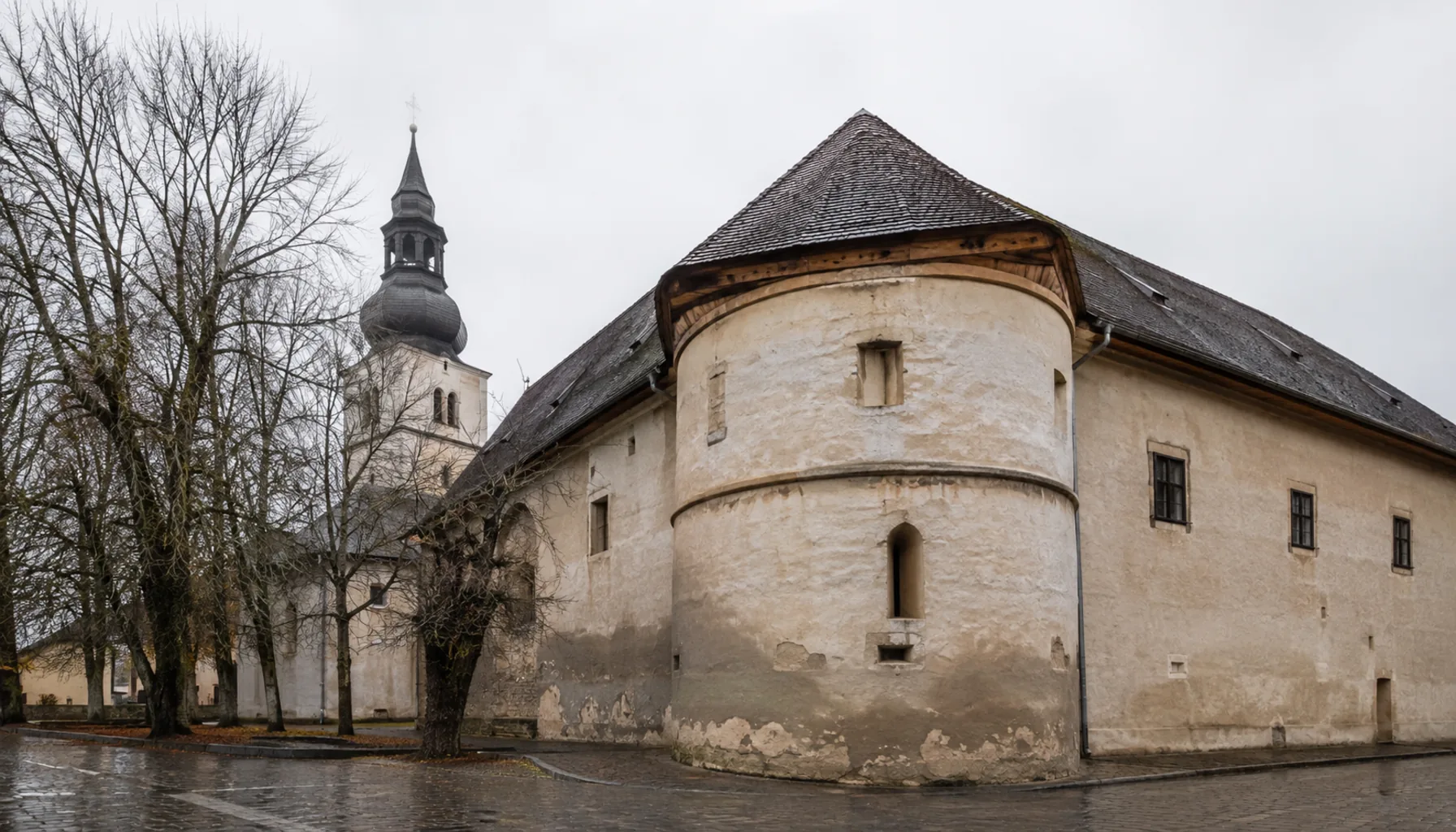
The surviving wing of Stropkov's Renaissance fortified manor, standing beside the Gothic parish church at the centre of the town.Zachované krídlo stropkovského renesančného opevneného kaštieľa vedľa gotického farského kostola v strede mesta.
The year in StropkovRok v Stropkove
Stropkov lived on its market and its three annual fairs for centuries, and for this district a country town with a manor, a monastery and three fairs counted as a capital. The market is still the town's function: it is where the villages of the upper Ondava do their business, go to school and see a doctor. The calendar around it is a district seat's - market days, a summer town celebration, school and club events at the cultural centre - and the town's own listings are where to check it.Stropkov stáročia žil z trhu a z troch výročných jarmokov a v tomto okrese platilo vidiecke mesto s kaštieľom, kláštorom a tromi jarmokmi za hlavné mesto. Trh je funkciou mesta dodnes: sem chodia dediny hornej Ondavy vybaviť si veci, do školy a k lekárovi. Kalendár okolo toho je kalendárom okresného sídla - trhové dni, letné mestské slávnosti, školské a záujmové podujatia v kultúrnom dome - a overiť si ho treba v mestských oznamoch.
The fixed points most people here actually keep are the church ones. The villages of the district are largely Greek Catholic, with Orthodox parishes among them and Roman Catholics in the town, so the year carries the feasts of more than one rite and the patronal feast of a village church is still the day its people come home for. In summer the district's leisure moves south to the Domaša reservoir, which fills in July and empties again in September.Pevné body, ktoré tu ľudia naozaj držia, sú cirkevné. Dediny okresu sú prevažne gréckokatolícke, medzi nimi sú pravoslávne farnosti a v meste rímskokatolíci, takže rok nesie sviatky viac než jedného obradu a odpust dedinského chrámu je stále dňom, na ktorý sa jeho ľudia vracajú domov. V lete sa oddych okresu presúva na juh k vodnej nádrži Domaša, ktorá sa v júli zaplní a v septembri vyprázdni.
Where culture livesKde žije kultúra
The town keeps what a district seat of this size keeps: a cultural centre with a hall and a programme, a library, a school of art for children, amateur theatre, choirs and folk groups. We name none of them individually, because programmes and premises change faster than a page like this does. The parish church and the monastery, standing at the centre together, are the two buildings where anything ceremonial in Stropkov has always happened.Mesto si drží to, čo si okresné sídlo tejto veľkosti drží: kultúrny dom so sálou a programom, knižnicu, základnú umeleckú školu, ochotnícke divadlo, zbory a folklórne skupiny. Nemenujeme ich jednotlivo, lebo programy a priestory sa menia rýchlejšie než takáto stránka. Farský kostol a kláštor, ktoré stoja v centre vedľa seba, sú dve budovy, kde sa v Stropkove odjakživa odohráva všetko slávnostné.
For collections, the district looks north. The museums that hold this region's material - the ethnographic collections of the Rusyn villages, and the museum of the 1944 fighting - are twenty kilometres away at Svidník, and the wooden churches are scattered through the villages on both sides of the road between the two towns. Stropkov is the practical base for that country rather than the destination in it, and there is little point pretending otherwise.Za zbierkami sa okres pozerá na sever. Múzeá, ktoré držia materiál tohto kraja - národopisné zbierky rusínskych dedín a múzeum bojov roku 1944 - sú dvadsať kilometrov ďaleko vo Svidníku a drevené kostoly sú roztrúsené po dedinách na oboch stranách cesty medzi oboma mestami. Stropkov je praktickou základňou pre tento kraj, nie jeho cieľom, a nemá zmysel tvrdiť opak.
The buildings that carry itBudovy, ktoré ju nesú
The Gothic parish church of the Body and Blood of Christ was begun in the late fourteenth or the fifteenth century, damaged in 1593 and given its tower in the repairs; it was restored between 2000 and 2002 and its facades in 2023. It is the oldest thing in Stropkov and it is still in use. Beside it stands a wing of the Renaissance fortified manor the Pethő family built after 1568 - corner bastions and a water moat, of which the one wing survives, which is more than a town of this size usually has to show.Gotický farský kostol Božieho tela a krvi začali stavať koncom 14. alebo v 15. storočí, v roku 1593 bol poškodený a pri opravách dostal vežu; obnovili ho v rokoch 2000 až 2002 a jeho fasády v roku 2023. Je najstaršou stavbou v Stropkove a stále slúži. Vedľa neho stojí krídlo renesančného opevneného kaštieľa, ktorý dali Pethőovci postaviť po roku 1568 - s nárožnými baštami a vodnou priekopou, z čoho sa zachovalo práve to jedno krídlo, a to je viac, než mesto tejto veľkosti obyčajne má.
The other building on the skyline is the monastery. Štefan Pethő invited Franciscan friars from Krosno in Poland in 1609, the house was formally founded in 1616, and its baroque buildings and the church of the Most Holy Trinity went up between 1673 and 1675; the Redemptorists took the house over in 1921. Almost everything else in the centre is post-war: the fighting in the hills above the town went on for months in the autumn of 1944 and Stropkov was badly damaged.Druhou stavbou na obzore je kláštor. Štefan Pethő povolal v roku 1609 františkánov z poľského Krosna, kláštor bol formálne založený v roku 1616 a jeho barokové budovy s kostolom Najsvätejšej Trojice vyrástli v rokoch 1673 až 1675; v roku 1921 ho prevzali redemptoristi. Takmer všetko ostatné v centre je povojnové: boje v kopcoch nad mestom trvali na jeseň 1944 celé mesiace a Stropkov bol ťažko poškodený.
The wooden churches around itDrevené kostoly v okolí
The real heritage of this district is not in the town. It is in the log-built churches of the villages - Greek Catholic and Orthodox, three-part, shingled, with a tower over the porch and a painted icon screen inside - and several of the finest in Slovakia stand within half an hour of Stropkov. They were built by carpenters rather than architects, and they are the clearest thing this landscape has to say about the people who settled it.Skutočné dedičstvo tohto okresu nie je v meste. Je v zrubových kostoloch dedín - gréckokatolíckych a pravoslávnych, trojdielnych, šindľových, s vežou nad predsieňou a s maľovaným ikonostasom vnútri - a viacero z tých najkrajších na Slovensku stojí do polhodiny od Stropkova. Stavali ich tesári, nie architekti, a hovoria o ľuďoch, ktorí tento kraj osídlili, jasnejšie než čokoľvek iné.
Two practical points. Many are locked and opened by a keyholder in the village rather than standing open, so ask locally before driving up a side valley. And the question of which church belongs to which congregation is not always settled: in 1950 the state dissolved the Greek Catholic Church and gave its buildings to the Orthodox Church, and although the Church was allowed to exist again in 1968, the argument over ownership outlasted communism in more than one village here.Dve praktické poznámky. Mnohé sú zamknuté a otvára ich kostolník v dedine, nie sú trvale prístupné, preto sa pred cestou do bočnej doliny spýtajte na mieste. A otázka, ktorý chrám patrí ktorej cirkvi, nie je vždy uzavretá: v roku 1950 štát zrušil gréckokatolícku cirkev a jej budovy odovzdal pravoslávnej cirkvi, a hoci cirkev smela od roku 1968 znova existovať, spor o vlastníctvo tu v nejednej dedine prežil aj komunizmus.