Stará Ľubovňa · Northern SpišStará Ľubovňa · Severný Spiš
Culture in Stará ĽubovňaKultúra v Starej Ľubovni
A castle museum on the rock, an open-air village at its foot, and three and a half centuries of Polish administration still legible in the surnames and the churches.Hradné múzeum na skale, skanzen pod ním a tri a pol storočia poľskej správy, ktoré sú dodnes čitateľné v priezviskách a v kostoloch.
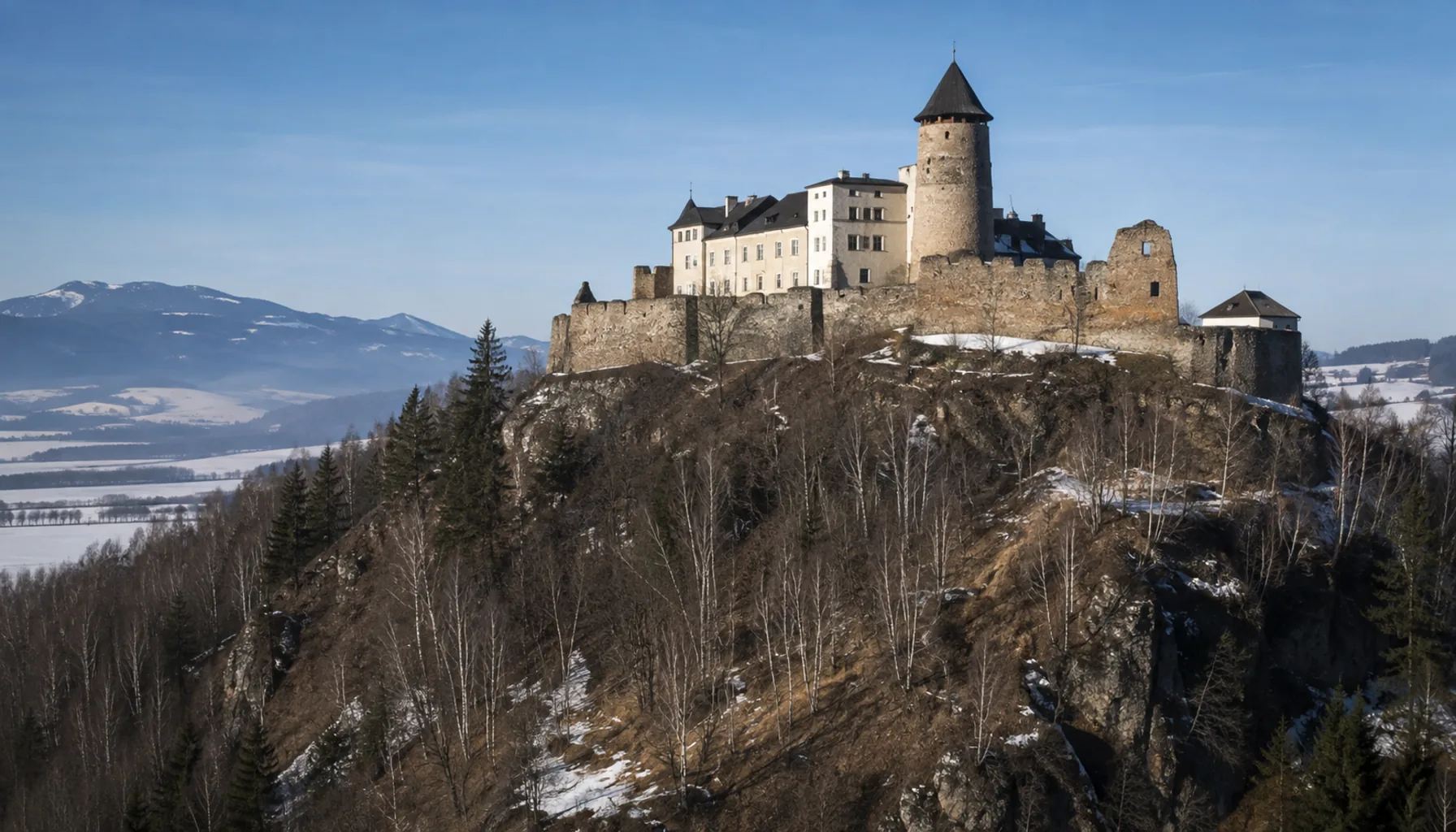
Ľubovňa Castle above the town, seat of the Polish starostas who administered sixteen Spiš towns until 1772.Ľubovniansky hrad nad mestom — sídlo poľských starostov, ktorí do roku 1772 spravovali šestnásť spišských miest.
The year in Stará ĽubovňaRok v Starej Ľubovni
The town's year is the castle's year. The hill above it is the district's biggest single draw, its season runs from spring to autumn with a programme in the courtyards and in the open-air museum below, and that is when the guides, the caterers and the shops have work; the town is noticeably quieter outside it. For anything with a date on it, use the museum's and the town's own listings - the programme is rebuilt every year and a page like this would be wrong within months.Rok mesta je rokom hradu. Kopec nad ním je najväčším lákadlom okresu, jeho sezóna trvá od jari do jesene, s programom na nádvoriach a v skanzene pod hradom, a vtedy majú prácu sprievodcovia, kuchyne aj obchody; mimo sezóny je v meste citeľne tichšie. Pri čomkoľvek s dátumom sa riaďte oznamami múzea a mesta - program sa každý rok skladá nanovo a takáto stránka by bola o pár mesiacov nepravdivá.
The rest of the calendar is the ordinary one of a district town on a border: market days, a summer celebration, school and club events at the cultural centre, and the feast days of both rites, since the villages up these valleys are largely Greek Catholic. Traffic across the frontier is part of the year too, and was long before it was easy - Poles come over for the castle and the shops, Slovaks go the other way for the markets, and since December 2007 nobody stops at the line.Zvyšok kalendára je obyčajný kalendár okresného mesta na hranici: trhové dni, letné slávnosti, školské a záujmové podujatia v kultúrnom dome a sviatky oboch obradov, keďže dediny v týchto dolinách sú prevažne gréckokatolícke. Súčasťou roka je aj pohyb cez hranicu, a bol ním dávno predtým, než sa stal ľahkým - Poliaci chodia na hrad a do obchodov, Slováci opačným smerom na trhy, a od decembra 2007 na čiare nikto nezastavuje.
Where culture livesKde žije kultúra
Two institutions matter more than the rest, and they are really one. The castle is restored and open as a museum - the Gothic tower, the Renaissance palace and the Baroque chapel can be walked through - and at the foot of the hill stands the open-air museum: farmsteads, a smithy, a school and a mill brought in from the Rusyn and Spiš villages, with an eighteenth-century wooden Greek Catholic church moved here from Matysová. It was assembled in the decades when those villages were losing their log buildings.Dve inštitúcie tu vážia viac než ostatné a v skutočnosti sú jednou. Hrad je obnovený a sprístupnený ako múzeum - dá sa prejsť gotická veža, renesančný palác aj baroková kaplnka - a pod kopcom stojí skanzen: usadlosti, kováčska dielňa, škola a mlyn prenesené z rusínskych a spišských dedín, s dreveným gréckokatolíckym kostolíkom z 18. storočia, prevezeným sem z Matysovej. Skladali ho v desaťročiach, keď tie dediny o svoje zrubové stavby prichádzali.
In the town itself there is a cultural centre with a hall, a library, a school of art for children, and the choirs and folk groups a district like this produces; we name none of them, because programmes and premises change faster than a page like this does. Ten kilometres up the Poprad at Podolínec, which belonged to the same pledged estate, there is a walled square, a Gothic church with a detached bell tower and a Piarist monastery - the obvious half-day out of the town.V samom meste je kultúrny dom so sálou, knižnica, základná umelecká škola a zbory i folklórne skupiny, aké taký okres vydáva; nemenujeme ich, lebo programy a priestory sa menia rýchlejšie než takáto stránka. Desať kilometrov po Poprade v Podolínci, ktorý patril k tomu istému zálohovanému panstvu, je opevnené námestie, gotický kostol so samostatnou zvonicou a piaristický kláštor - samozrejmý poldenný výlet z mesta.
The buildings that carry itBudovy, ktoré ju nesú
The castle was built around 1300, out of the same decision that put stone castles on rocks all over Spiš after the Mongol invasion of 1241, and it stands here because the Poprad valley is the easy road north into Poland. It was rebuilt as a Baroque residence between 1746 and 1760, and the restoration since has been slow and patient rather than showy. From the walls the Tatras are visible on a clear day, and the Poprad valley runs away to the north.Hrad postavili okolo roku 1300, z toho istého rozhodnutia, ktoré po mongolskom vpáde v roku 1241 osadilo kamenné hrady na skaly po celom Spiši, a stojí práve tu, lebo dolina Popradu je pohodlnou cestou na sever do Poľska. V rokoch 1746 až 1760 ho prestavali na barokovú rezidenciu a obnova odvtedy prebieha pomaly a trpezlivo, nie okázalo. Z hradieb vidno za jasného dňa Tatry a dolina Popradu uteká na sever.
The town below is small and workaday - a modest square, a parish church, streets that were never meant to compete with the hill. The building that says most about the district is in neither place: it is the log church from Matysová standing in the meadow, of the same kind that the villages up every side valley built for themselves. In 1950 the state dissolved the Greek Catholic Church and handed those buildings to the Orthodox Church; it was allowed to exist again only in 1968, and in some villages the argument over ownership outlasted communism.Mesto pod hradom je malé a všedné - skromné námestie, farský kostol, ulice, ktoré nikdy nemali s kopcom súperiť. Stavba, ktorá o okrese hovorí najviac, nie je ani na jednom z tých miest: je to zrubový kostolík z Matysovej stojaci na lúke, presne taký, aké si stavali dediny v každej bočnej doline. V roku 1950 štát zrušil gréckokatolícku cirkev a tieto budovy odovzdal pravoslávnej cirkvi; existovať smela znova až od roku 1968 a v niektorých dedinách spor o vlastníctvo prežil aj komunizmus.
The Polish centuriesPoľské storočia
On 15 March 1412 Sigismund of Luxembourg met Władysław II Jagiełło in this castle and pledged sixteen Spiš towns to the Polish crown as security for a war loan - an estimated seven tonnes of silver. It was never repaid, and an arrangement both sides expected to be short lasted 360 years. The towns stayed legally Hungarian and kept their own privileges, but were administered from Ľubovňa by a Polish starosta; one of the men who held the office was Zawisza the Black, the most celebrated Polish knight of his age.Pätnásteho marca 1412 sa Žigmund Luxemburský stretol v tomto hrade s Vladislavom II. Jagelovským a zálohoval poľskej korune šestnásť spišských miest za vojnovú pôžičku - odhadom sedem ton striebra. Nikdy ju nesplatil a to, čo obe strany brali ako krátke riešenie, trvalo 360 rokov. Mestá zostali právne uhorské a podržali si výsady, spravoval ich však z Ľubovne poľský starosta; jedným z tých, čo úrad zastávali, bol Zawisza Čierny, najslávnejší poľský rytier svojej doby.
The episode the castle is best known for is the Swedish invasion of Poland: when Kraków fell in 1655 the Polish crown jewels were carried over the mountains and kept here until 1661, on ground that was legally Hungarian and therefore safe. John II Casimir came in person in 1656, and John III Sobieski stopped here in December 1683 on his way home from the relief of Vienna. The pledge ended in 1772, but the surnames, the church dedications and the building habits of this corner still read Polish as readily as Slovak.Príbeh, ktorým je hrad najznámejší, patrí švédskemu vpádu do Poľska: keď v roku 1655 padol Krakov, poľské korunovačné klenoty previezli cez hory a uchovávali ich tu až do roku 1661, na pôde, ktorá bola právne uhorská, a teda bezpečná. Ján II. Kazimír sem prišiel osobne v roku 1656 a Ján III. Sobieski sa tu zastavil v decembri 1683 na ceste domov spod Viedne. Záloh sa skončil v roku 1772, ale priezviská, patrocíniá kostolov aj stavebné zvyky tohto kúta sa aj dnes čítajú rovnako poľsky ako slovensky.