Spišské Podhradie · SpišSpišské Podhradie · Spiš
A market town of craftsmen in the saddle between two World Heritage hills, which now lives largely off the ruin above it.Remeselnícke trhové mesto v sedle medzi dvoma pamiatkami svetového dedičstva, ktoré dnes žije najmä zo zrúcaniny nad sebou.
The town's oldest fixture was a market. In 1456 it won important market rights and began a weekly Thursday market, the Podhradský štvrtok, which was still being held in the middle of the twentieth century. Nothing has replaced it as a weekly institution. What the town keeps now is a small town's calendar - market days, a summer celebration, church feasts, school and club events at the cultural centre - and the reliable source for the dates is the town's own listings rather than a page written elsewhere.Najstarším pevným bodom mesta bol trh. V roku 1456 získalo dôležité trhové práva a začalo držať týždenný štvrtkový trh, podhradský štvrtok, ktorý sa konal ešte v polovici 20. storočia. Ako týždenná inštitúcia ho nič nenahradilo. Dnes si mesto drží kalendár malého mesta - trhové dni, letné slávnosti, cirkevné sviatky, školské a záujmové podujatia v kultúrnom dome - a spoľahlivým zdrojom termínov sú mestské oznamy, nie stránka písaná inde.
The year that fills the streets is the castle's. Spiš Castle is one of the most visited monuments in Slovakia and its season runs from spring to autumn, which is when the guides, the caterers, the shops and the rooms in the town have work; outside it the place is very quiet, and the swing is severe. Up on the opposite ridge Spišská Kapitula keeps a different calendar altogether - the church year of a diocesan seat, with ordinations and diocesan occasions that bring people up the hill who do not otherwise come to the town.Rok, ktorý zapĺňa ulice, patrí hradu. Spišský hrad je jednou z najnavštevovanejších pamiatok na Slovensku a jeho sezóna trvá od jari do jesene; vtedy majú prácu sprievodcovia, kuchyne, obchody a ubytovanie v meste, mimo nej je tu veľmi ticho a výkyv je prudký. Na protiľahlom hrebeni má Spišská Kapitula celkom iný kalendár - cirkevný rok biskupského sídla, s vysviackami a diecéznymi udalosťami, ktoré privádzajú hore ľudí, čo do mesta inak neprídu.
The town's first museum was one room. A local teacher, Štefan Cisko, spent the 1960s collecting what he could of the town's past and opened it on 28 May 1967 - the first museum Spišské Podhradie had ever had. A town of this size keeps that kind of collection on a modest scale and its opening arrangements change, so check locally before travelling for it. Beside it stand the usual institutions of a small town: a cultural centre with a hall and a programme, a library, a school of art for children.Prvé mestské múzeum bola jedna miestnosť. Miestny učiteľ Štefan Cisko zbieral v šesťdesiatych rokoch, čo sa z minulosti mesta dalo, a 28. mája 1967 ju otvoril - bolo to prvé múzeum, aké Spišské Podhradie kedy malo. Mesto tejto veľkosti drží takúto zbierku v skromnom rozsahu a otváracie hodiny sa menia, preto si to pred cestou overte na mieste. Vedľa stoja obvyklé inštitúcie malého mesta: kultúrny dom so sálou a programom, knižnica, základná umelecká škola.
The Kapitula on the ridge is a school town and has been for two centuries: a teacher-training institute ran there from 1819 and was given a functionalist building in 1932-34, and the seminary, nationalised after 1948, was refounded when the Church took the buildings back in 1989. The castle above the town is a museum monument administered from outside Podhradie, which is worth knowing, because the town below has less say in the hill above it than its visitors assume.Kapitula na hrebeni je školským mestečkom už dve storočia: od roku 1819 tam pôsobil učiteľský ústav, ktorý v rokoch 1932 - 1934 dostal funkcionalistickú budovu, a seminár, po roku 1948 zoštátnený, bol obnovený, keď si cirkev budovy v roku 1989 vzala späť. Hrad nad mestom je múzejnou pamiatkou spravovanou zvonka Podhradia, čo je dobré vedieť: mesto pod kopcom má do vecí na kopci menej čo hovoriť, než jeho návštevníci predpokladajú.
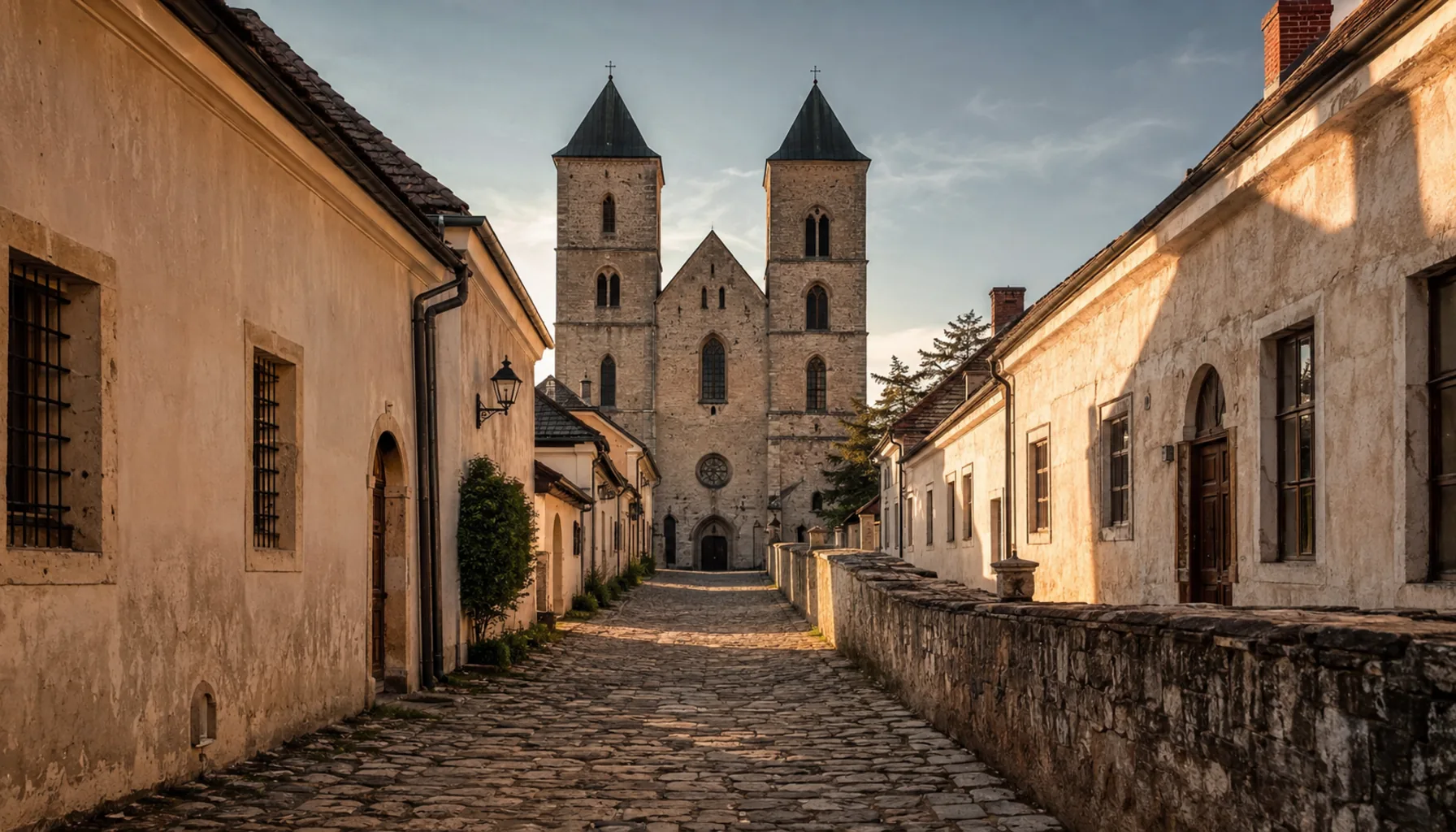
On 11 December 1993 the castle, Spišská Kapitula, the town itself and the village church of the Holy Spirit at Žehra were inscribed together on the World Heritage List; Levoča was added to the same inscription in 2009. The Kapitula is the part to walk. It is a single street inside a wall, with a gate at each end and the canons' houses down both sides, and at the head of it the Cathedral of St Martin - late Romanesque, built between 1245 and 1273 by masons of the same north-Italian school that was working on the castle.Jedenásteho decembra 1993 boli hrad, Spišská Kapitula, samo mesto a dedinský kostol Ducha Svätého v Žehre spoločne zapísané do Zoznamu svetového dedičstva; Levoča k tomu istému zápisu pribudla v roku 2009. Prejsť sa treba po Kapitule. Je to jediná ulica vnútri hradby, s bránou na oboch koncoch a s domami kanonikov po oboch stranách, a na jej čele stojí katedrála svätého Martina - neskororománska, postavená v rokoch 1245 až 1273 kamenármi tej istej severotalianskej školy, ktorá pracovala na hrade.
Inside are a fourteenth-century wall painting of the coronation of Charles Robert of Anjou, which records whose side the province took at Rozhanovce in 1312, and the white stone lion set into the floor by the entrance, at which oaths were once sworn; the Zápoľský family added their late-Gothic burial chapel at the end of the fifteenth century, using the masons they had up on the rock. Down in the saddle the town has some 145 protected monuments, a long widening square, and a Gothic parish church at one end of it.Vnútri je nástenná maľba korunovácie Karola Róberta z Anjou zo 14. storočia, ktorá pripomína, na čiu stranu sa provincia postavila v roku 1312 pri Rozhanovciach, a pri vchode je do dlážky vsadený biely kamenný lev, na ktorom sa kedysi prisahalo; Zápoľskovci pristavali koncom 15. storočia svoju neskorogotickú pohrebnú kaplnku, a to kamenármi, ktorých mali hore na skale. Dole v sedle má mesto asi 145 chránených pamiatok, dlhé rozšírené námestie a na jeho konci gotický farský kostol.
For five hundred years this was a craft town. The linen-weavers' guild is recorded in 1385; in 1595 the butchers had their statutes confirmed in German by the Polish king Sigismund III - a direct consequence of the pledge of 1412, which put the town under Polish administration for 360 years - and in 1613 the same butchers joined an association with the guilds of Kremnica, Banská Bystrica, Banská Štiavnica, Spišská Nová Ves and Spišské Vlachy.Päťsto rokov to bolo remeselnícke mesto. Cech tkáčov plátna je doložený v roku 1385; v roku 1595 potvrdil mäsiarom ich artikuly po nemecky poľský kráľ Žigmund III. - priamy dôsledok zálohu z roku 1412, ktorý mesto na 360 rokov odovzdal poľskej správe - a v roku 1613 sa tí istí mäsiari spojili s cechmi Kremnice, Banskej Bystrice, Banskej Štiavnice, Spišskej Novej Vsi a Spišských Vlách.
In 1677 sixteen guilds laid their statutes before the town judge Jakub Günther - coopers, potters, masons, cobblers, butchers, clothmakers, tailors, furriers, locksmiths, weavers, blacksmiths, gunsmiths, brewers and joiners among them - and by 1770 there were about 250 workshops here, as many as in far larger towns of the kingdom. After 1948 the workshops were folded into production cooperatives and the old crafts ended. The houses they worked in are still standing, and the town brought its fifteenth-century coat of arms, a punning picture of its German name, back into use in 1991.V roku 1677 predložilo šestnásť cechov svoje artikuly mestskému richtárovi Jakubovi Güntherovi - medzi nimi debnári, hrnčiari, murári, obuvníci, mäsiari, súkenníci, krajčíri, kožušníci, zámočníci, tkáči, kováči, puškári, pivovarníci a stolári - a v roku 1770 tu bolo okolo 250 remeselníckych dielní, toľko ako v oveľa väčších mestách krajiny. Po roku 1948 dielne pohltili výrobné družstvá a staré remeslá skončili. Domy, v ktorých pracovali, stoja dodnes a mesto v roku 1991 obnovilo svoj erb z 15. storočia, obrázkovú hračku s nemeckým menom mesta.
Sixteen videos for Culture in Spišské Podhradie.Šestnásť videí — Kultúra v Spišskom Podhradí.