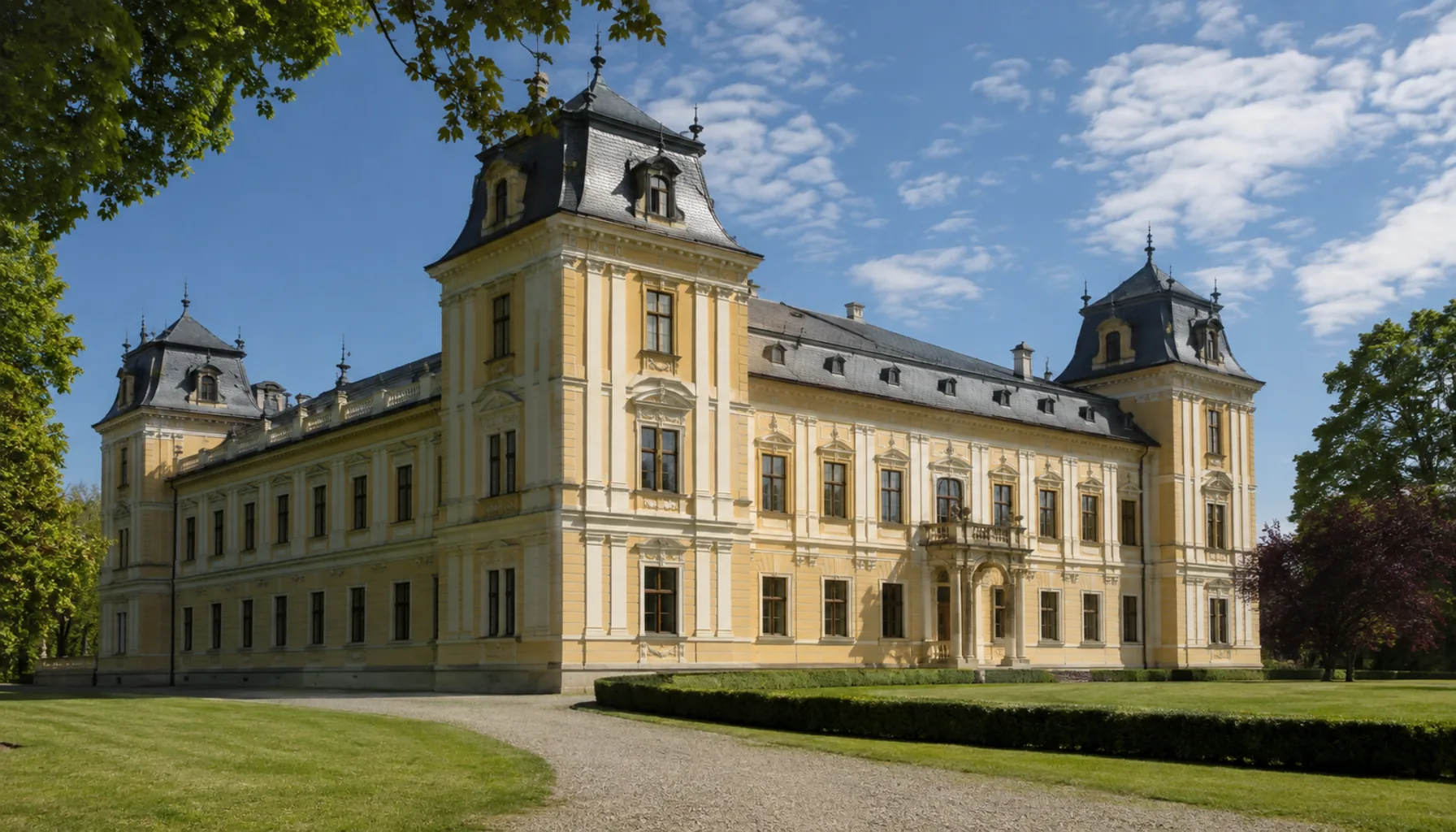
A Drugeth chateau with the regional museum inside it, an open-air museum of Zemplín farmsteads in the park behind, and the Eastern-rite tradition of the villages all around.Drugetovský kaštieľ s vlastivedným múzeom, skanzen zemplínskych usadlostí v parku za ním a východný obrad, ktorým žijú okolité dediny.
The Drugeth chateau in the centre of Humenné, rebuilt as a four-winged Renaissance residence and given its neo-Renaissance front in the nineteenth century.Drugethovský kaštieľ v centre Humenného — štvorkrídlové renesančné sídlo, ktoré v 19. storočí dostalo novorenesančnú fasádu.
The year in HumennéRok v Humennom
Humenné has held markets by right since the fifteenth century, when King Matthias Corvinus granted the town its own seal and its own coat of arms. Privileges of that kind were never decoration: they meant the right to hold markets, to judge small cases and to deal with the king rather than only with a landlord, and they are the difference between a village and a town. Upper Zemplín has been coming here to buy and sell ever since.Humenné má trhové právo od 15. storočia, keď mu kráľ Matej Korvín udelil vlastnú pečať a vlastný erb. Takéto výsady nikdy neboli ozdobou: znamenali právo konať trhy, súdiť menšie spory a jednať s kráľom, nie iba so zemepánom, a práve ony odlišujú dedinu od mesta. Horný Zemplín sem odvtedy chodí nakupovať a predávať.
The calendar now is a district town's calendar, and Humenné is a real one. That means a town celebration in the warm months, concerts and exhibitions in the chateau, a season at the open-air museum in the park behind it, feast days in two rites, and a school year that fills the halls from autumn onward. We name no events and no dates here: in a town this size the programme is set months at a time, and the museum's own listings and the town's are the only source worth trusting.Dnešný kalendár je kalendárom okresného mesta a Humenné ním naozaj je. Znamená to mestské slávnosti v teplých mesiacoch, koncerty a výstavy v kaštieli, sezónu v skanzene v parku za ním, sviatky v dvoch obradoch a školský rok, ktorý od jesene napĺňa sály. Podujatia ani dátumy tu neuvádzame: v meste tejto veľkosti sa program zostavuje na mesiace dopredu a jediným zdrojom, ktorému sa oplatí veriť, sú vlastné oznamy múzea a mesta.
Where culture livesKde žije kultúra
The chateau in the middle of the town holds the Vihorlat Museum: period interiors in the state rooms, the natural history of the Vihorlat and the Poloniny, and the history of upper Zemplín. It is a regional museum in the full sense — its subject is the country around it, not the house it sits in — and for a district of small, scattered villages it is where most of what survives of them has ended up.V kaštieli uprostred mesta sídli Vihorlatské múzeum: dobové interiéry v reprezentačných sálach, príroda Vihorlatu a Polonín a dejiny horného Zemplína. Je to vlastivedné múzeum v plnom zmysle slova — jeho témou je kraj naokolo, nie dom, v ktorom sídli — a v okrese malých roztratených dedín skončila práve tu väčšina toho, čo sa z nich zachovalo.
Behind the chateau, in the park, stands the open-air museum of folk architecture: farmsteads brought in from the Zemplín villages and rebuilt, with the wooden Greek Catholic church of 1745 from Nová Sedlica — the easternmost village in Slovakia — taken apart at the end of the road east and put up again here among them. Seeing both in one afternoon is the sensible way to spend a day in Humenné. The chateau is what the lords built; the park is what everybody else did.Za kaštieľom, v parku, stojí skanzen ľudovej architektúry: usadlosti prenesené zo zemplínskych dedín a znovu postavené, medzi nimi drevený gréckokatolícky chrám z roku 1745 z Novej Sedlice — najvýchodnejšej obce Slovenska — rozobratý na konci cesty na východ a zložený nanovo tu. Prejsť si oboje za jedno popoludnie je rozumný spôsob, ako v Humennom stráviť deň. Kaštieľ je to, čo postavili páni; park je to, čo robili všetci ostatní.
The everyday institutions are here as well: a cultural centre with a hall and a programme, a regional library, art schools for children and the amateur choirs and companies that go with them. We name none of them individually, because premises and programmes change faster than a page like this can be rewritten.Sú tu aj bežné inštitúcie: kultúrne stredisko so sálou a programom, regionálna knižnica, umelecké školy pre deti a amatérske zbory a súbory, ktoré k nim patria. Menovite ich neuvádzame, lebo priestory ani programy nevydržia dlhšie než takáto stránka.
The buildings that carry itBudovy, ktoré ju nesú
Around 1610 the Drugeths pulled down the old stone castle in the middle of the town and put up a Renaissance chateau with a park in its place — a house to live in rather than a fortress to survive in. Three years later, in 1613, they founded a Jesuit college beside it, the first secondary school the town ever had. A fire in 1619 wrecked the new house and Count Gabriel Drugeth rebuilt it as the four-winged building with corner towers you can still walk around; the nineteenth century gave it the French neo-Renaissance face it wears today. The ordinary shape of Humenné — a residence at the centre with a school next to it — was settled in that one decade.Okolo roku 1610 dali Drugetovci zbúrať starý kamenný hrad uprostred mesta a na jeho mieste postavili renesančný kaštieľ s parkom — dom na bývanie, nie pevnosť na prežitie. O tri roky neskôr, v roku 1613, pri ňom založili jezuitské kolégium, prvú strednú školu v dejinách mesta. Požiar v roku 1619 novostavbu zničil a gróf Gabriel Druget ju obnovil ako štvorkrídlovú budovu s nárožnými vežami, po ktorej sa dá chodiť dodnes; 19. storočie jej dalo francúzsku neorenesančnú tvár, ktorú má teraz. Obvyklý pôdorys Humenného — sídlo v strede a škola vedľa neho — sa rozhodol v tomto jedinom desaťročí.
The fortresses are ruins, and the ruins are the day trips. Brekov, the Drugeths' crag a few kilometres south-west, was wrecked in the anti-Habsburg uprisings at the end of the seventeenth century and never rebuilt; Jasenov stands on the ridge just south of it. The male line died out in 1684, and upper Zemplín was governed from a comfortable house in a town rather than from a rock ever after. Most of what surrounds all this is younger and blunter: after 1948 a plant for polyamide fibres went up on the edge of town, the villages emptied into it, and Humenné grew from about seven thousand people to more than thirty-three thousand within a generation. The blocks of flats are that story in concrete.Pevnosti sú zrúcaniny a zrúcaniny sú výletmi na deň. Brekov, drugetovské bralo pár kilometrov na juhozápad, zničili protihabsburské povstania na konci 17. storočia a už ho nikto neobnovil; Jasenov stojí na hrebeni hneď južne od neho. Mužská vetva rodu vymrela v roku 1684 a horný Zemplín sa odvtedy spravoval z pohodlného domu v meste, nie zo skaly. Väčšina toho, čo je okolo, je mladšia a strohejšia: po roku 1948 postavili na okraji mesta závod na polyamidové vlákna, dediny sa doň vyliali a Humenné vyrástlo zo siedmich tisícov na vyše tridsaťtritisíc ľudí za jedinú generáciu. Panelové sídliská sú tento príbeh v betóne.
The Eastern riteVýchodný obrad
The villages around Humenné are Greek Catholic country: Eastern-rite Christians who keep the Byzantine liturgy and recognise the pope, and in the Rusyn villages of upper Zemplín the ordinary religion of ordinary people. It shows in the buildings and in the services — a screen of icons between the nave and the sanctuary, singing instead of an organ, and in the oldest churches a roof of shingles with domes stepping down from the tower. The wooden church now standing in the chateau park is the closest example in the town itself.Dediny okolo Humenného sú gréckokatolícky kraj: východní kresťania, ktorí zachovávajú byzantskú liturgiu a uznávajú pápeža, a v rusínskych obciach horného Zemplína bežné náboženstvo bežných ľudí. Vidno to na stavbách aj počuť na bohoslužbách — ikonostas medzi loďou a svätyňou, spev namiesto organa a pri najstarších chrámoch šindľová strecha s kupolami klesajúcimi od veže. Najbližším príkladom priamo v meste je drevený chrám stojaci v parku pri kaštieli.
That tradition was broken by decree. On 28 April 1950 the state staged an assembly in Prešov which declared the Greek Catholic Church in Czechoslovakia dissolved and handed its buildings, parishes and congregations to the Orthodox Church. Priests were summoned under threat of arrest and told to sign; those who refused lost their house and their parish, and some went to prison. In a district where one person in eight was Greek Catholic, that reached into almost every village. The Church was permitted to exist again only in 1968.Túto tradíciu prelomil výnos. Dňa 28. apríla 1950 zinscenoval štát v Prešove zhromaždenie, takzvaný sobor, ktorý vyhlásil Gréckokatolícku cirkev v Československu za zrušenú a jej chrámy, farnosti i veriacich odovzdal pravoslávnej cirkvi. Kňazov predvolávali pod hrozbou zatknutia a nútili ich podpísať; tí, čo odmietli, prišli o faru aj o farnosť a niektorí skončili vo väzení. V okrese, kde bol gréckokatolíkom každý ôsmy človek, sa to dotklo takmer každej dediny. Cirkev smela znova existovať až od roku 1968.