Up Through the Meadows, Gate by GateCez lúky nahor, bránu za bránou
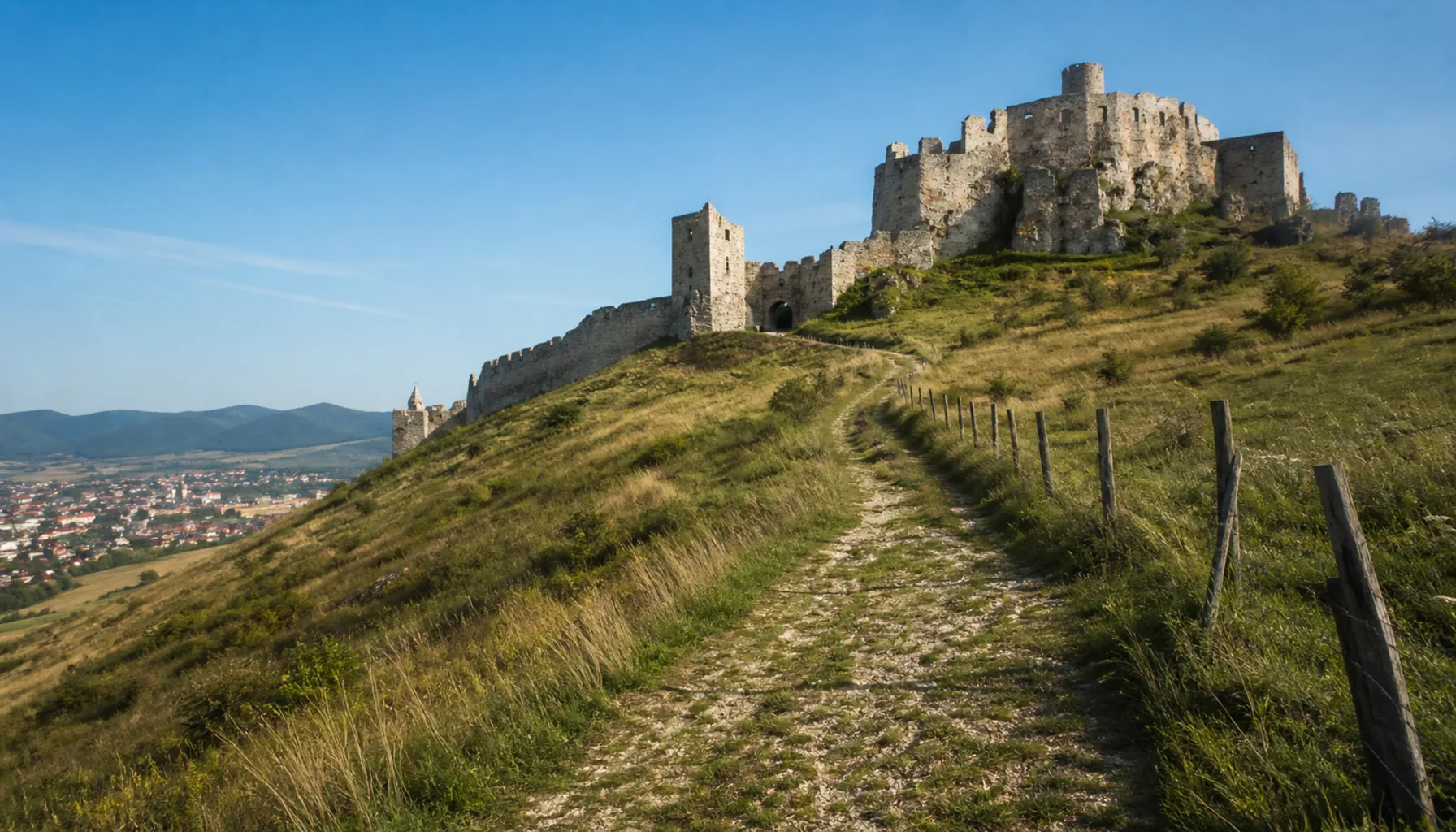
There are two ways to arrive, and they give you two different castles. Walk up from Spišské Podhradie and you get the classic one: a steady climb out of the town through sheep pasture and wildflower meadow, the walls growing above you the whole way, until the hill stops pretending to be a hill and turns into a rampart. Or come round to the upper side, on the Žehra and Hodkovce flank, where there is a car park and the remaining walk is shorter — kinder on the legs, less of an arrival. Either way the last stretch is uphill, and it is open ground.Prísť sa dá dvoma spôsobmi a každý vám dá iný hrad. Ak vystúpite zo Spišského Podhradia, dostanete ten klasický: vytrvalé stúpanie z mestečka cez ovčie pasienky a rozkvitnuté lúky, pričom hradby nad vami celý čas rastú, až kým kopa neprestane predstierať, že je kopcom, a nezmení sa na val. Alebo môžete hrad obísť z hornej strany, od Žehry a Hodkoviec, kde je parkovisko a zvyšná cesta je kratšia — miernejšia pre nohy, no menej slávnostný príchod. Tak či onak, posledný úsek vedie hore a po otvorenom teréne.
Inside the first gate, the scale takes over. The lower bailey is an enormous grassed enclosure, big enough to have held an army — which is precisely what it was for — ringed by curtain wall and empty now of everything except grass, wind and the occasional stub of masonry. From here the ground rises again, through the inner gates, towards the older core. The walk has the rhythm of a siege run backwards: each gate is narrower than the last, each courtyard higher, each wall harder.Za prvou bránou preberá vládu mierka. Dolné nádvorie je obrovské zatrávnené priestranstvo, dosť veľké na to, aby pojalo celé vojsko — presne na to slúžilo — obopnuté hradbou a dnes prázdne, len tráva, vietor a tu i tam pahýľ muriva. Odtiaľto sa terén znova dvíha, vnútornými bránami, k staršiemu jadru. Prechádzka má rytmus obliehania naopak: každá brána je užšia než predchádzajúca, každé nádvorie vyššie, každý múr tvrdší.
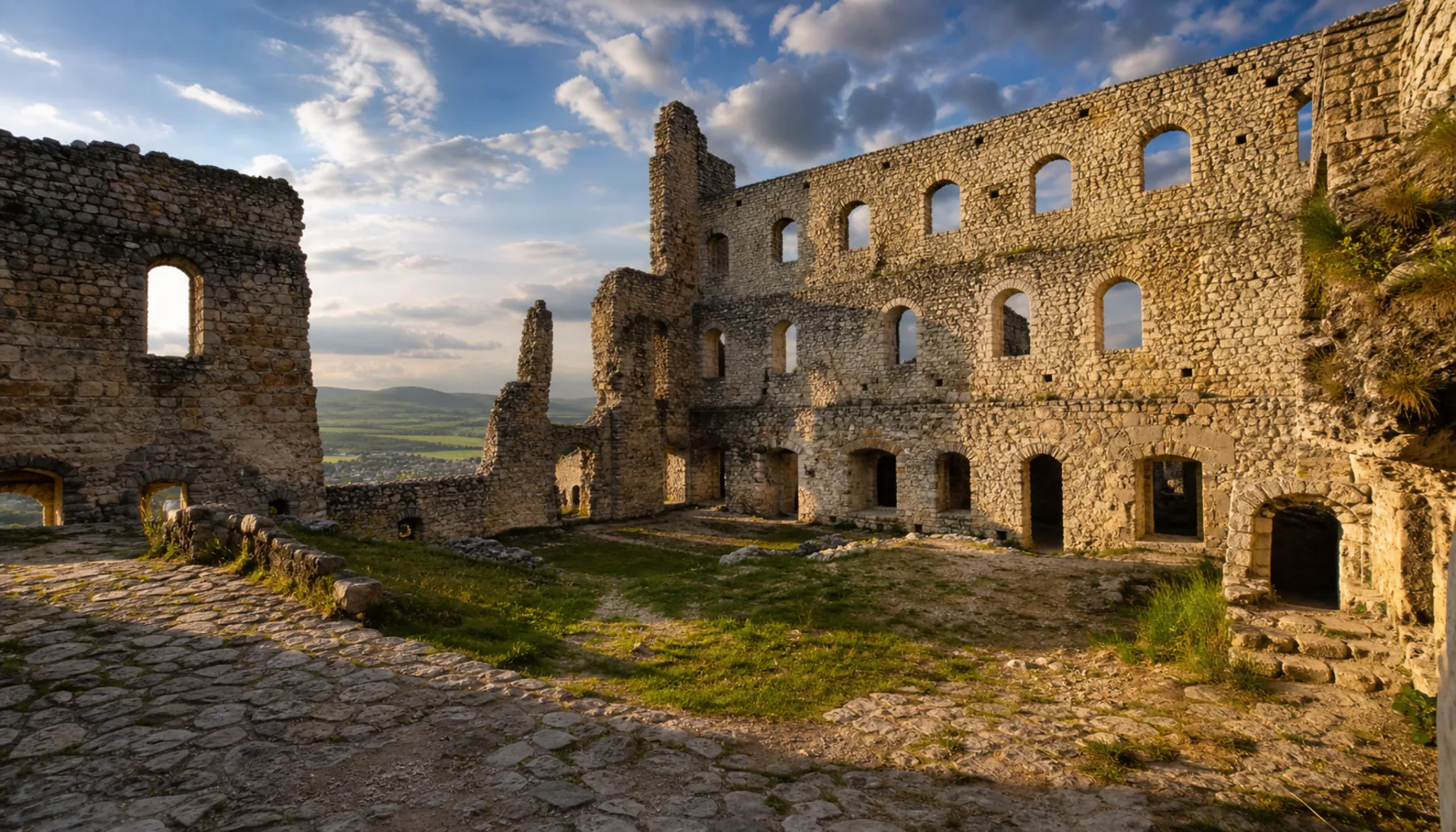
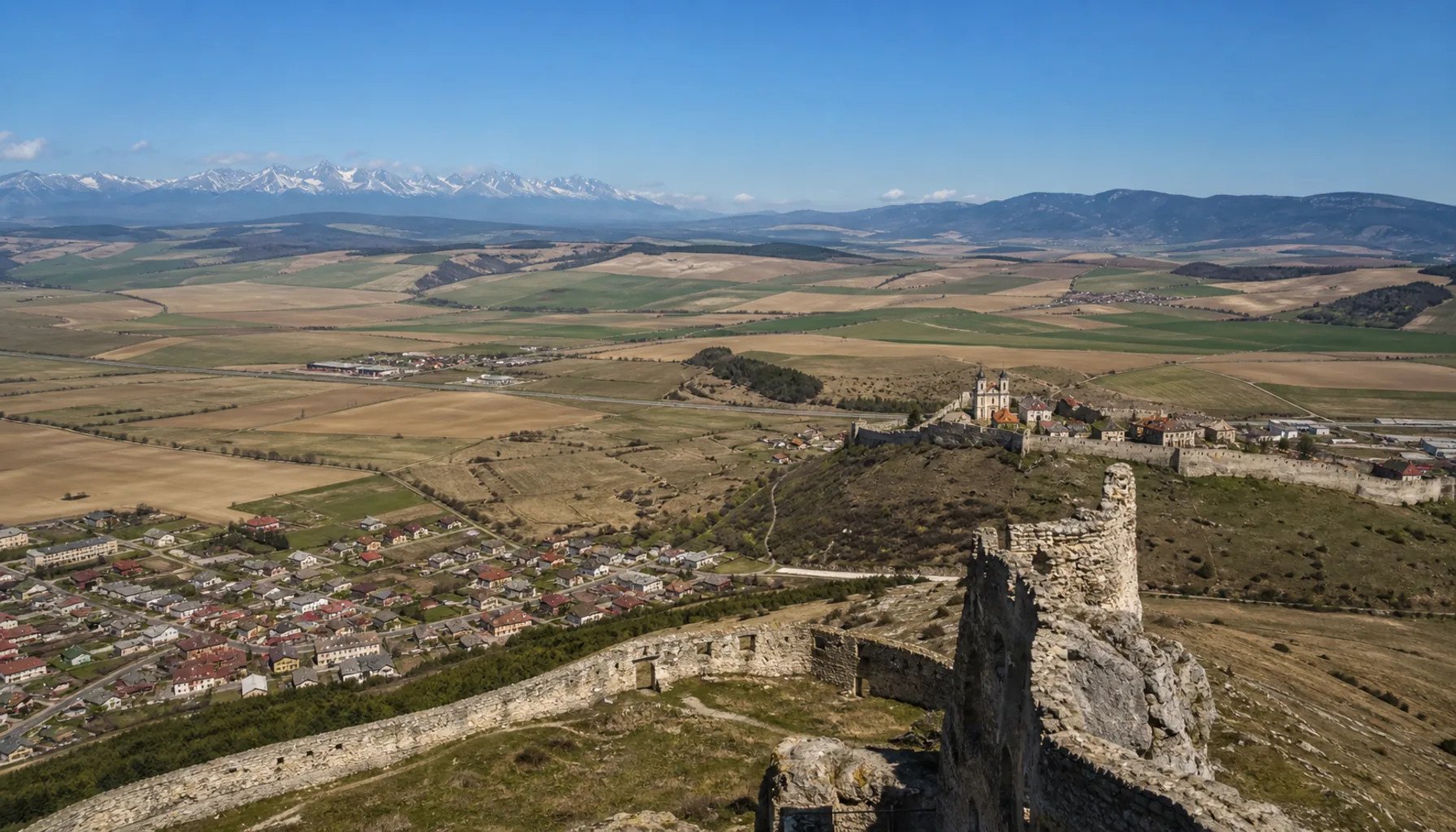
The upper castle is where the stone gets old. The Romanesque palace still shows its round-headed openings on the courtyard side; the Gothic chapel beside it keeps its pointed windows and the springing of its vaults. Part of the upper castle has been re-roofed to hold the museum exhibition — medieval arms and armour and a torture-chamber display are the pieces visitors tend to remember, though exactly what is out varies from season to season. Then the tower. The stair is a proper stair, the top is entirely exposed, and the reward is the whole of Spiš at once: the ridge of Spišská Kapitula directly opposite, Žehra's white church on its knoll, the long wall of the Branisko range closing the eastern horizon, and — on a clear day — the High Tatras standing up to the north-west like something painted in afterwards.V hornom hrade je kameň najstarší. Románsky palác má na strane nádvoria stále polkruhovo zaklenuté otvory; gotická kaplnka vedľa neho si zachovala lomené okná aj nábehy klenieb. Časť horného hradu dostala späť strechu, aby ukryla múzejnú expozíciu — najviac si návštevníci pamätajú stredoveké zbrane a zbroj a mučiareň, hoci to, čo je práve vystavené, sa sezónu od sezóny mení. A potom veža. Schodisko je poriadne schodisko, vrchol je úplne nechránený a odmenou je celý Spiš naraz: hrebeň Spišskej Kapituly priamo oproti, biely kostolík v Žehre na návrší, dlhá stena Braniska uzatvárajúca východný obzor a — za jasného dňa — Vysoké Tatry, ktoré sa na severozápade dvíhajú, akoby ich tam niekto domaľoval dodatočne.