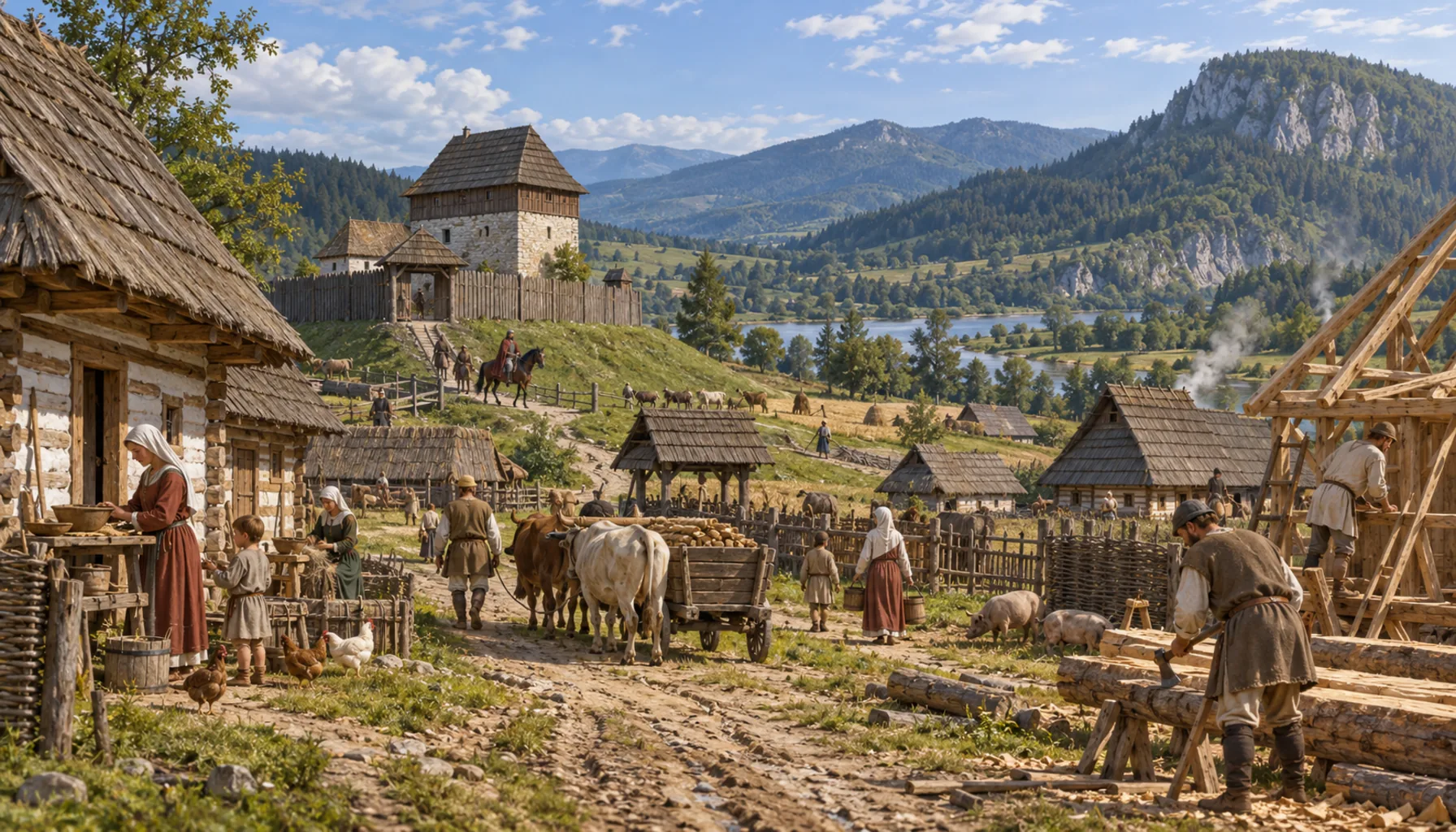
Leštiny enter the written record in the fourteenth century; reference works give 1325 and 1381 for the earliest mentions, the same decades in which the neighbouring Kubíns first appear. Orava was not magnate country. Instead of one great lord with a village of tenants, it filled up with lesser gentry — many small noble families, each with a few fields, noble enough to bear arms and far too poor to build a palace. The family that held Leštiny were the Zmeškals, and they did what noble families did with a place they owned: they put its name into their own, and were known ever after as Zmeškal of Domanovce and Leštiny.Do písomných prameňov vstupujú Leštiny v 14. storočí; príručky uvádzajú ako najstaršie zmienky roky 1325 a 1381, teda tie isté desaťročia, v ktorých sa objavujú aj susedné Kubíny. Orava nebola krajom magnátov. Namiesto jedného veľkého pána s dedinou poddaných sa zaplnila drobným zemianstvom — mnohými malými šľachtickými rodinami, každá s pár poľami, dosť urodzenými na erb a priďaleko od peňazí na kaštieľ. Leštiny držali Zmeškalovci a urobili s nimi to, čo šľachtické rody robievali s majetkom: dali si ich meno do vlastného a odvtedy sa písali Zmeškalovci z Domanoviec a Leštín.