Tvrdošín · Upper OravaTvrdošín · horná Orava
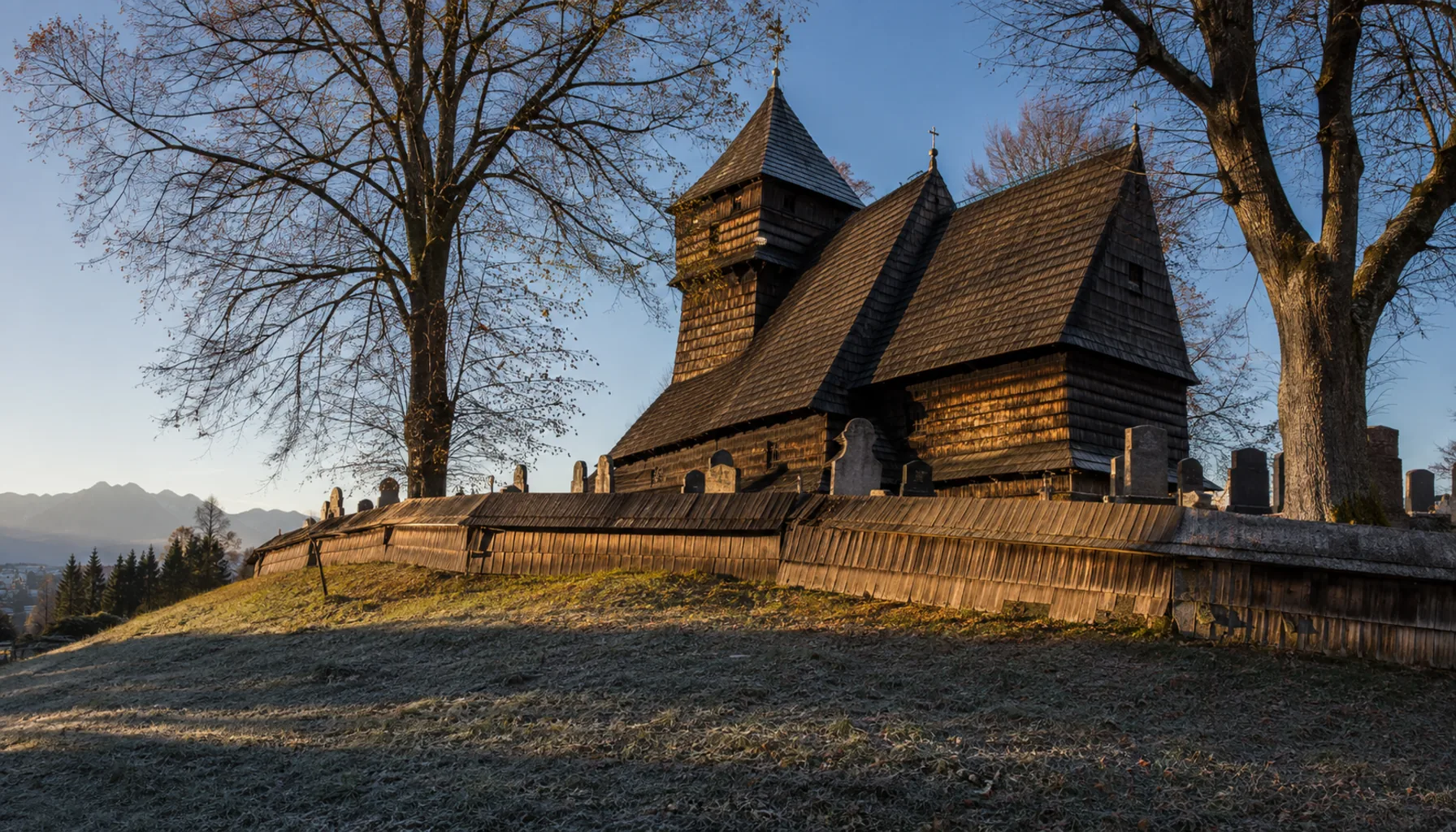
A small wooden church on a rise above the town, dark with shingles outside and painted within, has been on the UNESCO list since 2008 and is by a wide margin the oldest thing here.Malý drevený kostol na vyvýšenine nad mestom, zvonka tmavý od šindľov a vnútri maľovaný, je od roku 2008 na zozname UNESCO a je s veľkým náskokom najstaršou vecou v meste.
On 15 July 1369 King Louis I granted Tvrdošín the privileges of a royal town, and the list is worth reading because it is a small constitution: the townsmen could elect their own mayor and a council of twelve, hold markets, choose their own priest, keep a hospital, and travel toll-free anywhere in the kingdom. Freedom from tolls was the real prize for a place whose whole living came from a customs post, the thirtieth part of the value of goods taken by the crown from everything crossing the mountains. Salt and cloth came south through the gate; cattle, timber and iron went north.Pätnásteho júla 1369 udelil kráľ Ľudovít I. Tvrdošínu výsady kráľovského mesta a ten zoznam sa oplatí prečítať, lebo je to malá ústava: mešťania si mohli voliť vlastného richtára a dvanásťčlennú radu, držať trhy, vybrať si vlastného kňaza, mať špitál a cestovať bez mýta po celom kráľovstve. Oslobodenie od mýt bolo skutočnou výhrou pre miesto, ktoré žilo z colnej stanice, z tridsiatku, čiže tridsatiny hodnoty tovaru, ktorý kráľ vyberal zo všetkého, čo prešlo cez hory. Bránou išla na juh soľ a súkno, na sever dobytok, drevo a železo.
The town's present calendar is the ordinary one of a district seat: town days, seasonal markets, an Advent programme, parish feasts, school and folk performances. We give no dates and no names, because a programme of this kind is decided a season at a time and the town's own listings are the place to check before travelling for something specific.Dnešný kalendár mesta je bežný kalendár okresného sídla: dni mesta, sezónne trhy, adventný program, farské slávnosti, školské a folklórne vystúpenia. Neuvádzame dátumy ani názvy, lebo takýto program sa rozhoduje sezónu po sezóne a pred cestou za niečím konkrétnym treba pozrieť vlastné oznamy mesta.
The town's gallery is devoted to Mária Medvecká, who lived from 1914 to 1987, was born in Medvedzie, once a separate village and now a quarter of Tvrdošín, and spent her working life here. Her landscapes and portraits of Orava are the best-known painting the region produced, and the collection is part of the Orava Gallery. It is an unusual arrangement worth stating plainly: a small district town keeps the life's work of one painter, and the professional collections of the whole valley are administered from Dolný Kubín.Mestská galéria je venovaná Márii Medveckej, ktorá žila v rokoch 1914 až 1987, narodila sa v Medvedzí, kedysi samostatnej obci a dnes mestskej časti Tvrdošína, a prežila tu celý svoj tvorivý život. Jej oravské krajiny a portréty sú najznámejšou maľbou, akú tento kraj vydal, a zbierka je súčasťou Oravskej galérie. Je to nezvyčajné usporiadanie a treba to povedať otvorene: malé okresné mesto opatruje celoživotné dielo jednej maliarky, kým odborné zbierky celej doliny spravujú z Dolného Kubína.
The other place is the wooden church, and here the honest note matters more than any description. Access to the interior is limited, and the sensible thing is to ask locally rather than to assume that a UNESCO listing means an open door. It is a working piece of heritage in a small parish, not a ticketed attraction with a rota.Druhým miestom je drevený kostol a tu je poctivá poznámka dôležitejšia než akýkoľvek opis. Vstup do interiéru je obmedzený a rozumné je spýtať sa priamo v meste, nie predpokladať, že zápis v UNESCO znamená otvorené dvere. Je to živá pamiatka malej farnosti, nie atrakcia so vstupenkami a rozpisom.
Everything else is the ordinary machinery of a small town: a cultural centre with a hall and a programme, a library, a school of art for children, and amateur choirs and folk groups. We name none of them individually, because premises and programmes change faster than a page like this does, and a wrong name is worse than no name.Všetko ostatné je bežná výbava malého mesta: kultúrne stredisko so sálou a programom, knižnica, základná umelecká škola a ochotnícke spevácke a folklórne súbory. Menovite neuvádzame ani jeden, lebo priestory a programy sa menia rýchlejšie ako takáto stránka a nesprávne meno je horšie ako žiadne.
The Church of All Saints stands on a rise above the town, built entirely of wood, walls and roof clad in shingles. Its late Gothic core is usually dated to the end of the fifteenth century, though some researchers argue for the end of the fourteenth, and the disagreement is genuine and unresolved rather than a detail somebody has tidied away. The interior was painted in the seventeenth century and holds a Renaissance pulpit of 1654 and a Baroque altar. It is by a wide margin the oldest surviving building in the town, and it is made of the one material you would least expect to last.Kostol Všetkých svätých stojí na vyvýšenine nad mestom, postavený celý z dreva, so stenami aj strechou pokrytými šindľom. Jeho neskorogotické jadro sa zvyčajne datuje na koniec pätnásteho storočia, hoci časť bádateľov argumentuje koncom štrnásteho, a ten nesúlad je skutočný a neuzavretý, nie detail, ktorý niekto upratal. Interiér vymaľovali v sedemnástom storočí a je v ňom renesančná kazateľnica z roku 1654 a barokový oltár. Je to s veľkým náskokom najstaršia zachovaná budova v meste a je z materiálu, od ktorého by ste to čakali najmenej.
The church had been quietly rotting for most of a century. In the early 1990s it was taken apart and put back together properly: decayed timber replaced, shingles renewed, and the painted interior restored rather than repainted, which is a harder and slower thing to do. The work received the Europa Nostra award in 1995, and in 2008 the church was inscribed on the UNESCO World Heritage list as one of eight wooden churches of the Slovak part of the Carpathians, a group that deliberately mixes Roman Catholic, Lutheran and Greek Catholic buildings, because what is being protected is the carpentry and the religious argument that produced it.Kostol potichu hnil väčšinu storočia. Na začiatku deväťdesiatych rokov ho rozobrali a poriadne poskladali späť: vymenili zhnité drevo, obnovili šindľovú krytinu a maľovaný interiér reštaurovali, a nie premaľovali, čo je ťažšia a pomalšia práca. V roku 1995 získala táto obnova cenu Europa Nostra a v roku 2008 zapísali kostol do zoznamu svetového dedičstva UNESCO ako jeden z ôsmich drevených chrámov slovenskej časti Karpát, pričom skupina zámerne mieša rímskokatolícke, evanjelické a gréckokatolícke stavby, lebo chránené je tesárstvo a náboženský spor, ktorý ho vyvolal.
The eighteenth century was the town's recovery, and it was built on the river. Timber cut in the Orava forests was lashed into rafts, plte, and floated down to the Váh and on towards the lowland: dangerous skilled work that fed whole villages, alongside linen woven at home, milling and cattle. A raftsman had to know a fast mountain river well enough to bet his life on it twice a week.Osemnáste storočie bolo obdobím zotavenia mesta a stálo na rieke. Drevo vyťažené v oravských lesoch viazali do pltí a splavovali po Váh a ďalej do nížiny: nebezpečná zručná práca, ktorá živila celé dediny popri doma tkanom plátne, mlynárstve a dobytku. Pltník musel poznať rýchlu horskú rieku tak dobre, aby na ňu dvakrát do týždňa stavil život.
The railway killed it. A branch line was built up the valley from Kraľovany on the main Košice to Bohumín route and by 1899 it ran through Tvrdošín towards the Polish border, and timber no longer needed the water. Industry was tried and stayed small, with a button factory opening in 1909 after a planned cloth mill came to nothing, and what really moved people in those decades was emigration: from the 1880s to the First World War, Orava men left for the United States by the shipload.Železnica ju zabila. Dolinou postavili odbočnú trať z Kraľovian na hlavnej košicko-bohumínskej dráhe a od roku 1899 viedla cez Tvrdošín k poľskej hranici, takže drevo už vodu nepotrebovalo. Priemysel skúšali a zostal malý, gombikáreň otvorili v roku 1909 po tom, čo plánovaná súkenka stroskotala, a čím sa ľudia v tých desaťročiach naozaj hýbali, bolo vysťahovalectvo: od osemdesiatych rokov devätnásteho storočia do prvej svetovej vojny odchádzali oravskí muži do Spojených štátov po celých lodiach.
The dam finished what the railway had begun. Digging started upstream in 1941, the first turbine turned on 2 May 1953 and the lake was declared complete in 1954, and that was the end of the last of the rafting. The trade left no building behind and no museum in this town, which is precisely why a page like this has to say that it happened.Priehrada dokončila, čo železnica začala. Hore prúdom sa začalo kopať v roku 1941, prvá turbína sa roztočila 2. mája 1953 a jazero vyhlásili za hotové v roku 1954, a tým sa skončili posledné zvyšky pltníctva. To remeslo nezanechalo v tomto meste nijakú budovu ani múzeum, a práve preto musí takáto stránka povedať, že tu bolo.
Sixteen videos for Culture in Tvrdošín.Šestnásť videí — Kultúra v Tvrdošíne.