Trstená · Upper Orava, on the Polish roadTrstená · horná Orava, na poľskej ceste
Culture in TrstenáKultúra v Trstenej
Four annual fairs were granted here in the early seventeenth century and two of them are still held, which is a longer cultural continuity than any building in the town can show.Štyri výročné jarmoky získalo mesto na začiatku sedemnásteho storočia a dva sa konajú dodnes, čo je dlhšia kultúrna kontinuita, než dokáže ukázať ktorákoľvek tunajšia budova.
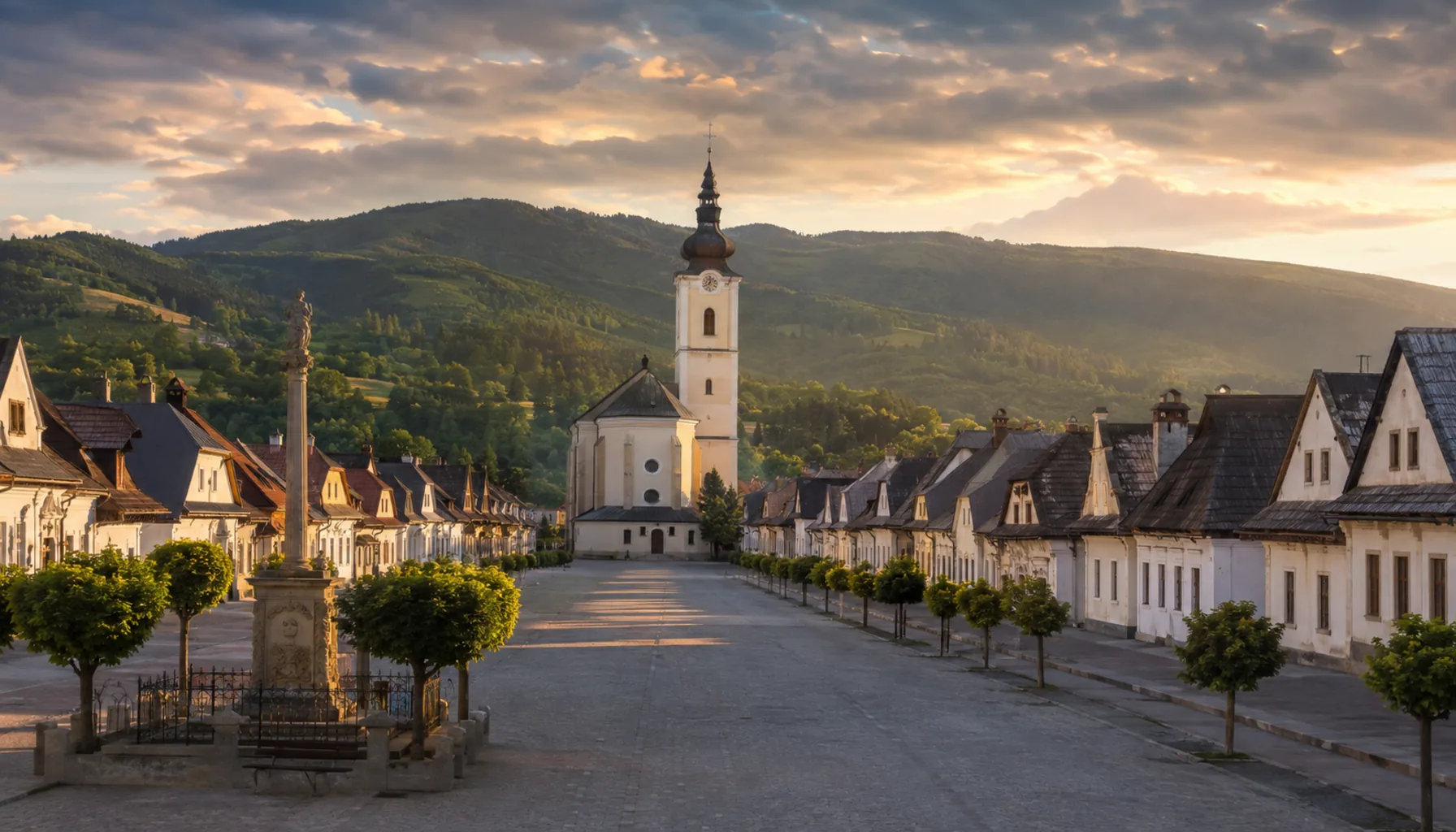
The long market square of Trstená with the parish church at its head — the only proper square in the Upper Orava.Dlhé trhové námestie v Trstenej s farským kostolom v čele — jediné skutočné námestie na hornej Orave.
The year in TrstenáRok v Trstenej
In 1588 the town came under the Thurzos, who by then held the whole Orava estate, and it struck the bargain that defines a market town: instead of labour service and dues in kind it paid a lump sum of eight hundred gold pieces a year and was otherwise left alone. Emperor Matthias confirmed its privileges and granted four annual fairs, two of which are still held. A fair was not shopping. It was the one week in the year when a valley this remote could sell a winter of linen and buy the things it could not make.V roku 1588 pripadlo mesto Thurzovcom, ktorí vtedy držali celé oravské panstvo, a uzavrelo dohodu, ktorá definuje mestečko: namiesto robôt a naturálnych dávok platilo osemsto zlatých ročne a inak ho nechali na pokoji. Cisár Matej potvrdil jeho výsady a udelil štyri výročné jarmoky, z ktorých dva sa konajú dodnes. Jarmok nebol nakupovanie. Bol to jediný týždeň v roku, keď takto odľahlá dolina mohla predať zimu plátna a kúpiť veci, ktoré si sama nevyrobila.
The rest of the year is the calendar of a small town beside a border: markets, town days, parish feasts, school and folk performances, and the traffic on the road to Kraków. That road stopped having a border post on it on 21 December 2007, when Slovakia and Poland entered the Schengen area, and after eighty-seven years of passports and customs sheds it became simply a road again. We attach no dates to any of the town's own events, because they are arranged a season at a time and the town's listings are the only reliable source.Zvyšok roka je kalendárom malého mesta pri hranici: trhy, dni mesta, farské slávnosti, školské a folklórne vystúpenia a doprava na ceste do Krakova. Na tejto ceste prestal 21. decembra 2007 stáť hraničný priechod, keď Slovensko a Poľsko vstúpili do schengenského priestoru, a po osemdesiatich siedmich rokoch pasov a colných búdok sa z nej opäť stala len cesta. K vlastným podujatiam mesta neuvádzame dátumy, lebo sa pripravujú sezónu po sezóne a jediným spoľahlivým zdrojom sú oznamy mesta.
Where culture livesKde žije kultúra
Schools have carried more of this town's cultural weight than any museum. From 1774 the Franciscans ran the main school here, and they ran it until 1869. In an Orava where most people could not read, a school like that was the only ladder out of the valley: it took bright boys from villages and turned them into priests, teachers and clerks. Martin Hattala got his schooling here, and so did most of the region's very small educated class.Kultúrnu váhu tohto mesta niesli školy väčšmi než ktorékoľvek múzeum. Od roku 1774 tu viedli hlavnú školu františkáni a viedli ju až do roku 1869. Na Orave, kde väčšina ľudí nevedela čítať, bola takáto škola jediným rebríkom z doliny: brala bystrých chlapcov z dedín a robila z nich kňazov, učiteľov a úradníkov. Chodil do nej Martin Hattala a rovnako aj väčšina veľmi tenkej vrstvy vzdelancov tohto kraja.
A royal Catholic grammar school opened in 1869 and made the town's reputation. In the decades after the Austro-Hungarian settlement of 1867 it was heavily Magyarised, because the state's policy was that the kingdom's schools should turn out Hungarians, so boys from Orava villages did their learning in a language their parents did not speak. That is one reason the educated men of this region cared so fiercely about which Slovak got written down. The school carried on in Slovak after 1918, and since 1971 it has borne Hattala's name.V roku 1869 tu otvorili kráľovské katolícke gymnázium a to urobilo mestu meno. V desaťročiach po rakúsko-uhorskom vyrovnaní z roku 1867 bolo silne pomaďarčené, lebo štátnou politikou bolo, aby školy kráľovstva vychovávali Maďarov, a tak sa chlapci z oravských dedín učili v jazyku, ktorým ich rodičia nehovorili. Aj preto tunajším vzdelancom tak veľmi záležalo na tom, ktorá slovenčina sa zapíše. Po roku 1918 škola pokračovala po slovensky a od roku 1971 nesie Hattalovo meno.
The buildings that carry itBudovy, ktoré ju nesú
The centre is a long market square with the parish church at its head and rows of low burgher houses along its sides: the shape a small Upper Hungarian market town took, with the space in the middle kept clear for stalls. It is a modest centre, walked in twenty minutes, and it is the only proper square in the Upper Orava.Centrom je dlhé trhové námestie s farským kostolom v čele a radmi nízkych meštianskych domov po stranách: tvar, aký mávalo malé hornouhorské mestečko, s priestorom uprostred voľným pre stánky. Je to skromné centrum, prejdené za dvadsať minút, a jediné poriadne námestie na hornej Orave.
It is not old fabric, and the reason is on the map. The seventeenth century nearly finished the town: armies crossing to and from Poland plundered as they went, the winters were long, and two great fires burned much of Trstená down. When a wooden town of this size burns, everything burns, including the charters in the chest. At the end of March 1945 German soldiers burned it again as they pulled out, destroying seventy-five houses and badly damaging many more. A market town that had burned twice in the seventeenth century burned again for the same reason it had then: it stands on a road that armies use.Nie je to stará zástavba a dôvod je na mape. Sedemnáste storočie mesto takmer zlikvidovalo: vojská prechádzajúce do Poľska a späť cestou rabovali, zimy boli dlhé a dva veľké požiare vypálili veľkú časť Trstenej. Keď zhorí drevené mesto takejto veľkosti, zhorí všetko vrátane listín v truhlici. Koncom marca 1945 ho pri ústupe znovu podpálili nemeckí vojaci, zničili sedemdesiatpäť domov a mnoho ďalších ťažko poškodili. Mestečko, ktoré horelo dvakrát v sedemnástom storočí, zhorelo znova z toho istého dôvodu ako vtedy: stojí na ceste, ktorú používajú armády.
The town that settled how Slovak is writtenMesto, ktoré rozhodlo, ako sa píše slovenčina
Martin Hattala was born in Trstená on 4 November 1821 and became a priest and a linguist. In 1852 he published Krátka mluvnica slovenská, a short Slovak grammar that was a deliberate compromise: it kept Ľudovít Štúr's spoken basis for literary Slovak but brought back spelling habits familiar to the older Bernolák camp and to Czech, including the letter y and the distinction between l and ľ.Martin Hattala sa narodil v Trstenej 4. novembra 1821 a stal sa kňazom a jazykovedcom. V roku 1852 vydal Krátku mluvnicu slovenskú, ktorá bola zámerným kompromisom: ponechala Štúrov hovorový základ spisovnej slovenčiny, ale vrátila pravopisné zvyklosti známe staršiemu bernolákovskému táboru a češtine vrátane písmena y a rozlišovania l a ľ.
That compromise stayed the standard handbook of Slovak orthography until 1902, and most of it is what you are reading in the Slovak on this page. He taught at the university in Prague from 1854 and died there in 1903. It is worth noticing where the argument was settled: not in a capital, but by a man from a burned market town at the top of the coldest valley in the country.Tento kompromis zostal štandardnou príručkou slovenského pravopisu až do roku 1902 a jeho väčšina je to, čo čítate v slovenskom texte na tejto stránke. Od roku 1854 učil na univerzite v Prahe a tam v roku 1903 aj zomrel. Stojí za povšimnutie, kde sa spor rozhodol: nie v hlavnom meste, ale rukou muža z vypáleného mestečka na konci najstudenšej doliny v krajine.
The town's other writer left and did not come back. Rudolf Dilong was born in Trstená on 1 August 1905, became a Franciscan friar and a poet who was widely read in the 1930s, and served as a military chaplain during the war. He went abroad in 1945, to Rome first, then to Argentina in 1947 and to Pittsburgh in 1965, where he died in 1986. After the communist takeover of February 1948 the state treated the Catholic church as an enemy, monasteries were shut in 1950 and priests were put on trial, and in a valley this Catholic that was felt in every parish.Druhý spisovateľ mesta odišiel a nevrátil sa. Rudolf Dilong sa narodil v Trstenej 1. augusta 1905, stal sa františkánom a v tridsiatych rokoch široko čítaným básnikom a počas vojny slúžil ako vojenský kaplán. V roku 1945 odišiel do zahraničia, najprv do Ríma, v roku 1947 do Argentíny a v roku 1965 do Pittsburghu, kde v roku 1986 zomrel. Po komunistickom prevrate vo februári 1948 sa štát správal ku katolíckej cirkvi ako k nepriateľovi, v roku 1950 zavreli kláštory a kňazov postavili pred súd, a v takto katolíckej doline to bolo cítiť v každej farnosti.