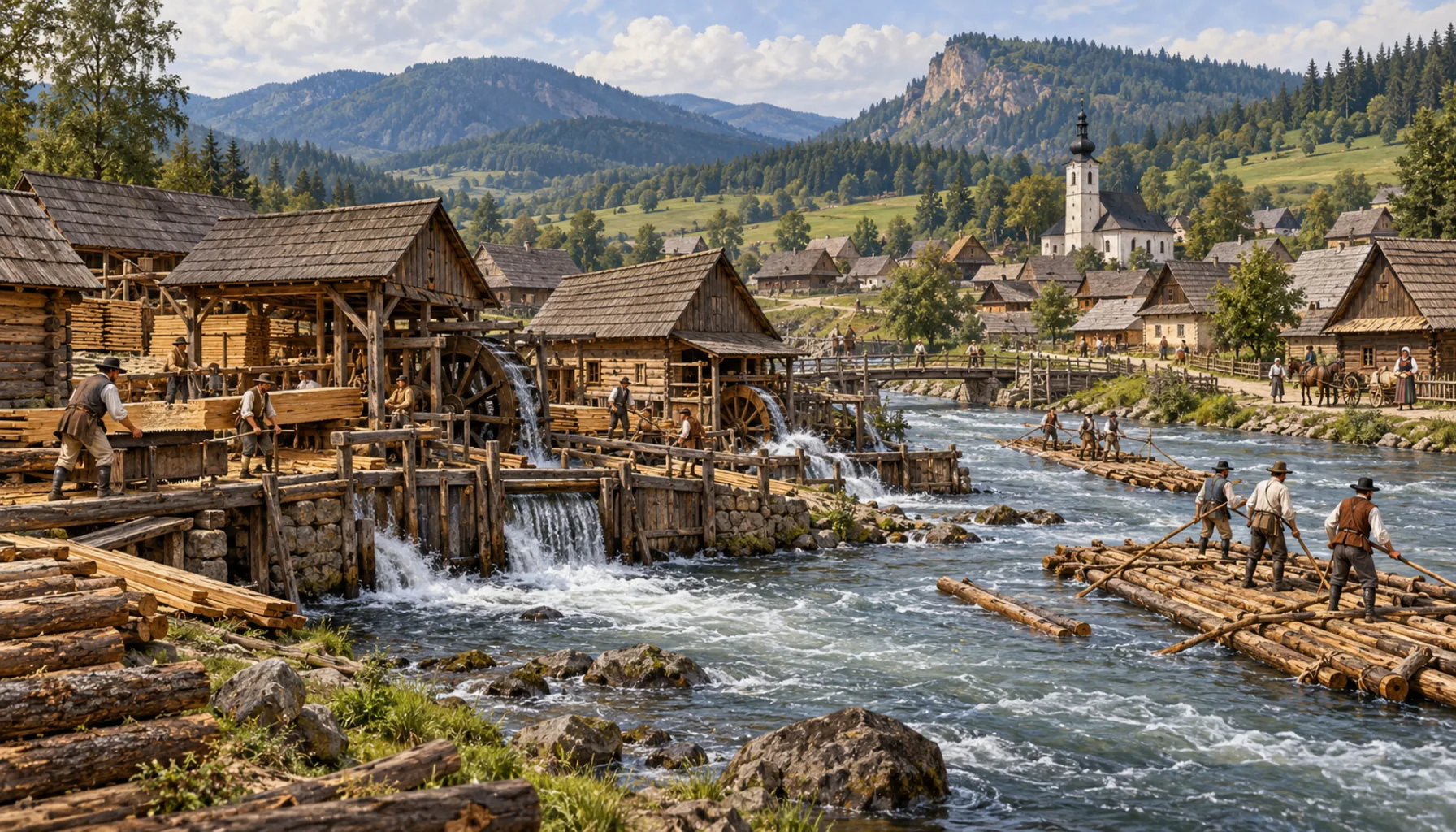
By the early 1600s Nižná already had two mills and a sawmill and about four hundred people; by the census of 1785 there were 1,031. The village lived on what the valley allowed: flax spun and woven at home, cattle and sheep on the slopes, and timber. Logs cut in the Orava forests were lashed into rafts and floated downriver to the Váh, and the raftsmen of these villages were skilled enough that the trade fed families for generations. Nothing about the place suggested it would ever make anything more complicated than a plank.Už začiatkom 17. storočia mala Nižná dva mlyny a pílu a asi štyristo obyvateľov; pri sčítaní v roku 1785 ich bolo 1 031. Dedina žila z toho, čo dolina dovolila: z ľanu, ktorý sa doma priadol a tkal, z dobytka a oviec na stráňach a z dreva. Klady vyrúbané v oravských lesoch viazali do pltí a splavovali po rieke do Váhu a pltníci z týchto dedín boli takí zruční, že to remeslo živilo rodiny celé generácie. Nič na tom mieste nenasvedčovalo, že tu raz budú vyrábať niečo zložitejšie než dosku.