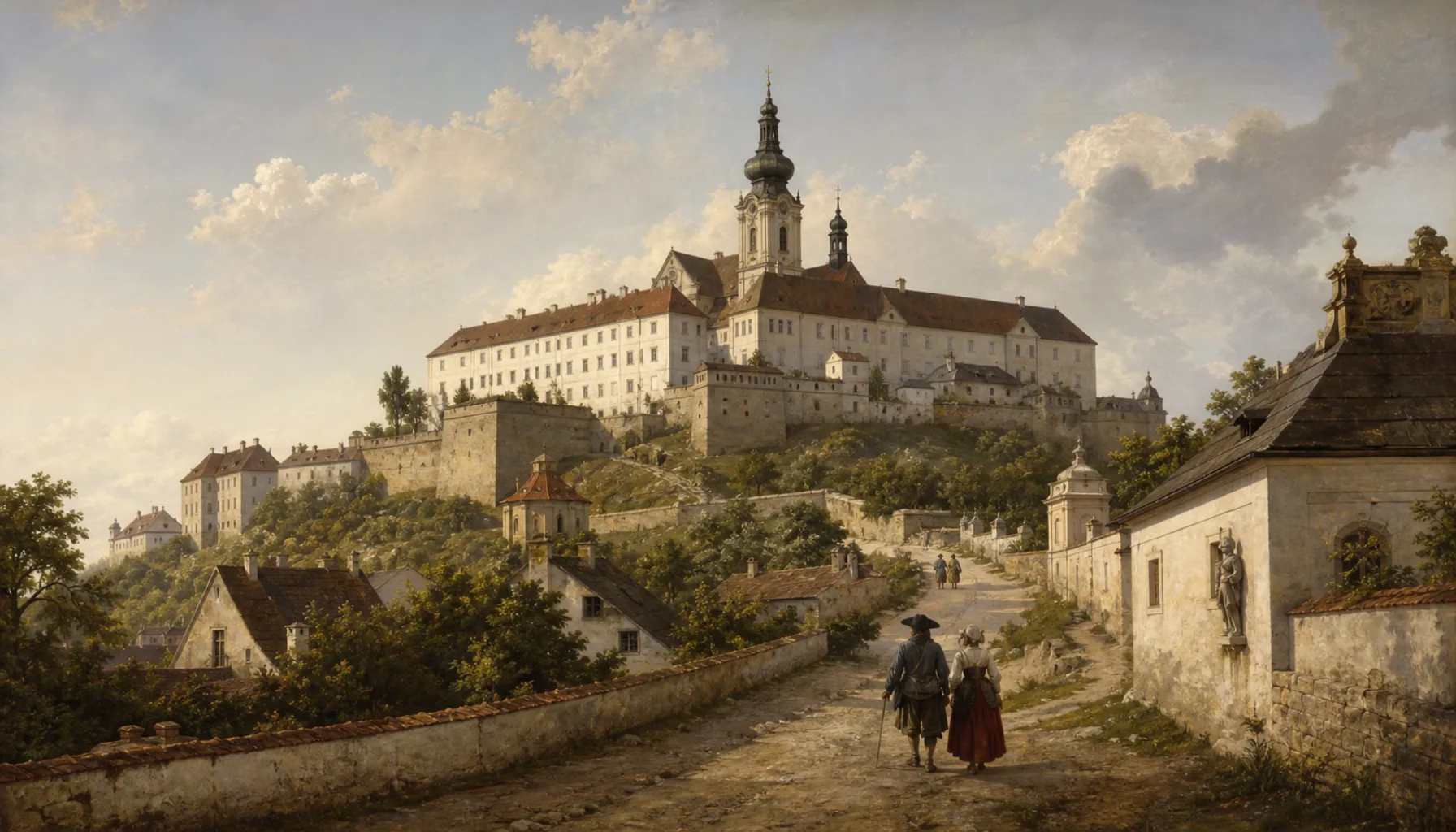
The eighteenth century is the one you actually see when you walk up the hill today. The bishops rebuilt the castle in Baroque: a white bishop's palace on the courtyard, the upper church remodelled, the whole complex turned from a fortress into a residence that happened to have walls. The Upper Town below filled with chapter houses and a plague column, and on the outer bastion a stone giant appeared — an atlas figure straining under the corner of the wall, whom Nitra has called Corgoň ever since and still touches for luck. Nothing about that century was dramatic, which is exactly why so much of it is still standing.Osemnáste storočie je práve to, ktoré dnes cestou hore na hrad naozaj vidíte. Biskupi hrad prestavali barokovo: na nádvorí biely biskupský palác, prestavaný horný kostol, celý areál premenený z pevnosti na rezidenciu, ktorá má náhodou aj hradby. Horné mesto pod ním sa zaplnilo kanonickými domami a morovým stĺpom a na vonkajšej bašte sa objavil kamenný obor — atlant, ktorý sa napína pod rohom múru a ktorému Nitra odvtedy hovorí Corgoň a chodí sa ho dotýkať pre šťastie. Nič z toho storočia nebolo dramatické — a práve preto sa toho toľko zachovalo.