-
1600 BC – AD 8001600 pred n. l. – 800 n. l. The rock that was always worth holdingBralo, ktoré sa vždy oplatilo držať
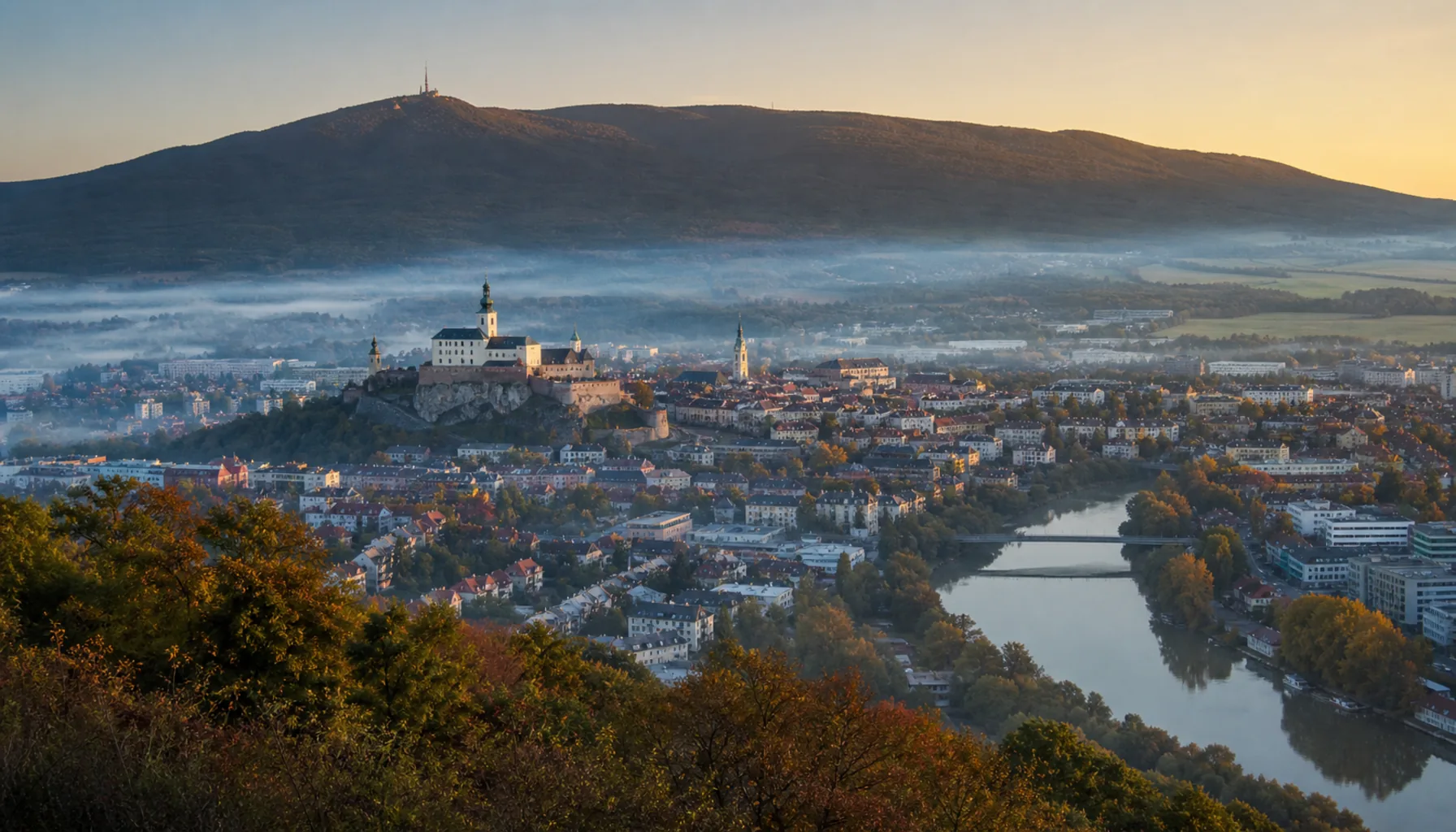
The castle rock was not chosen by the Slavs; it was chosen thousands of years before them. A fortified settlement stood on it in the Bronze Age, around 1600 BC, and Celts were living on the hill in the first century BC. Slavs settled it permanently from about the turn of the eighth and ninth centuries and threw a massive rampart of earth and timber around the summit. By the end of the eighth century the place had become the seat of what historians call the Principality of Nitra — a territory with its own prince, a hundred years before there was a kingdom of Hungary to swallow it.Hradné bralo si nevybrali Slovania — vybrali ho ľudia tisícročia pred nimi. Opevnené sídlisko na ňom stálo už v dobe bronzovej, okolo roku 1600 pred n. l., a v 1. storočí pred n. l. tu žili Kelti. Slovania sa na kopci natrvalo usadili na prelome 8. a 9. storočia a okolo vrcholu postavili mohutný val z hliny a dreva. Koncom 8. storočia sa tu začalo formovať Nitrianske kniežatstvo — územie s vlastným panovníkom, sto rokov predtým, než vzniklo Uhorské kráľovstvo, ktoré ho pohltilo.
Open this yearOtvoriť tento rok
-
c. 828 – 907okolo 828 – 907 Pribina's church, and a bishop in 880Pribinov kostol a biskup v roku 880
Around the year 828 Prince Pribina had a Christian church consecrated at Nitra by the archbishop of Salzburg. It is the first Christian church recorded anywhere on the territory of today's Slovakia, and the chronicle that reports it adds a detail worth keeping: Pribina himself was not yet baptised. In 833 the Moravian prince Mojmír I drove him out and joined Nitra to the realm we call Great Moravia, whose strongest ruler, Svätopluk, governed Nitra before he governed anything else. The institution that lasted arrived in 880, when a papal bull founded a bishopric here — the oldest in Slovakia — with Wiching as its bishop. Great Moravia fell apart in the first decade of the tenth century; the church on the hill did not.Okolo roku 828 dal knieža Pribina v Nitre vysvätiť kresťanský kostol; posvätil ho salzburský arcibiskup. Je to prvý známy kresťanský kostol na území dnešného Slovenska a kronika, ktorá o ňom píše, dodáva podrobnosť, ktorú stojí za to nezabudnúť: sám Pribina vtedy ešte nebol pokrstený. Roku 833 ho moravské knieža Mojmír I. vyhnalo a Nitru pripojilo k ríši, ktorú voláme Veľká Morava; jej najmocnejší panovník Svätopluk vládol najprv v Nitre a až potom všade inde. Trvalú inštitúciu však priniesol rok 880: pápežská bula vtedy v Nitre založila biskupstvo — najstaršie na Slovensku — a na jeho čelo postavila Wichinga. Veľká Morava sa v prvom desaťročí 10. storočia rozpadla, kostol na kopci nie.
Open this yearOtvoriť tento rok
-
11th – 12th century11. – 12. storočie A duchy, a stone castle and the oldest schoolKniežatstvo, kamenný hrad a najstaršia škola
Nitra was absorbed into the new kingdom of Hungary, but it did not become an ordinary town. Through the eleventh century and into the twelfth it was the seat of a duchy — a third of the kingdom, handed to the king's younger brother or son to govern, with Nitra as its capital. The stone castle went up on the rock in the eleventh century, and the small Romanesque church of St Emmeram inside it is already named in a text written about the middle of that century. The bishopric, interrupted when Great Moravia fell, was restored about 1105. And the two Zobor charters of 1111 and 1113, written for the Benedictine abbey on the hill above the town, are the oldest documents preserved in Slovakia — one of them mentions a school, the earliest recorded anywhere in the country.Nitra sa stala súčasťou nového Uhorského kráľovstva, obyčajným mestom sa však nestala. Počas 11. a začiatkom 12. storočia bola sídlom údelného kniežatstva — tretiny kráľovstva, ktorú kráľ dával spravovať mladšiemu bratovi alebo synovi. Kamenný hrad vyrástol na brale v 11. storočí a malý románsky Kostol svätého Emeráma v jeho vnútri spomína už text napísaný okolo polovice toho istého storočia. Biskupstvo, prerušené po páde Veľkej Moravy, obnovili okolo roku 1105. A dve zoborské listiny z rokov 1111 a 1113, napísané pre benediktínske opátstvo nad mestom, sú najstaršie dokumenty zachované na Slovensku — jedna z nich spomína školu, najstaršiu doloženú v krajine.
Open this yearOtvoriť tento rok
-
1241 – 12481241 – 1248 The town that survived — and was rewardedMesto, ktoré prežilo — a dostalo odmenu
The Mongol army that destroyed the Hungarian king's forces at Mohi in 1241 swept across the kingdom, and almost everything it met was made of wood. Nitra survived the invasion. The lesson King Béla IV drew from the catastrophe changed the whole country: he ordered stone castles built on the rocks, which is why most Slovak castles date from the decades after 1241 rather than before it. Nitra already had its castle, so it got a different reward — in 1248 Béla granted the town the privileges of a free royal town, meaning it answered to the king alone and could run its own affairs.Mongolské vojsko, ktoré roku 1241 rozdrvilo uhorské oddiely pri rieke Slanej, sa prehnalo celým kráľovstvom — a takmer všetko, na čo narazilo, bolo z dreva. Nitra vpád prežila. Poučenie, ktoré si z katastrofy odniesol kráľ Belo IV., zmenilo celú krajinu: dal stavať kamenné hrady na skalách, a práve preto väčšina slovenských hradov pochádza z desaťročí po roku 1241, nie spred neho. Nitra hrad už mala, a tak dostala inú odmenu — roku 1248 jej Belo udelil výsady slobodného kráľovského mesta, čiže podliehala priamo kráľovi a mohla si spravovať vlastné veci.
Open this yearOtvoriť tento rok
-
1271 – 13551271 – 1355 Lost privileges, and a bishop's townStratené výsady a biskupské mesto
The free royal town lasted forty years. In 1271 and 1272 the Bohemian king Ottokar II campaigned through the region and left Nitra badly damaged, and in 1288 the king handed the town over to the bishop of Nitra as compensation for what the bishopric had lost. From that moment Nitra was a bishop's town rather than a royal one — a demotion in law it would not undo until 1848. In the early fourteenth century Matúš Čák of Trenčín, who ruled most of western Slovakia as though it were his own kingdom, damaged the town and the castle several times over. After him a bishop from the Polish Piast family built a new Gothic cathedral on the rock; the work was finished in 1355, and its tall upper church still stands above the Baroque one.Slobodné kráľovské mesto vydržalo štyridsať rokov. V rokoch 1271 a 1272 sa cez kraj prehnal český kráľ Přemysl Otakar II. a Nitru ťažko poškodil; roku 1288 kráľ mesto odovzdal nitrianskemu biskupovi ako náhradu za to, o čo biskupstvo prišlo. Odvtedy bola Nitra mestom biskupským, nie kráľovským — právny zostup, ktorý sa jej podarilo zvrátiť až roku 1848. Začiatkom 14. storočia mesto aj hrad viackrát poškodil Matúš Čák Trenčiansky, ktorý ovládal západné Slovensko, akoby to bolo jeho vlastné kráľovstvo. Po ňom dal biskup z poľského rodu Piastovcov postaviť na brale novú gotickú katedrálu; stavba sa dokončila roku 1355 a jej vysoký horný kostol stojí nad barokovým dodnes.
Open this yearOtvoriť tento rok
-
1526 – 16851526 – 1685 A frontier fortressPevnosť na hranici
After the Hungarian army was destroyed at Mohács in 1526 the Ottoman frontier moved north, and Nitra — a quiet church town in the middle of a kingdom — found itself near the edge of one. Through the sixteenth and seventeenth centuries the castle was rebuilt for artillery: thicker walls, bastions pushed out at the corners, a Renaissance palace inside and a new inner gate. Ottoman armies tried three times and failed. They succeeded in 1663, in the campaign that also took the great fortress of Nové Zámky downstream, and imperial troops recaptured Nitra on 2 May 1664. The countryside around the city stayed exposed to raiding until Nové Zámky itself was retaken in 1685.Po zničení uhorského vojska pri Moháči roku 1526 sa osmanská hranica posunula na sever a Nitra — pokojné cirkevné mesto uprostred kráľovstva — sa zrazu ocitla takmer na jej okraji. V 16. a 17. storočí hrad prestavali pre delá: hrubšie múry, bašty vysunuté do rohov, renesančný palác vnútri a nová vnútorná brána. Osmanské vojská to skúsili trikrát a neuspeli. Podarilo sa im to roku 1663, v ťažení, ktoré im prinieslo aj veľkú pevnosť Nové Zámky, a cisárske vojsko Nitru dobylo späť 2. mája 1664. Okolie mesta zostalo vystavené nájazdom až do roku 1685, keď sa Nové Zámky vrátili do habsburských rúk.
Open this yearOtvoriť tento rok
-
1604 – 17111604 – 1711 Burned by its own sideVypálené vlastnými
The Ottomans were not the only army in the neighbourhood. For more than a century Hungarian nobles rose against the Habsburg emperors — Bocskai, then Bethlen in the seventeenth century, and finally the great kuruc war of Francis II Rákóczi from 1703 to 1711 — and Nitra was fought over in all of them. Rákóczi's commander Bercsényi took the castle, and in 1708 the town below it burned down. This is the honest answer to a story you will hear at half the castles in Slovakia: far more damage was done by these civil wars, and by the demolitions the Habsburgs ordered afterwards, than by any Turkish army. Nitra was rebuilt each time because a bishop with an income lived on the hill and had a reason to rebuild it.Osmani neboli jediné vojsko v okolí. Vyše storočia sa uhorská šľachta búrila proti habsburským panovníkom — Bocskai, potom v 17. storočí Bethlen a napokon veľká kurucká vojna Františka II. Rákócziho v rokoch 1703 až 1711 — a o Nitru sa bojovalo vo všetkých. Rákócziho veliteľ Bercséni hrad obsadil a roku 1708 mesto pod ním vyhorelo. Toto je poctivá odpoveď na historku, ktorú počujete na polovici slovenských hradov: oveľa väčšie škody narobili tieto domáce vojny — a búranie, ktoré po nich nariadili Habsburgovci — než ktorékoľvek turecké vojsko. Nitru zakaždým postavili znova preto, lebo na kopci býval biskup s príjmami, ktorý mal dôvod stavať.
Open this yearOtvoriť tento rok
-
18th century18. storočie The white Baroque townBiele barokové mesto
The eighteenth century is the one you actually see when you walk up the hill today. The bishops rebuilt the castle in Baroque: a white bishop's palace on the courtyard, the upper church remodelled, the whole complex turned from a fortress into a residence that happened to have walls. The Upper Town below filled with chapter houses and a plague column, and on the outer bastion a stone giant appeared — an atlas figure straining under the corner of the wall, whom Nitra has called Corgoň ever since and still touches for luck. Nothing about that century was dramatic, which is exactly why so much of it is still standing.Osemnáste storočie je práve to, ktoré dnes cestou hore na hrad naozaj vidíte. Biskupi hrad prestavali barokovo: na nádvorí biely biskupský palác, prestavaný horný kostol, celý areál premenený z pevnosti na rezidenciu, ktorá má náhodou aj hradby. Horné mesto pod ním sa zaplnilo kanonickými domami a morovým stĺpom a na vonkajšej bašte sa objavil kamenný obor — atlant, ktorý sa napína pod rohom múru a ktorému Nitra odvtedy hovorí Corgoň a chodí sa ho dotýkať pre šťastie. Nič z toho storočia nebolo dramatické — a práve preto sa toho toľko zachovalo.
Open this yearOtvoriť tento rok
-
1848 – 18491848 – 1849 Self-government, after 560 yearsSamospráva po 560 rokoch
The revolutions of 1848 swept serfdom away across the Habsburg empire, and they gave Nitra back something it had lost in 1288: the right to govern itself. For the first time in five and a half centuries the town was not the bishop's property. The same decades were the beginning of the Slovak national awakening, and Nitra mattered to it as a symbol more than as a place — writers reached for Pribina and Great Moravia to argue that Slovaks had a state of their own long before anyone else in this corner of Europe. A city can be used as a piece of evidence, and this one was.Revolučný rok 1848 zrušil v habsburskej monarchii poddanstvo a Nitre vrátil to, o čo prišla roku 1288: právo spravovať samu seba. Po piatich a pol storočiach nebolo mesto prvý raz biskupovým majetkom. Tie isté desaťročia boli začiatkom slovenského národného obrodenia a Nitra v ňom znamenala viac ako symbol než ako miesto — spisovatelia sa odvolávali na Pribinu a Veľkú Moravu, aby dokázali, že Slováci mali vlastný štát dávno pred inými v tomto kúte Európy. Aj mesto môže poslúžiť ako dôkaz a toto poslúžilo.
Open this yearOtvoriť tento rok
-
1867 – 19141867 – 1914 The railway, the factories, the countyŽeleznica, továrne, župa
Under Austria-Hungary Nitra was the seat of Nitra county, a Hungarian administrative capital in a countryside that spoke Slovak, and the state policy of Magyarisation pressed hard on Slovak schools and associations. The railway arrived late — in 1876, on a branch from Šurany — and lines to Topoľčany, Hlohovec and Nové Zámky followed. Industry came with it: a distillery, a brewery, a dairy and a factory making agricultural machinery, all of them processing what the black soil of the lowland grew.V Rakúsko-Uhorsku bola Nitra sídlom Nitrianskej župy — uhorským správnym centrom uprostred kraja, ktorý hovoril po slovensky — a štátna politika maďarizácie tvrdo doliehala na slovenské školy a spolky. Železnica prišla neskoro: roku 1876 odbočkou zo Šurian, potom pribudli trate na Topoľčany, Hlohovec a Nové Zámky. S ňou prišiel priemysel — liehovar, pivovar, mliekareň, továreň na poľnohospodárske stroje — a všetko spracúvalo to, čo urodila čierna zem nížiny.
Open this yearOtvoriť tento rok
-
1918 – 19381918 – 1938 A new state, and a new language in the officesNový štát a nový jazyk na úradoch
Austria-Hungary collapsed in the autumn of 1918 and Czechoslovak troops occupied Nitra that December; the town's Hungarian national council formally protested against the occupation on 10 December 1918. The change was not only a flag. Slovak replaced Hungarian in the offices and the schools, and for the first time the language most people in the surrounding villages actually spoke was the language of the state as well. Nitra stayed a regional capital and stayed what it had long been — a market and church town on the edge of the best farmland in the country.Rakúsko-Uhorsko sa na jeseň 1918 rozpadlo a v decembri obsadili Nitru československé vojská; miestna maďarská národná rada 10. decembra 1918 formálne protestovala proti obsadeniu mesta. Nešlo len o výmenu zástavy. Na úradoch a v školách nahradila maďarčinu slovenčina a jazyk, ktorým naozaj hovorila väčšina ľudí v okolitých dedinách, sa prvý raz stal aj jazykom štátu. Nitra zostala krajským centrom a zostala aj tým, čím bola dávno predtým — trhovým a cirkevným mestom na okraji najlepšej ornej pôdy v krajine.
Open this yearOtvoriť tento rok
-
1938 – 19391938 – 1939 The border movesHranica sa posunie
The First Vienna Award of 2 November 1938 gave southern Slovakia to Hungary — Nové Zámky, Levice and Komárno among the towns lost — and the new frontier ran across the lowland just south of Nitra. On 14 March 1939 the Slovak assembly declared independence under German pressure.Prvá viedenská arbitráž z 2. novembra 1938 pripojila južné Slovensko k Maďarsku — okrem iných miest aj Nové Zámky, Levice a Komárno — a nová hranica viedla nížinou tesne na juh od Nitry. 14. marca 1939 vyhlásil slovenský snem pod nemeckým nátlakom samostatnosť.
Open this yearOtvoriť tento rok
-
1944 – 19451944 – 1945 The Uprising that did not reach here, and 166 bombsPovstanie, ktoré sem nedošlo, a 166 bômb
The Slovak National Uprising was declared at Banská Bystrica on 29 August 1944 and at its height held more than half the country — but never Nitra. The city lay west of the insurgent territory and spent the last months of the war under the regime and then under German occupation. On Monday 26 March 1945 the Soviet 5th Air Army bombed it: 166 bombs fell on a market day and 345 people died, most of them civilians. Troops of the 2nd Ukrainian Front took the city days later, at the end of March, as the front rolled on west toward Bratislava.Slovenské národné povstanie vypuklo 29. augusta 1944 v Banskej Bystrici a v najlepších chvíľach ovládalo vyše polovice krajiny — Nitru však nikdy. Mesto ležalo západne od povstaleckého územia a posledné mesiace vojny prežilo pod režimom a potom pod nemeckou okupáciou. V pondelok 26. marca 1945 ho bombardovala sovietska 5. letecká armáda: v trhový deň naň dopadlo 166 bômb a zahynulo 345 ľudí, väčšinou civilistov. O niekoľko dní neskôr, ešte koncom marca, mesto obsadili vojská 2. ukrajinského frontu a front sa posunul ďalej na západ k Bratislave.
Open this yearOtvoriť tento rok
-
1948 – 19891948 – 1989 The agricultural capitalPoľnohospodárske hlavné mesto
The Communist Party took full power in February 1948 and governed for forty-one years. In a bishop's city the pressure on the Catholic church was felt directly: religious orders were dissolved, seminaries closed, and church life was watched and restricted. At the same time the state decided what Nitra would be for. The agricultural university moved here in 1952 and a teacher-training institute followed in 1959; the surrounding villages were annexed to the city, panel-block estates rose at Chrenová and Klokočina, and the national agricultural fair filled a new exhibition ground every summer. By 1989 Nitra was a far bigger city than the one the Communists had inherited, and the whole country associated it with farming.Vo februári 1948 prevzala všetku moc komunistická strana a vládla štyridsaťjeden rokov. V biskupskom meste bolo tlak na katolícku cirkev cítiť priamo: rehole zrušili, semináre zatvorili a cirkevný život sledovali a obmedzovali. Zároveň štát rozhodol, na čo Nitra bude. Roku 1952 sa sem presťahovala poľnohospodárska vysoká škola, roku 1959 pribudol pedagogický inštitút; okolité dediny pripojili k mestu, na Chrenovej a Klokočine vyrástli panelové sídliská a celoštátna poľnohospodárska výstava každé leto zaplnila nové výstavisko. Roku 1989 bola Nitra oveľa väčším mestom, než aké komunisti prevzali, a celá krajina si ju spájala s poľnohospodárstvom.
Open this yearOtvoriť tento rok
-
November 1989 – 1996november 1989 – 1996 The bells and the universityZvony a univerzita
The Velvet Revolution reached Nitra as it reached every Slovak city: students first, then the general strike of 27 November 1989 that broke the regime's nerve within weeks and without a shot fired. In a city built around a cathedral the most visible change was religious — the church came out from under four decades of supervision, and the castle hill went back to being an ordinary working bishop's seat rather than a monument under a suspicious eye. The teacher-training institute of 1959 grew into a full university, and since 1996 it has carried the name of Constantine the Philosopher — the scholar the world knows as Cyril, who brought the Slavonic alphabet to Great Moravia. Naming a brand-new university after a ninth-century missionary is very much a Nitra thing to do.Nežná revolúcia prišla do Nitry tak ako do každého slovenského mesta: najprv študenti a potom generálny štrajk 27. novembra 1989, ktorý za pár týždňov a bez jediného výstrelu zlomil režimu vôľu. V meste postavenom okolo katedrály bola najviditeľnejšia zmena náboženská — cirkev sa vymanila zo štyroch desaťročí dozoru a hradný kopec sa vrátil k tomu, čím bol: k bežnému fungujúcemu biskupskému sídlu, nie k pamiatke pod podozrievavým dohľadom. Z pedagogického inštitútu z roku 1959 vyrástla plnohodnotná univerzita a od roku 1996 nesie meno Konštantína Filozofa — učenca, ktorého svet pozná ako Cyrila a ktorý priniesol na Veľkú Moravu slovanské písmo. Pomenovať úplne novú univerzitu po misionárovi z 9. storočia je veľmi nitrianske rozhodnutie.
Open this yearOtvoriť tento rok
-
1993 – today1993 – dnes Cars on the plain below the castleAutá na rovine pod hradom
Czechoslovakia split peacefully on 1 January 1993, and in 1996 Nitra became the seat of the Nitra Region, one of Slovakia's eight self-governing kraje. The biggest change since then came from outside: in 2015 Jaguar Land Rover chose the plain south of the city for its first factory in continental Europe, the first vehicles came off the line in 2018, and suppliers and thousands of jobs followed into a city previously known for a cathedral and a lot of good soil. Nitra today has about 75,000 inhabitants, two public universities, and the same silhouette on the rock that it has had since the Middle Ages. Almost twelve centuries after Pribina's church, the oldest address in Slovakia is still occupied — which is rarer than it sounds.Česko-Slovensko sa 1. januára 1993 pokojne rozdelilo a roku 1996 sa Nitra stala sídlom Nitrianskeho kraja, jedného z ôsmich samosprávnych krajov Slovenska. Najväčšiu zmenu odvtedy priniesol niekto zvonka: roku 2015 si Jaguar Land Rover vybral rovinu južne od mesta pre svoj prvý závod na európskom kontinente, prvé autá zišli z linky roku 2018 a za nimi prišli dodávatelia a tisíce pracovných miest do mesta, ktoré dovtedy poznali skôr pre katedrálu a veľa dobrej pôdy. Nitra má dnes približne 75 000 obyvateľov, dve verejné vysoké školy a na brale tú istú siluetu ako v stredoveku. Takmer dvanásť storočí po Pribinovom kostole je najstaršia adresa na Slovensku stále obývaná — a to je zriedkavejšie, než to znie.
Open this yearOtvoriť tento rok