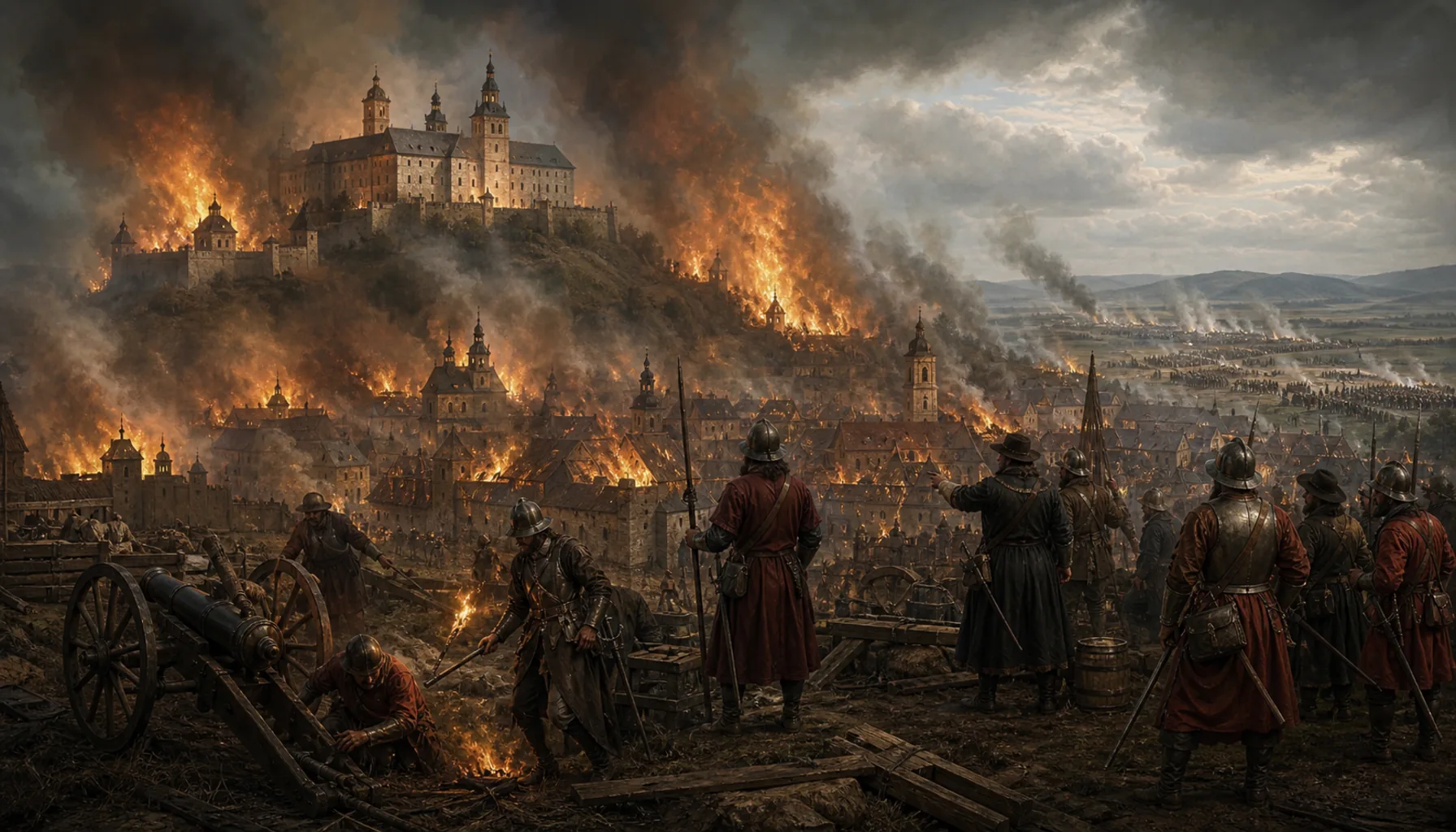
The Ottomans were not the only army in the neighbourhood. For more than a century Hungarian nobles rose against the Habsburg emperors — Bocskai, then Bethlen in the seventeenth century, and finally the great kuruc war of Francis II Rákóczi from 1703 to 1711 — and Nitra was fought over in all of them. Rákóczi's commander Bercsényi took the castle, and in 1708 the town below it burned down. This is the honest answer to a story you will hear at half the castles in Slovakia: far more damage was done by these civil wars, and by the demolitions the Habsburgs ordered afterwards, than by any Turkish army. Nitra was rebuilt each time because a bishop with an income lived on the hill and had a reason to rebuild it.Osmani neboli jediné vojsko v okolí. Vyše storočia sa uhorská šľachta búrila proti habsburským panovníkom — Bocskai, potom v 17. storočí Bethlen a napokon veľká kurucká vojna Františka II. Rákócziho v rokoch 1703 až 1711 — a o Nitru sa bojovalo vo všetkých. Rákócziho veliteľ Bercséni hrad obsadil a roku 1708 mesto pod ním vyhorelo. Toto je poctivá odpoveď na historku, ktorú počujete na polovici slovenských hradov: oveľa väčšie škody narobili tieto domáce vojny — a búranie, ktoré po nich nariadili Habsburgovci — než ktorékoľvek turecké vojsko. Nitru zakaždým postavili znova preto, lebo na kopci býval biskup s príjmami, ktorý mal dôvod stavať.