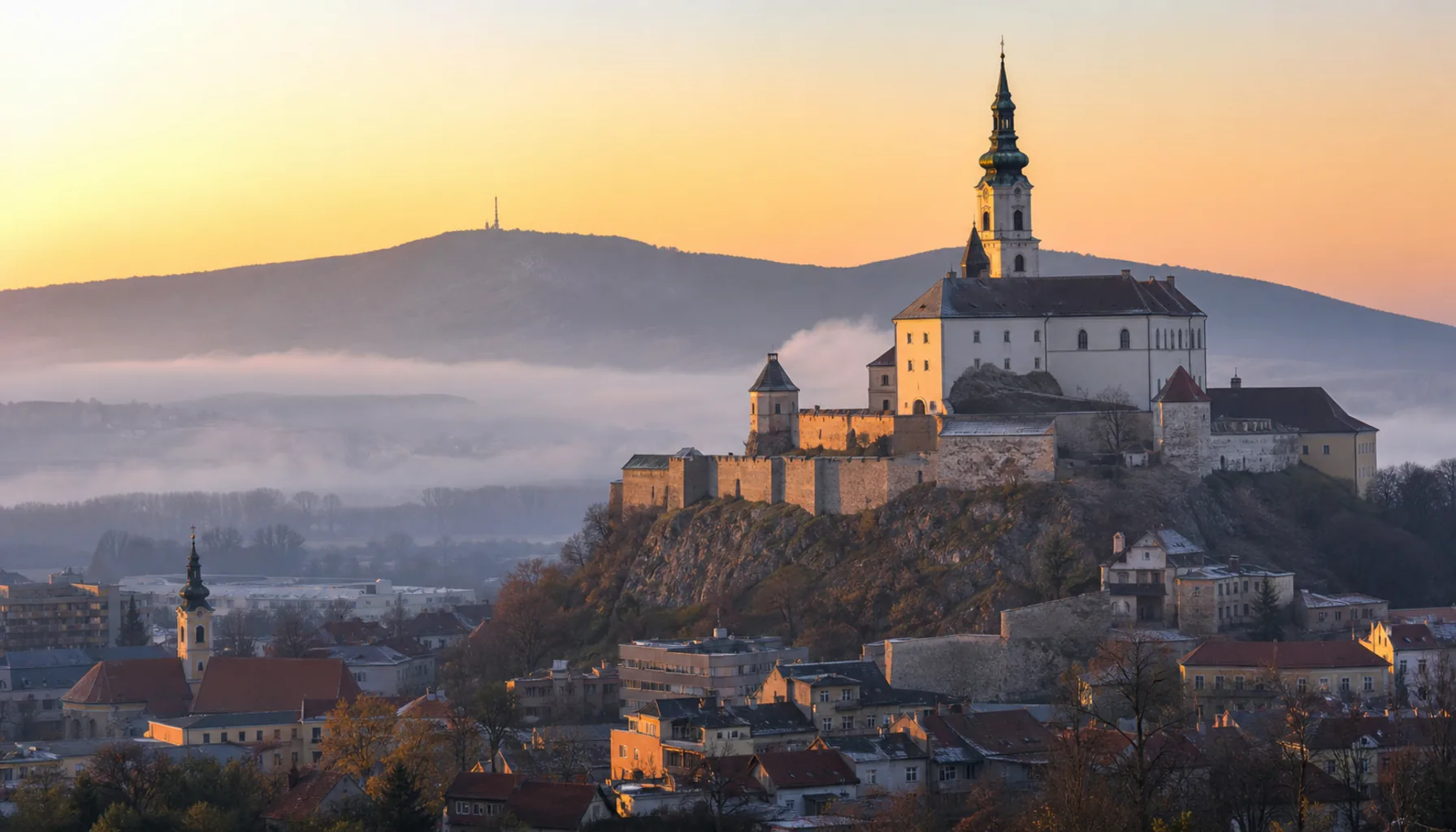
The Oldest Address in SlovakiaNajstaršia adresa na Slovensku
Nitra was the seat of the Principality of Nitra before there was a kingdom of Hungary to absorb it, and around the year 828 its ruler, Prince Pribina, had a Christian church consecrated here by the Archbishop of Salzburg. It is the first Christian church known anywhere on the territory of present-day Slovakia, and it predates the mission of Cyril and Methodius to Great Moravia by decades. One honest caveat travels with that date: tradition places the church on this castle rock, but archaeology has not settled where it actually stood, and you will meet more than one candidate site in the literature.Nitra bola sídlom Nitrianskeho kniežatstva ešte predtým, než ho pohltilo Uhorské kráľovstvo, a okolo roku 828 dal jej vládca, knieža Pribina, vysvätiť tunajší kresťanský kostol salzburským arcibiskupom. Je to prvý známy kresťanský kostol na území dnešného Slovenska a predchádza misii Cyrila a Metoda na Veľkej Morave o celé desaťročia. S tým dátumom však putuje aj jedna poctivá výhrada: tradícia kladie kostol na toto hradné bralo, archeológia však jeho polohu doteraz nepotvrdila a v odbornej literatúre nájdete viac ako jedno možné miesto.
What is not in doubt is what came half a century later. The Bishopric of Nitra, established in 880, is the oldest in Slovakia; after a long interruption it was restored in the early twelfth century and has been seated on this hill ever since. That single fact explains the whole character of the place. Nitra Castle is not only a fortress — it is, and has continuously been, an ecclesiastical seat, and a bishop with an income repairs his roof. Where other Slovak castles were abandoned after a fire or a siege and left to the weather, this one always had a reason to be rebuilt.O tom, čo prišlo o pol storočia neskôr, však pochybnosti nie sú. Nitrianske biskupstvo, zriadené v roku 880, je najstaršie na Slovensku; po dlhom prerušení ho obnovili na začiatku dvanásteho storočia a odvtedy sídli na tomto kopci bez prestávky. Práve tento jediný fakt vysvetľuje celý charakter miesta. Nitriansky hrad nie je len pevnosť — je a nepretržite bol cirkevným sídlom, a biskup s príjmom si strechu opraví. Zatiaľ čo iné slovenské hrady po požiari alebo obliehaní opustili a nechali napospas počasiu, tento mal vždy dôvod, aby ho niekto postavil nanovo.
It needed the money. Through the sixteenth and seventeenth centuries the castle was fortified in successive waves against the Ottoman advance — the medieval walls thickened, bastions thrown out, the gate approach rebuilt for artillery. The Ottomans took Nitra all the same, briefly, in the 1660s, and the fortifications were damaged again during the Rákóczi uprising in the early eighteenth century. Each time the bishops rebuilt, and by the end of that century they had done it in Baroque — which is essentially the castle you walk into today: white walls, a bishop's residence, and a cathedral with three centuries stacked inside it.Peniaze na to potreboval. V šestnástom a sedemnástom storočí hrad opevňovali vo viacerých vlnách proti osmanskému postupu — stredoveké múry zhrubli, pribudli bašty a prístup k bráne prestavali pre delostrelectvo. Osmani napriek tomu Nitru v šesťdesiatych rokoch sedemnásteho storočia nakrátko dobyli a opevnenie utrpelo znovu počas Rákócziho povstania na začiatku osemnásteho storočia. Biskupi zakaždým stavali nanovo a do konca toho storočia to urobili v barokovom duchu — a to je v podstate hrad, do ktorého dnes vchádzate: biele múry, biskupská rezidencia a katedrála s troma storočiami naskladanými vnútri.