Strážske · Zemplín lowlandStrážske · Zemplínska nížina

Culture in StrážskeKultúra v Strážskom

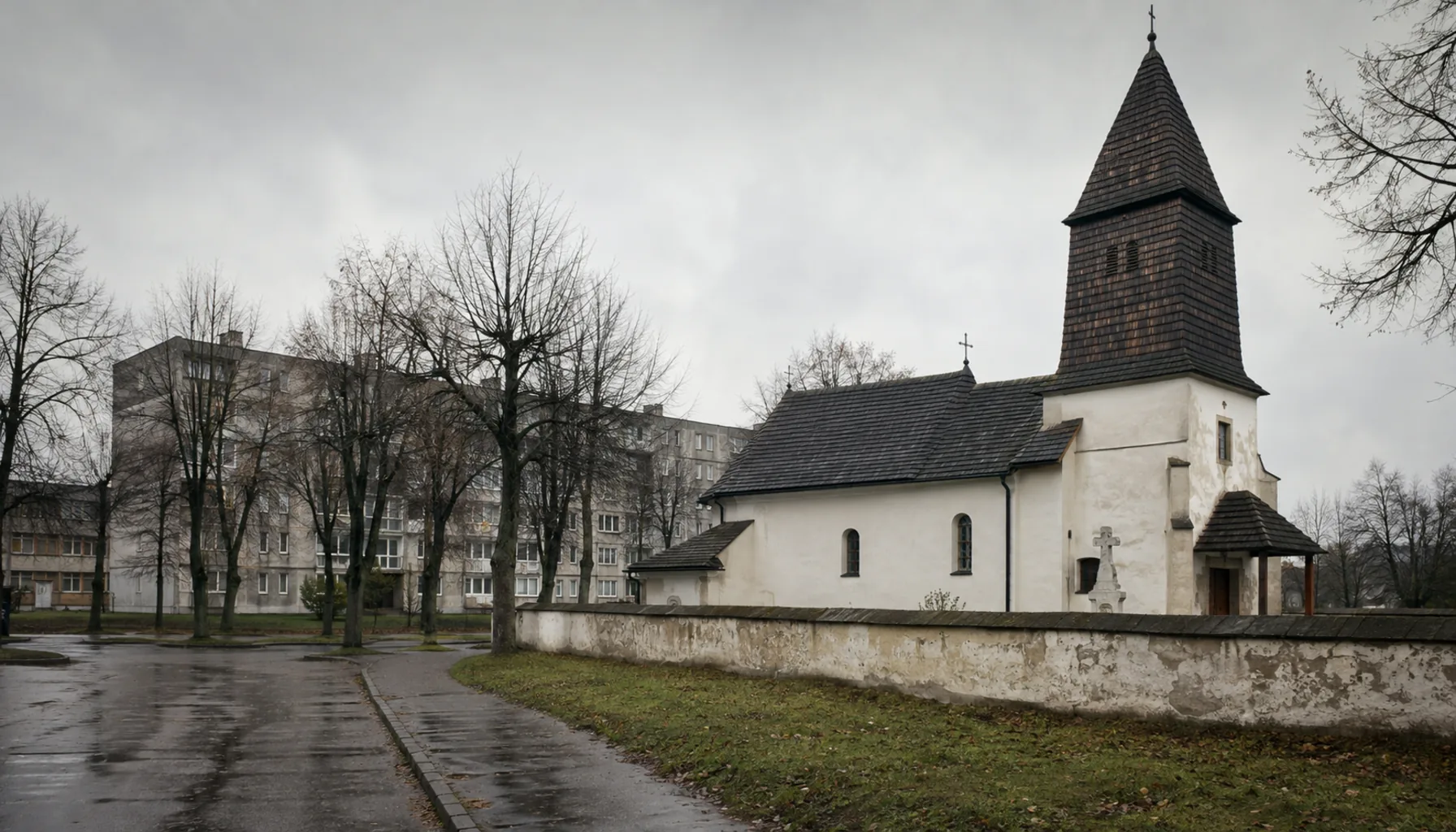
A village until a chemical works arrived in the late 1950s and made it a town, Strážske has the cultural life that comes with that: a cultural centre, a library, a school of art for children, and an old church at the edge of a street plan drawn on paper.Strážske bolo dedinou, kým sem koncom päťdesiatych rokov neprišiel chemický závod a neurobil z neho mesto — a kultúrny život tomu zodpovedá: kultúrne stredisko, knižnica, základná umelecká škola a starý kostol na okraji uličnej siete nakreslenej na papieri.

The old village church at the edge of Strážske, with the concrete blocks that turned a Laborec village into a town
The old village church at the edge of Strážske, with the concrete blocks that turned a Laborec village into a town.Starý dedinský kostol na okraji Strážskeho a panelové domy, ktoré z dediny pri Laborci urobili mesto.

The year in StrážskeRok v Strážskom

Strážske keeps the year a small Slovak town keeps, and we are not going to invent names for it: a town day in the warm months, markets on the square, a Christmas programme, sporting fixtures, and whatever the cultural centre has booked into its hall between them.Strážske drží rok, aký drží každé malé slovenské mesto, a nebudeme si preň vymýšľať názvy: dni mesta v teplých mesiacoch, trhy na námestí, vianočný program, športové podujatia a to, čo si medzi tým kultúrne stredisko objedná do sály.

What the town does not have is an event that draws people from outside it, and a page that tells you otherwise is selling something. What is actually on gets announced locally and close to the date. For anything larger the calendar belongs to the neighbours — Humenné up the Laborec, Michalovce a short way south, and in summer the shore of Zemplínska šírava east of both.Čo mesto nemá, je podujatie, ktoré by priťahovalo ľudí zvonku, a stránka, ktorá tvrdí opak, niečo predáva. To, čo sa naozaj koná, sa oznamuje miestne a krátko pred termínom. Pri čomkoľvek väčšom patrí kalendár susedom — Humennému proti prúdu Laborca, Michalovciam kúsok na juh a v lete brehu Zemplínskej šíravy východne od oboch.

Where culture livesKde žije kultúra

The institutions are the standard ones and we name none of them individually, because programmes and premises here change faster than a page like this does: a cultural centre with a hall, a public library, a school of art for children, and the schools, which in a town built in one generation carry a good deal of the local programme.Inštitúcie sú tie obvyklé a jednotlivo ich tu nemenujeme, pretože programy a priestory sa menia rýchlejšie než takáto stránka: kultúrne stredisko so sálou, mestská knižnica, základná umelecká škola a školy, ktoré v meste postavenom za jednu generáciu nesú značnú časť miestneho programu.

There is no museum in Strážske, and pretending otherwise would be a disservice. The collections of this country are north, in Humenné, where the Renaissance manor house holds the regional museum and an open-air museum of wooden village buildings stands behind it. That short trip explains the Laborec valley better than anything in Strážske can.V Strážskom nie je múzeum a tváriť sa inak by bola medvedia služba. Zbierky tohto kraja sú na severe, v Humennom, kde renesančný kaštieľ ukrýva vlastivedné múzeum a za ním stojí skanzen drevených dedinských stavieb. Ten krátky výlet vysvetlí údolie Laborca lepšie než čokoľvek v Strážskom.

One thing is worth saying plainly: the town's people came from everywhere in the valley at once. The interwar village exported people rather than goods, and then from the late 1950s the works pulled labour back out of villages up and down the Laborec. What the new town assembled was a whole region's habits rather than one village's inheritance.Jednu vec treba povedať priamo: obyvatelia mesta sem prišli z celého údolia naraz. Medzivojnová dedina vyvážala ľudí, nie tovar, a od konca päťdesiatych rokov závod pracovnú silu opäť stiahol z dedín pozdĺž celého Laborca. Nové mesto tak poskladalo zvyky celého kraja, a nie dedičstvo jednej dediny.

The buildings that carry itBudovy, ktoré ju nesú

The centre is post-war housing around a small square, and virtually everything you can see is younger than 1955. That is a description, not a complaint: if you want to see what eastern Slovakia looked like while it was being industrialised, this is a legible example — blocks of flats, a street plan drawn on paper, the public buildings on the square, and the works on the far side of the railway.Centrom je povojnová zástavba okolo malého námestia a prakticky všetko, čo tu vidíte, je mladšie ako rok 1955. Je to opis, nie sťažnosť: kto chce vidieť, ako vyzeralo východné Slovensko počas industrializácie, má tu čitateľný príklad — bytové domy, uličná sieť nakreslená na papieri, verejné budovy na námestí a závod na druhej strane železnice.

The older village survives at one edge, with its church, and the oldest thing in the town is its name. Strážske first appears in writing in 1337, in a charter dividing the estates of the noble family of Michalovce; in Hungarian documents it is Őrmező, guard field, and the Slovak name says the same, from stráž, a watch. Somebody here owed the duty of watching a road, which tells you the road is older than the record of it.Staršia dedina prežila na jednom okraji, aj s kostolom — a najstaršou vecou v meste je jeho meno. Strážske sa prvý raz písomne spomína v roku 1337, v listine deliacej majetky michalovského šľachtického rodu; v uhorských dokumentoch je to Őrmező, strážne pole, a slovenský názov hovorí to isté, od slova stráž. Niekto tu mal povinnosť strážiť cestu — a to znamená, že cesta je staršia než záznam o nej.

For built heritage the answer is the road north. Brekov castle stands on a white limestone crag above the Laborec on the way to Humenné, a ruin you walk up to with the whole valley under it. Eastward, the ruin of Vinné castle above Zemplínska šírava is the standard short walk of that country.Pri stavebných pamiatkach je odpoveďou cesta na sever. Hrad Brekov stojí na bielom vápencovom brale nad Laborcom po ceste do Humenného — zrúcanina, ku ktorej sa vyjde pešo a pod ktorou leží celé údolie. Na východe je zrúcanina Vinianskeho hradu nad Zemplínskou šíravou obvyklou krátkou vychádzkou tamojšieho kraja.

The plant, and what it leftZávod a to, čo po ňom zostalo

One more thing belongs on a page about what this town is, because it is what the town is known for. The works made polychlorinated biphenyls — insulating fluid for electrical equipment — under the trade name Delor until 1984, and they were banned internationally soon afterwards, because they do not break down and they build up in fat, in fish and in people.Na stránku o tom, čím toto mesto je, patrí ešte jedna vec, pretože práve ňou je mesto známe. Závod vyrábal až do roku 1984 polychlórované bifenyly — izolačnú kvapalinu do elektrických zariadení — pod obchodným názvom Delor, a krátko nato boli medzinárodne zakázané, lebo sa nerozkladajú a hromadia sa v tuku, v rybách aj v ľuďoch.

What was left in the plant's ground, in the sediments of the Laborec and the Ondava and downstream in the Zemplín lake country, is one of the best-documented environmental burdens in Slovakia. It is public record rather than local rumour, and the clean-up has become an industry of its own: monitoring, sealed deposits, and a recurring argument about who pays and when.To, čo zostalo v pôde areálu, v sedimentoch Laborca a Ondavy a nižšie po prúde v zemplínskej jazernej krajine, je jedna z najlepšie zdokumentovaných environmentálnych záťaží na Slovensku. Nie je to miestna povesť, ale verejný záznam, a sanácia sa tu stala samostatným odvetvím: monitoring, zapečatené skládky a opakovaný spor o to, kto zaplatí a kedy.

It sits on the culture page because a town's understanding of itself is culture. Strážske was made by one industry in one generation and has spent a second living with what that industry left; its real monument is underground and invisible, and the state has been budgeting for it since before most of the town's schoolchildren were born.Na stránke o kultúre to stojí preto, že to, ako mesto rozumie samo sebe, kultúrou je. Strážske vytvoril jeden priemysel za jednu generáciu a druhú žije s tým, čo po ňom zostalo; jeho skutočný pamätník je pod zemou a neviditeľný a štát naň rozpočtuje od čias, keď väčšina tunajších školákov ešte nebola na svete.

← Strážske← Strážske

WatchPozrite si

Sixteen videos for Culture in Strážske.Šestnásť videí — Kultúra v Strážskom.