Spišské Vlachy · Spiš and the Hornád valleySpišské Vlachy · Spiš a Hornádska dolina
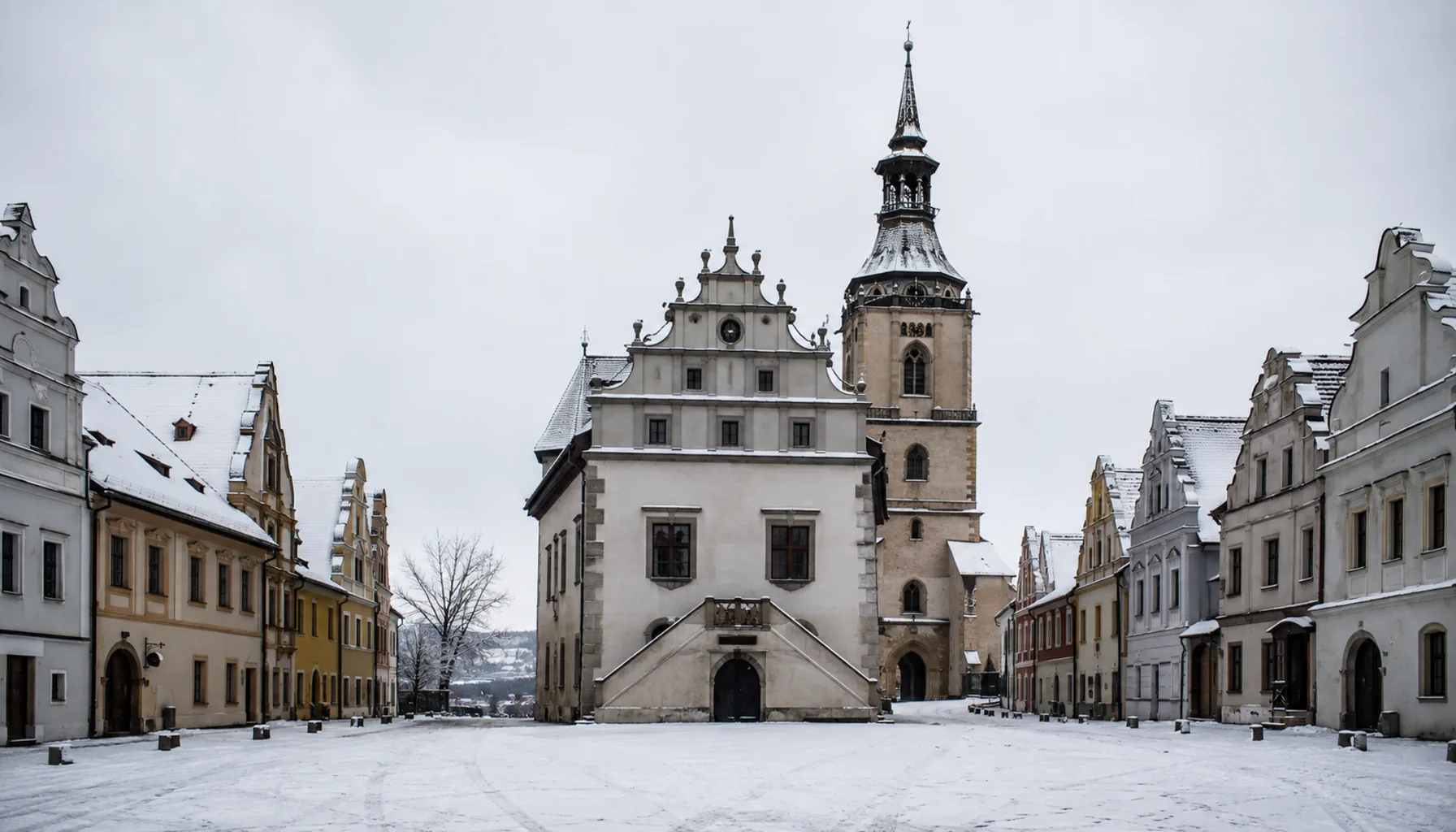
The Spiš square without the crowds: the same plan as Levoča at a quarter of the size, and the castle everyone else is driving to ten kilometres up the road.Spišské námestie bez davov: rovnaký pôdorys ako v Levoči v štvrtinovej veľkosti — a hrad, za ktorým všetci ostatní idú, desať kilometrov po ceste.
The visiting year here is really the neighbours'. Spiš Castle and Spišská Kapitula, about ten kilometres north-east, keep a season that runs from spring to autumn, and the church at Žehra is opened the way most village churches are — outside services, by arrangement. Spišské Vlachy sits inside that triangle and is one of the least visited places in it.Návštevnícky rok tu vlastne patrí susedom. Spišský hrad a Spišská Kapitula asi desať kilometrov na severovýchod majú sezónu od jari do jesene a kostol v Žehre sa otvára tak ako väčšina dedinských kostolov — mimo bohoslužieb a po dohode. Spišské Vlachy ležia vnútri toho trojuholníka a patria k jeho najmenej navštevovaným miestam.
The town's own calendar is the calendar of a small town: celebrations in the warm months, the church year, markets and school and club fixtures on and around the square, whatever the cultural centre has in its hall. We give no names and no dates, because they move and the town's own noticeboards are the only reliable source.Vlastný kalendár mesta je kalendárom malého mesta: oslavy v teplých mesiacoch, cirkevný rok, trhy a školské i spolkové termíny na námestí a okolo neho, to, čo má kultúrny dom v sále. Názvy ani dátumy neuvádzame, lebo sa menia a spoľahlivým zdrojom sú jedine oznamy mesta.
The other seasonal fact is the trains. The main line between Košice and Žilina runs through the town and the regional trains stop, though the fast ones do not, so arriving without a car means changing at Spišská Nová Ves a few minutes west — which is also where the buses into the Slovak Paradise start.Druhou sezónnou vecou sú vlaky. Hlavná trať medzi Košicami a Žilinou vedie cez mesto a osobné vlaky tu zastavujú, rýchliky nie — príchod bez auta teda znamená prestup v Spišskej Novej Vsi pár minút na západ, odkiaľ chodia aj autobusy do Slovenského raja.
There is no museum and no gallery in the town, and it is better to say that plainly than to dress up what is here. What Spišské Vlachy keeps is what small towns keep for themselves: a cultural centre with a hall, a library, a school of art for children, church choirs and amateur groups. We name none of them, because premises and programmes change faster than a page like this does.Múzeum ani galéria v meste nie sú a je lepšie to povedať rovno, než tunajšie pomery prikrášľovať. Spišské Vlachy si držia to, čo si malé mestá držia samy: kultúrny dom so sálou, knižnicu, základnú umeleckú školu, chrámové zbory a amatérske súbory. Menovite ich neuvádzame, lebo priestory aj programy sa menia rýchlejšie než takáto stránka.
Everything larger is within half an hour. Spišská Nová Ves has the regional museum, a professional theatre and a gallery; Levoča has the walled town and Master Pavol's altar; Spiš Castle is a visitor site with a season of its own, and Spišská Kapitula facing it across the fields can be walked through, though its cathedral is opened for visits rather than standing open.Všetko väčšie je do pol hodiny. Spišská Nová Ves má regionálne múzeum, profesionálne divadlo a galériu; Levoča hradby a oltár Majstra Pavla; Spišský hrad je sprístupnený a má vlastnú sezónu a Spišskou Kapitulou oproti nemu cez polia sa dá prejsť, hoci katedrála sa otvára na prehliadky, nestojí otvorená.
What the town does have, and what is easy to miss, is the square itself as somewhere to spend an hour. It is a lens a good deal shorter than the one at Spišská Nová Ves but built on the same idea, and because almost nobody stops here you can actually look at it.Čo mesto má a ľahko sa prehliadne, je samotné námestie ako miesto, kde sa dá stráviť hodina. Je to šošovka podstatne kratšia než v Spišskej Novej Vsi, ale postavená na tej istej myšlienke — a keďže tu takmer nikto nezastaví, dá sa na ňu naozaj pozerať.
One long square, wide in the middle where the market stood and narrowing at both ends where the gates were, with two-storey burgher houses down each side turning their gables and Renaissance attics inward. In the open middle stand the two buildings that stand in the middle of every Spiš square: the church and the town hall.Jedno dlhé námestie, v strede široké, kde stál trh, a na oboch koncoch zúžené, kde stáli brány, s dvojpodlažnými meštianskymi domami po oboch stranách, ktoré k nemu obracajú štíty a renesančné atiky. Vo voľnom strede stoja dve budovy, ktoré stoja v strede každého spišského námestia: kostol a radnica.
The church of St John the Baptist is Gothic, dated by Slovak monument records to around 1434 on the site of something older, and its tower is the one vertical for miles across the valley floor. The town hall went up in the same century and was given a Renaissance face afterwards. A free-standing town hall is the mark of a town that governed itself — and from 1271 this one belonged to the Province of the Twenty-Four Spiš Towns, electing its own judge and answering to the king rather than a landlord.Kostol svätého Jána Krstiteľa je gotický, pamiatkové súpisy ho datujú okolo roku 1434 na mieste čohosi staršieho, a jeho veža je jedinou vertikálou na míle ďaleko po dne doliny. Radnica vyrástla v tom istom storočí a neskôr dostala renesančnú tvár. Samostatne stojaca radnica je znakom mesta, ktoré si vládlo samo — a od roku 1271 patrilo toto mesto do Provincie dvadsiatich štyroch spišských miest: volilo si vlastného richtára a zodpovedalo sa kráľovi, nie zemepánovi.
In 1412 it was among the towns Sigismund of Luxembourg pledged to the Polish crown, and it was governed from Ľubovňa by a Polish starosta until 1772. But the reason the centre survives whole is less grand: the town never grew. It lived on crafts, its market and the traffic to the ore valleys south, later on commuting to the works at Krompachy and Spišská Nová Ves. No boom ever arrived rich enough to knock the old houses down.V roku 1412 bolo medzi mestami, ktoré dal Žigmund Luxemburský do zálohu poľskej korune, a až do roku 1772 ho z Ľubovne spravoval poľský starosta. Dôvod, prečo sa centrum zachovalo celé, je však oveľa menej vznešený: mesto nikdy nevyrástlo. Žilo z remesiel, z trhu a z premávky do rudných dolín na juhu, neskôr z dochádzania do závodov v Krompachoch a Spišskej Novej Vsi. Nikdy neprišiel taký blahobyt, aby staré domy zbúral.
The earliest records call the place villa Latina, the village of the Latins. Vlasi was the Slavic word for people of Romance speech; the German name was Wallendorf and the Hungarian Szepesolaszi, the Italians of the Spiš. Three languages saying the same thing: the settlers who founded this town were Walloons or Italians, brought in during the medieval colonisation of the region alongside the far more numerous Germans.Najstaršie záznamy volajú toto miesto villa Latina, dedina Latinov. Vlasi bolo slovanské pomenovanie ľudí románskej reči; nemecky sa mesto volalo Wallendorf a po maďarsky Szepesolaszi, spišskí Taliani. Tri jazyky hovoria to isté: osadníci, ktorí toto mesto založili, boli Valóni alebo Taliani, privedení počas stredovekej kolonizácie kraja popri oveľa početnejších Nemcoch.
Nothing of that speech survives. Within a couple of generations the town was German-speaking like its neighbours, and Wallendorf is the name it carried for most of its history; the German families of the Spiš, here since the thirteenth century, were gone by the end of the Second World War. What survives is the Slovak name, which kept the memory of the Walloons long after the Walloons themselves had been absorbed.Z ich reči sa nezachovalo nič. O dve generácie neskôr bolo mesto nemecky hovoriace ako jeho susedia a Wallendorf je meno, ktoré nosilo väčšinu svojich dejín; nemecké rodiny Spiša, usadené tu od trinásteho storočia, na konci druhej svetovej vojny zmizli. Zostalo slovenské meno, ktoré uchovalo pamäť na Valónov dávno po tom, čo sa Valóni sami stratili v okolí.
Sixteen videos for Culture in Spišské Vlachy.Šestnásť videí — Kultúra v Spišských Vlachoch.