Sečovce · Zemplín and the Dargov passSečovce · Zemplín a Dargovský priesmyk

Culture in SečovceKultúra v Sečovciach

A market town whose calendar has always been the fair calendar, with the district's one great monument standing on the pass a few kilometres behind it.Trhové mesto, ktorého kalendárom boli odjakživa jarmoky — a najväčšia pamiatka okresu stojí na priesmyku pár kilometrov za ním.

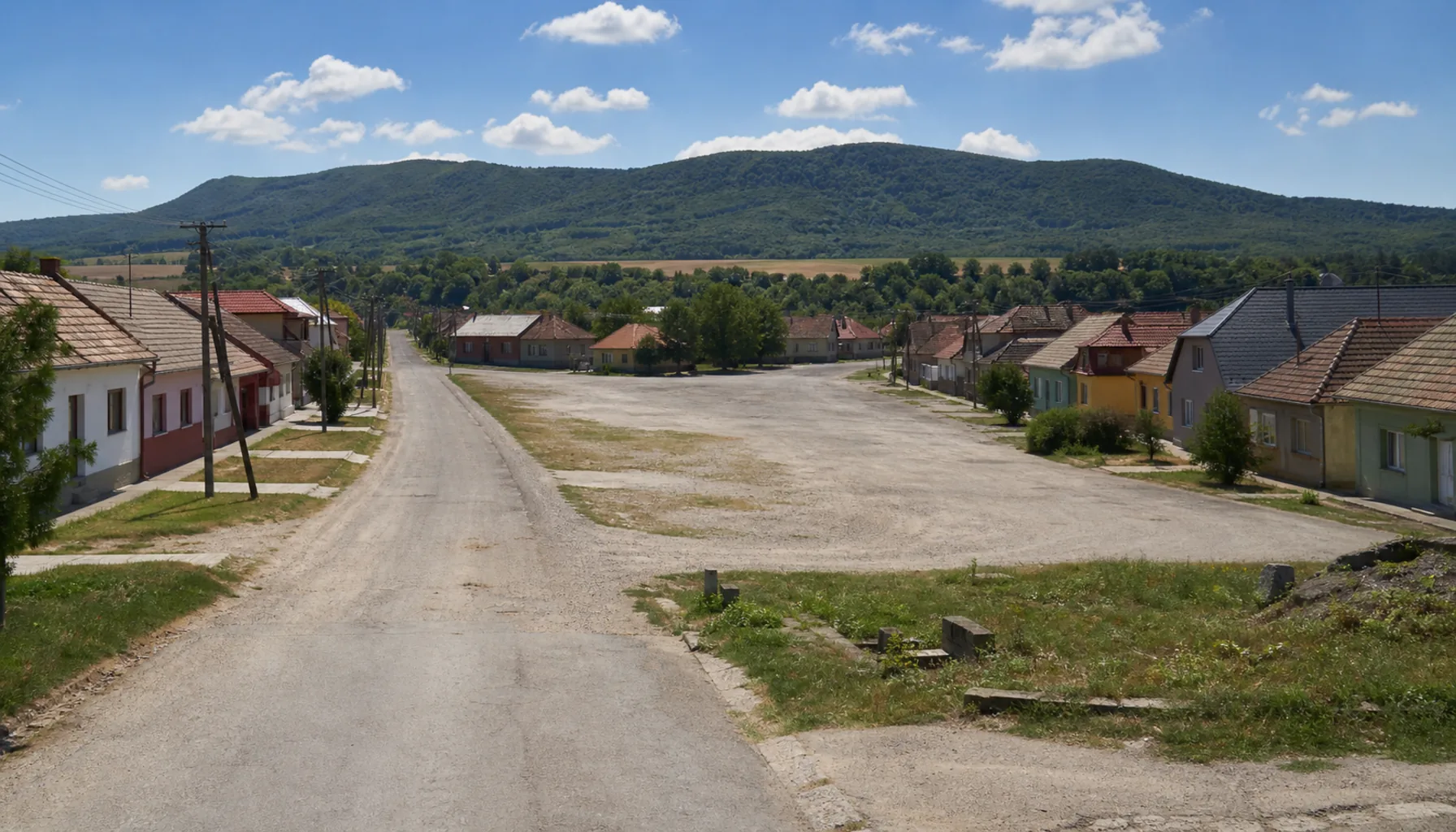
The long market street of Sečovce, widening in the middle where the fairs were held, under the Slanské vrchy
The long market street of Sečovce, widening in the middle where the fairs were held, under the Slanské vrchy.Dlhá trhová ulica Sečoviec, uprostred rozšírená do trhoviska, pod Slanskými vrchmi.

The year in SečovceRok v Sečovciach

In 1437 King Sigismund granted the town fair and toll rights: two annual fairs, one at St Martin in November and one at St Sophia in the spring. That privilege, not a castle or a mine, is what made Sečovce, and the shape of the place still shows it — one long street that widens in the middle into a market place. Market day is still the day the town fills.V roku 1437 udelil kráľ Žigmund mestu jarmočné a mýtne právo: dva výročné jarmoky, jeden na Martina v novembri a druhý na Žofiu na jar. Práve táto výsada — nie hrad a nie baňa — urobila zo Sečoviec mesto a pôdorys to dodnes ukazuje: jedna dlhá ulica, ktorá sa v strede rozširuje na trhovisko. Trhový deň je stále dňom, keď je mesto plné.

Beyond that the year is the ordinary year of a Zemplín district town: town celebrations in the warm months, the church calendar kept twice over by a Roman Catholic and a Greek Catholic parish, school and club fixtures, seasonal markets. We give no names and no dates: they move from year to year, and the town's own noticeboards are the only source worth trusting.Inak je rok obyčajným rokom zemplínskeho okresného mesta: mestské oslavy v teplých mesiacoch, cirkevný kalendár držaný dvojmo — v rímskokatolíckej aj gréckokatolíckej farnosti —, školské a spolkové termíny, sezónne trhy. Názvy ani dátumy neuvádzame: menia sa rok čo rok a jediným spoľahlivým zdrojom sú oznamy samotného mesta.

One fixed point of the district's year is not in the town at all. Commemorations at the Dargov memorial, up on the pass to the west, fall in winter, near the anniversary of the fighting that ended there in January 1945. They are formal and sombre rather than festive, and the memorial itself stands on open ground and can be visited on any day of the year.Jeden pevný bod v kalendári okresu v meste vôbec nie je. Spomienkové podujatia pri pamätníku na Dargove, hore na priesmyku na západ, pripadajú na zimu, blízko výročia bojov, ktoré sa tam skončili v januári 1945. Sú skôr vážne a slávnostné než sviatočné a samotný pamätník stojí na voľnom priestranstve — navštíviť sa dá ktorýkoľvek deň v roku.

Where culture livesKde žije kultúra

Sečovce keeps what a town of its size keeps for itself: a cultural centre with a hall and a programme, a library, a school of art for children, amateur groups and church choirs. We name none of them individually, because premises and programmes change faster than a page like this does.Sečovce si držia to, čo si mesto tejto veľkosti drží samo: kultúrne stredisko so sálou a programom, knižnicu, základnú umeleckú školu, amatérske súbory a chrámové zbory. Menovite ich neuvádzame, lebo priestory aj programy sa menia rýchlejšie než takáto stránka.

There is no museum and no gallery here, and it is better to say so than to dress the town up. For those you go to Trebišov, the district town to the south-east, where the manor and its park are the main heritage site of the district, or forty kilometres west to Košice.Múzeum ani galéria tu nie sú a je poctivejšie to povedať, než mesto prikrášľovať. Za nimi sa chodí do Trebišova, okresného mesta na juhovýchod, kde je hlavnou pamiatkou okresu kaštieľ s parkom, alebo štyridsať kilometrov na západ do Košíc.

What brings people to Sečovce itself is country rather than an institution: the oak and beech woods of the Slanské vrchy behind the town, with marked trails; the Tokaj vineyards beyond Trebišov; and the water of Zemplínska šírava under the Vihorlat to the north-east. The town is a practical base for all three, which is a fair description of what it has always been.Do samotných Sečoviec ľudí ťahá krajina, nie inštitúcia: dubové a bukové lesy Slanských vrchov za mestom so značenými chodníkmi, tokajské vinice za Trebišovom a voda Zemplínskej šíravy pod Vihorlatom na severovýchode. Mesto je praktickou základňou pre všetky tri, čo je napokon presný opis toho, čím vždy bolo.

The buildings that carry itBudovy, ktoré ju nesú

The market street is the monument. There is no castle here, no walls and no quarter of stone burgher houses, because there were no mines and no fortress to pay for them — and no rock to build a castle on, which is why Béla IV's castle-building after 1241 passed the town by. Sečovce got a charter to hold fairs instead, and a charter builds nothing. What it builds is a shape.Pamiatkou je trhová ulica. Nie je tu hrad, nie sú hradby ani kamenná meštianska štvrť, lebo neboli bane ani pevnosť, ktoré by ich zaplatili — a nie je tu ani skala pre hrad, preto sa mestu vyhla hradná výstavba Belu IV. po roku 1241. Sečovce dostali namiesto toho výsadu konať jarmoky, a výsada nepostaví nič. Postaví však tvar.

Two Catholic parishes, Roman and Greek, keep their own churches in the town. Two rites side by side is the ordinary arrangement of eastern Zemplín rather than an exception to it, and it is the clearest thing visible from the street that tells you where in the country you are: one faith, two liturgies, two sets of feast days, in a town of this size.Dve katolícke farnosti, rímska a grécka, tu majú vlastné kostoly. Dva obrady vedľa seba sú na východnom Zemplíne bežné usporiadanie, nie výnimka, a sú tým najviditeľnejším znakom z ulice, ktorý vám povie, kde v krajine ste: jedna viera, dve liturgie, dva okruhy sviatkov — v meste tejto veľkosti.

The one piece of architecture in the district built to be looked at stands outside the town, on the Dargov pass: a memorial to the Soviet soldiers who died forcing the ridge in the winter of 1944 and 1945, sculpted by the Košice artist Vojtech Löffler, unveiled on the tenth anniversary of the battle and moved to its present place above the road in 1975. It is sombre rather than pretty — an open saddle in the forest with the Zemplín plain laid out below it to the east.Jediná stavba okresu postavená na to, aby sa na ňu hľadelo, stojí mimo mesta, na Dargovskom priesmyku: pamätník sovietskym vojakom, ktorí padli pri dobýjaní hrebeňa v zime 1944 a 1945, dielo košického sochára Vojtecha Löfflera, odhalené na desiate výročie bitky a v roku 1975 prenesené na dnešné miesto nad cestou. Je skôr pochmúrny než pekný — otvorené sedlo v lese s celou zemplínskou rovinou pod ním na východ.

The man who printed the first Hungarian hymnbookMuž, ktorý vytlačil prvý maďarský spevník

The town's Hungarian name was Gálszécs, and a sixteenth-century writer carried it as his surname: István Gálszécsi, born here, one of the Hungarian pioneers of the Reformation. He studied at Vienna, Kraków and Wittenberg, taught in Košice and then in the school of his native town, and in 1536 published in Kraków the first printed Hungarian hymnbook with musical notation. A catechism followed in 1538.Maďarské meno mesta bolo Gálszécs a jeden spisovateľ šestnásteho storočia ho nosil ako priezvisko: István Gálszécsi, rodák odtiaľto, jeden z maďarských priekopníkov reformácie. Študoval vo Viedni, Krakove a Wittenbergu, učil v Košiciach a potom v škole svojho rodného mesta a v roku 1536 vydal v Krakove prvý tlačený maďarský spevník s notovým zápisom. V roku 1538 nasledoval katechizmus.

Only fragments of either book survive, which is arithmetic rather than neglect: Zemplín was fought over for the next two centuries, by Ottoman raiders, imperial armies and the anti-Habsburg risings, and paper does not survive that. The fact does, and it is worth knowing on a street that otherwise looks as though it has never produced anything but a market.Z oboch kníh sa zachovali len zlomky, a to skôr počtami než nedbanlivosťou: o Zemplín sa nasledujúce dve storočia bojovalo — osmanské vpády, cisárske vojská, protihabsburské povstania — a papier to neprežije. Fakt sám však áno a stojí za to vedieť o ňom na ulici, ktorá inak vyzerá, akoby nikdy nesplodila nič okrem trhu.

← Sečovce← Sečovce

WatchPozrite si

Sixteen videos for Culture in Sečovce.Šestnásť videí — Kultúra v Sečovciach.