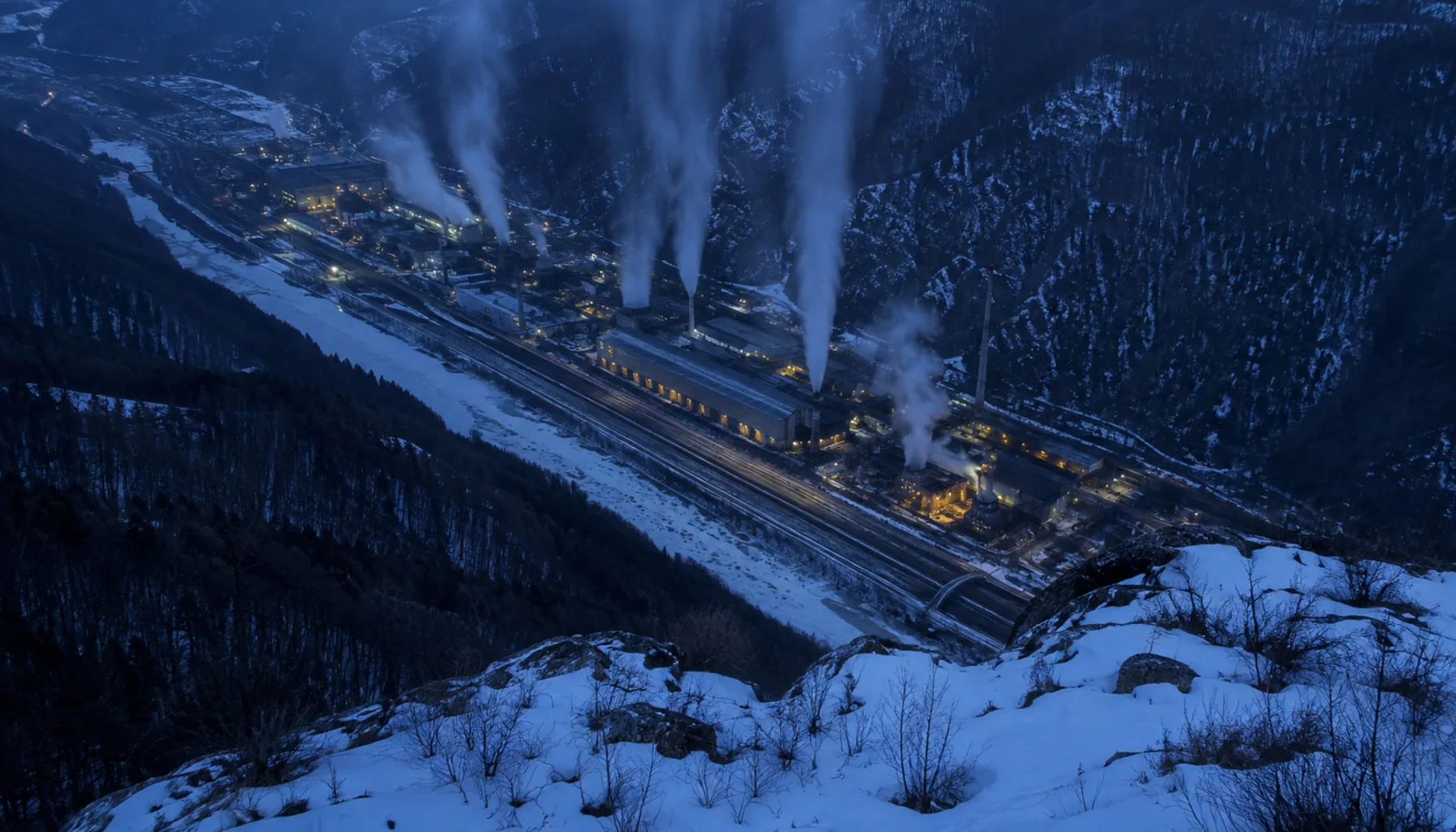
Krompachy · Hornád valley, SpišKrompachy · údolie Hornádu, Spiš
A works town whose culture sits close to its industry: a small square with a Gothic church, a ski ridge above it, and protected monuments that commemorate a workers' revolt rather than a saint.Robotnícke mesto, ktorého kultúra stojí blízko priemyslu: malé námestie s gotickým kostolom, lyžiarsky hrebeň nad ním a chránené pamiatky, ktoré nepripomínajú svätca, ale robotnícku vzburu.
Krompachy keeps the calendar of a Slovak town of roughly eight and a half thousand people: town days in the warm months, a market or two, church feasts, school and club events run out of the cultural centre, and a Christmas programme on the square. We give no titles or dates here, because in a town this size they are set a season at a time and change more often than a page like this does. The town's own noticeboards and its website are the listings worth trusting.Krompachy žijú kalendárom slovenského mesta s približne osemtisícpäťsto obyvateľmi: dni mesta v teplých mesiacoch, jarmok či dva, cirkevné sviatky, školské a záujmové podujatia z dielne kultúrneho strediska a vianočný program na námestí. Konkrétne názvy a termíny tu neuvádzame — v meste tejto veľkosti sa určujú od sezóny k sezóne a menia sa častejšie než takáto stránka. Dôverovať sa oplatí mestským výveskám a stránke mesta.
One date is genuinely the town's own. In February 1921, after the ironworks had shut and hunger had set in, gendarmes fired into a crowd of workers and their families and several people were killed. The victims' grave, the former ironworks administration building on Družstevná street and the memorial in front of it — unveiled in 1971, on the fiftieth anniversary — are all protected national cultural monuments. Sources still disagree about the exact day and the number of dead, which is worth knowing about an event barely a century old.Jeden dátum patrí naozaj len Krompachom. Vo februári 1921, keď boli železiarne zatvorené a v meste sa žilo o hlade, četníci vystrelili do zástupu robotníkov a ich rodín a niekoľko ľudí zahynulo. Hrob obetí, bývalá správna budova železiarní na Družstevnej ulici aj pamätník pred ňou — odhalený v roku 1971, k päťdesiatemu výročiu — sú chránené národné kultúrne pamiatky. Pramene sa dodnes nezhodujú na presnom dni ani na počte mŕtvych, čo pri udalosti starej sotva sto rokov stojí za zmienku.
The rest of the year is shaped by the ridge and the water rather than by a programme. Plejsy above the town has ski slopes and a lift, so winter weekends move uphill; in summer the Ružín reservoir downstream fills with people out from Košice, and the Slovak Paradise is a short way up the valley.Zvyšok roka určuje skôr hrebeň a voda než dramaturgia. Nad mestom sú Plejsy s lyžiarskymi svahmi a vlekom, takže zimné víkendy stúpajú do kopca; v lete sa vodná nádrž Ružín pod mestom plní ľuďmi z Košíc a Slovenský raj je kúsok proti prúdu.
The everyday cultural infrastructure here is the standard Slovak set and it works: a cultural centre with a hall and a programme, a public library, amateur choirs and folk groups, and a school of art for children. We name none of them individually, because premises, ensembles and programmes change faster than a page like this does, and a wrong name is worse than no name.Každodenná kultúrna infraštruktúra je tu štandardná slovenská a funguje: kultúrne stredisko so sálou a programom, mestská knižnica, amatérske spevácke zbory a folklórne skupiny a základná umelecká škola pre deti. Menovite tu neuvádzame ani jednu z nich, pretože priestory, telesá aj programy sa menia rýchlejšie než takáto stránka — a nesprávne meno je horšie než žiadne.
What Krompachy does not have is a museum of its own worth travelling for. The town was built by an industry rather than by a merchant class, and it never accumulated the collections or the burgher houses that carry them elsewhere on the Spiš; for that kind of visit people take the railway to the bigger towns along the valley. What can be read here is in the street instead — the protected monuments are industrial and political, an administration building, a grave and a memorial, and the working smelter below the town is the honest landmark.Čo Krompachy nemajú, je vlastné múzeum, pre ktoré by sa oplatilo cestovať. Mesto postavil priemysel, nie kupecká vrstva, a nikdy tu nevznikli zbierky ani meštianske domy, ktoré ich inde na Spiši nesú; za takouto návštevou sa chodí vlakom do väčších miest v doline. To, čo sa tu dá čítať, je namiesto toho na ulici — chránené pamiatky sú priemyselné a politické, správna budova, hrob a pamätník, a poctivou dominantou zostáva fungujúca huta pod mestom.
The parish church is Gothic in origin with later rebuilding, and it stands on a small square. There is no long row of burgher houses here of the kind Spišská Nová Ves and Levoča have. That absence is the information: Krompachy was built by an industry, and it still looks like it.Farský kostol je pôvodom gotický, neskôr prestavaný, a stojí na malom námestí. Dlhý rad meštianskych domov, aký majú Spišská Nová Ves či Levoča, tu nenájdete. Práve tá neprítomnosť je informácia: Krompachy postavil priemysel a dodnes tak vyzerajú.
The reason reaches back to 1282, when Krompachy is first named in writing, in a charter of King Ladislaus IV recording that the place belonged to the royal castle of Spiš. A village in a castle domain did not decide its own affairs. Whoever held the castle held Krompachy: Ján Jiskra of Brandýs from 1441, King Matthias Corvinus from 1460, the Zápoľský family from 1465, the Thurzos from 1531. None of them built anything here for the town's own sake, which is why the great architecture of Krompachy's own history stands above Spišské Podhradie rather than here.Dôvod siaha do roku 1282, keď sa Krompachy prvý raz spomínajú v listine kráľa Ladislava IV., ktorá hovorí, že patrili kráľovskému Spišskému hradu. Poddanská dedina v hradnom panstve o sebe nerozhodovala. Kto držal hrad, držal aj Krompachy: od roku 1441 Ján Jiskra z Brandýsa, od roku 1460 kráľ Matej Korvín, od roku 1465 Zápoľskovci a od roku 1531 Turzovci. Nikto z nich tu nestaval kvôli mestu samotnému, a preto veľká architektúra krompašských dejín stojí nad Spišským Podhradím, a nie tu.
The buildings that actually matter were left by the nineteenth and twentieth centuries. A modern ironworks and rolling mill were built here in 1841 by Ľudovít Trangus and other entrepreneurs, and by 1900 about 3,500 of the town's 6,500 people worked in them. In 1889 a small hydroelectric station of 22 kilowatts went up, one of the earliest electric plants anywhere in what is now Slovakia. Blocks of flats for the workforce followed after 1948, and in 1951 copper works started on the old industrial ground.Budovy, na ktorých naozaj záleží, zanechalo devätnáste a dvadsiate storočie. Moderné železiarne a valcovňu tu v roku 1841 postavil Ľudovít Trangus s ďalšími podnikateľmi a okolo roku 1900 v nich pracovalo asi 3 500 z 6 500 obyvateľov mesta. V roku 1889 tu vyrástla malá vodná elektráreň s výkonom 22 kilowattov, jedna z najstarších na území dnešného Slovenska. Panelové domy pre robotníkov pribudli po roku 1948 a v roku 1951 sa na starej priemyselnej pôde rozbehli medené hute.
Krompachy's sense of itself is industrial, and it is not sentimental about it. Slovak accounts call the plant here the largest ironworks in the Kingdom of Hungary at the turn of the twentieth century; more cautious ones call it one of the largest. We leave the disagreement standing, because the argument is more informative than a verdict: at its height the works turned out roughly 85,000 tonnes of iron and over 100,000 tonnes of steel a year.Krompachy sa vnímajú ako priemyselné mesto a nie sú za tým sentimentálne. Slovenské pramene nazývajú tunajší závod najväčšími železiarňami v Uhorsku na prelome devätnásteho a dvadsiateho storočia, opatrnejšie hovoria o jedných z najväčších. Ten rozpor tu necháme stáť, lebo spor je poučnejší než verdikt: v čase najväčšieho rozmachu vyrobili železiarne ročne asi 85 000 ton železa a vyše 100 000 ton ocele.
Then the market moved. Czechoslovakia was declared in October 1918, and the new republic already had big steel plants in the Czech lands; it concentrated steelmaking there, the works shut, and half the adults in town lost their work at once. February 1921 followed from that, and so did the memorial. The metal came back after 1948 as copper rather than iron, and the smelter is still the largest employer — unusual on the Spiš, where most mining towns lost their metal altogether. Long-term unemployment has been part of life here ever since, and any honest account of culture in Krompachy has to say so.Potom sa trh pohol inam. V októbri 1918 vzniklo Československo a nová republika už mala veľké oceliarne v českých krajinách; sústredila výrobu tam, závod zavrel a polovica dospelých v meste prišla o prácu naraz. Február 1921 z toho vyplynul — a pamätník takisto. Kov sa po roku 1948 vrátil ako meď, nie ako železo, a huta je dodnes najväčším zamestnávateľom — na Spiši nezvyčajne, keďže väčšina banských miest o svoj kov prišla. Dlhodobá nezamestnanosť je tu odvtedy súčasťou života a poctivé rozprávanie o kultúre v Krompachoch to musí povedať.
Sixteen videos for Culture in Krompachy.Šestnásť videí — Kultúra v Krompachoch.