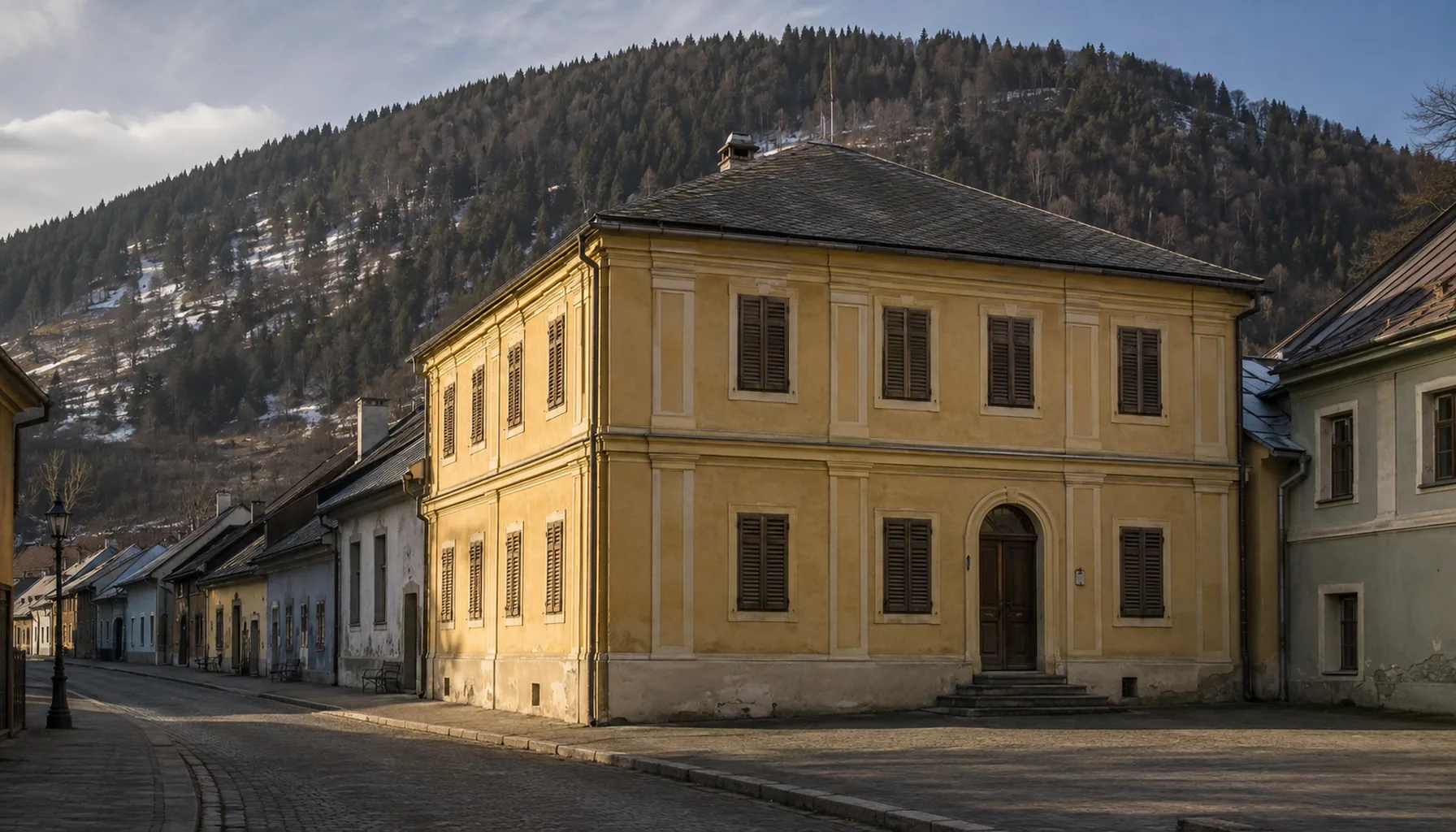
Gelnica · Hnilec valley, Slovak Ore MountainsGelnica · Hnilecká dolina, Slovenské rudohorie
A town whose entire history is one trade, kept in a museum in the old town hall, in a valley where the work has stopped and the buildings have not.Mesto, ktorého celé dejiny sú jedno remeslo, uložené v múzeu v starej radnici, v doline, kde sa práca skončila a budovy zostali.
Gelnica keeps the calendar of a small mountain district town, and we name none of it here: church feasts, seasonal markets, a town day, whatever the cultural centre programmes. Those are set year by year and change faster than a page like this does. What can be said with confidence is the shape of the visitor year, and it is decided by the valley rather than by the town.Gelnica si vedie kalendár malého horského okresného mesta a nič z neho tu nemenujeme: hody, sezónne trhy, dni mesta, čo pripraví kultúrne stredisko. Zostavuje sa rok po roku a mení sa rýchlejšie ako takáto stránka. S istotou sa dá povedať iba tvar návštevníckeho roka a ten určuje dolina, nie mesto.
The railway is part of it. The slow single-track line up the Hnilec from Margecany towards Červená Skala runs through the town and is one of the most scenic in the country; people ride it for its own sake. Further up the valley it reaches Dedinky and the Palcmanská Maša reservoir on the southern edge of the Slovak Paradise — a summer and winter recreation area served by the same road and the same trains.Súčasťou je aj železnica. Pomalá jednokoľajka po Hnilci z Margecian do Červenej Skaly prechádza mestom a patrí k najkrajším tratiam v krajine; ľudia sa ňou vozia aj kvôli nej samej. Vyššie v doline dochádza k Dedinkám a k vodnej nádrži Palcmanská Maša na južnom okraji Slovenského raja — do letnej i zimnej rekreačnej oblasti, obsluhovanej tou istou cestou a tými istými vlakmi.
Around the town the hills carry marked trails through forest that is full of old adits. The mining landscape itself is legible once you know what to look for: water channels along the contours, shaft heads, spoil heaps under the trees. That is the closest thing Gelnica has to a permanent open-air exhibition, and it costs nothing.Okolo mesta vedú značené chodníky lesom plným starých štôlní. Samotná banská krajina sa dá čítať, len čo človek vie, čo hľadať: vodné jarky po vrstevniciach, ústia šácht, haldy pod stromami. Je to najbližšie, čo má Gelnica k stálej expozícii pod holým nebom, a nestojí to nič.
The mining museum is the point of a visit. It holds tools, maps, ore samples and the documentary record of seven centuries of work underground, and since 1963 it has occupied the old town hall of 1802 — a council building repurposed to keep the record of the only business that council ever really had. A museum of this seriousness is an unusual thing for a town of this size, and the reason is simple: that record is the entire history of the place.Zmyslom návštevy je banské múzeum. Uchováva náradie, mapy, vzorky rúd a písomné svedectvo o siedmich storočiach práce pod zemou a od roku 1963 sídli v starej radnici z roku 1802 — v budove mestskej rady, ktorá dnes stráži záznam o jedinom podnikaní, aké tá rada kedy naozaj mala. Múzeum takejto vážnosti je na mesto tejto veľkosti nezvyčajné a dôvod je jednoduchý: ten záznam sú celé dejiny miesta.
The community that built all of it has gone. German miners were settled in the Hnilec valley in the thirteenth century, and the people of these lower valleys were known as the Gründler — a group distinct from the Zipser Germans of the Spiš towns to the north, with a dialect of their own and a trade of their own. Their German-speaking Gelnica ended in 1945, after seven hundred years, when the population was expelled and some had already left ahead of the front. The museum, the church and the street plan are what they left.Spoločenstvo, ktoré to všetko postavilo, tu už nie je. Nemeckých baníkov usadili v Hnileckej doline v trinástom storočí a ľuďom z týchto nižších dolín sa hovorilo Gründleri — skupina odlišná od spišských Nemcov v mestách na severe, s vlastným nárečím a vlastným remeslom. Ich nemecká Gelnica sa v roku 1945 po sedemsto rokoch skončila, keď obyvateľstvo vysídlili a časť odišla už pred frontom. Múzeum, kostol a uličná sieť sú to, čo po nich zostalo.
The everyday institutions are those of a district seat, and we describe them as a category rather than name them, because premises and programmes change: a cultural centre with a hall, a library, amateur groups and a school of art for children.Každodenné inštitúcie sú tu tie, aké má okresné sídlo, a radšej ich opíšeme ako kategóriu, než by sme ich menovali, lebo priestory a programy sa menia: kultúrne stredisko so sálou, knižnica, ochotnícke súbory a základná umelecká škola.
The old core is short: the Gothic parish church, rebuilt in Baroque taste between 1743 and 1746, a row of low burgher houses, and the late-Baroque town hall of 1802, plain and two storeys, put up for a council whose main business was still the mines. Between 1837 and 1845 the town threw a two-arched stone bridge across the Hnilec — the sort of thing a valley town builds when the carts get heavier and the road starts to matter more than it used to.Staré jadro je krátke: gotický farský kostol, v rokoch 1743 až 1746 prestavaný barokovo, rad nízkych meštianskych domov a neskorobaroková radnica z roku 1802, jednoduchá a dvojpodlažná, postavená pre mestskú radu, ktorej hlavnou vecou boli stále bane. V rokoch 1837 až 1845 preklenulo mesto Hnilec dvojoblúkovým kamenným mostom — takú vec stavia dolinové mesto vtedy, keď ťažšejú vozy a cesta začína znamenať viac než predtým.
Above the town stand the remains of the medieval castle, recorded on the hill by 1288. It was destroyed for good by fire in 1685, and the honest thing to say is what the records say: fire. The 1680s were the collapse of Imrich Thököly's kuruc rising against the Habsburgs, and whether the two are connected the sources do not tell us. Local tradition would almost certainly blame a ruin like this on the Turks; here it should not. What is left is fragments of wall, freely accessible, and a view down the valley.Nad mestom stoja zvyšky stredovekého hradu, doloženého na kopci už roku 1288. Definitívne ho zničil požiar v roku 1685 a poctivé je povedať to, čo hovoria pramene: požiar. Osemdesiate roky sedemnásteho storočia boli rozpadom kuruckého povstania Imricha Thökölyho proti Habsburgovcom a či to spolu súvisí, pramene nepovedia. Ľudová tradícia by takú zrúcaninu takmer isto pripísala Turkom; tu by nemala. Zostali z nej fragmenty muriva, voľne prístupné, a výhľad do doliny.
One more date belongs here. In 1892 an electricity works began operating at Gelnica, and it is sometimes called the first power station on the territory of today's Slovakia — although neighbouring Krompachy claims a small hydroelectric plant three years earlier. Claims of that kind depend entirely on how you define first, and this page is not going to settle it.Patrí sem ešte jeden dátum. V roku 1892 začala v Gelnici pracovať elektráreň a niekedy sa označuje za prvú na území dnešného Slovenska — hoci susedné Krompachy sa hlásia k malej vodnej elektrárni o tri roky staršej. Takéto nároky závisia výlučne od toho, ako sa definuje slovo prvá, a táto stránka to nerozsúdi.
Gelnica's real distinction was legal. In 1435 it was raised to a free royal mining town: it answered to the king and to nobody in between, elected its own council, ran its own court and kept its own mining law. That law was among the oldest written down in the Kingdom of Hungary, and other mining towns took their rules from it — having your law copied is the medieval version of setting a standard. Gelnica headed the association of the upper Hungarian mining towns, a group of seven that included Rožňava, Smolník and Jasov.Skutočná výnimočnosť Gelnice bola právna. V roku 1435 ju povýšili na slobodné kráľovské banské mesto: zodpovedala sa kráľovi a nikomu medzi tým, volila si vlastnú radu, viedla vlastný súd a mala vlastné banské právo. To právo patrilo k najstarším zapísaným v Uhorskom kráľovstve a ostatné banské mestá si podľa neho upravovali svoje — nechať si právo opísať je stredoveká podoba určovania normy. Gelnica stála na čele združenia hornouhorských banských miest, sedmičky, do ktorej patrili aj Rožňava, Smolník a Jasov.
Even the town's beginning is a lesson in reading sources. Slovak and English accounts give 1246 as its first appearance in writing; German ones say the oldest surviving document actually naming the place is a royal confirmation of 1276, which repeats mining-town rights granted in 1264. All three are facts about which parchment happened to survive, not about when people arrived — and that is what most founded-in dates really are.Aj začiatok mesta je lekciou v čítaní prameňov. Slovenské a anglické spracovania uvádzajú ako prvú písomnú zmienku rok 1246; nemecké tvrdia, že najstaršou zachovanou listinou, ktorá miesto naozaj menuje, je kráľovské potvrdenie z roku 1276, opakujúce banské mestské práva udelené roku 1264. Všetky tri sú fakty o tom, ktorý pergamen sa náhodou zachoval, nie o tom, kedy sem ľudia prišli — a presne toto väčšina dátumov založenia je.
The height did not last. In the sixteenth century the copper of these mountains was traded on a European scale, when the Thurzo family of Upper Hungary went into partnership with the Fugger bankers of Augsburg — but the mines had begun to give less from the end of the fifteenth century, and by the 1520s Gelnica had lost most of the privileges it had spent two hundred years collecting. It went on being a mining town for another four hundred years without ever again being an important one.Vrchol netrval. V šestnástom storočí sa meď z týchto hôr obchodovala v európskom meradle, keď sa hornouhorskí Thurzovci spojili s augsburskými bankármi Fuggerovcami — ale bane dávali menej už od konca pätnásteho storočia a do dvadsiatych rokov šestnásteho prišla Gelnica o väčšinu výsad, ktoré zbierala dvesto rokov. Banským mestom zostala ďalších štyristo rokov bez toho, aby ešte niekedy bola dôležitá.
Sixteen videos for Culture in Gelnica.Šestnásť videí — Kultúra v Gelnici.