Čierna nad Tisou · Medzibodrožie and the eastern borderČierna nad Tisou · Medzibodrožie a východná hranica
A town built from nothing in one generation around a railway yard, whose name has meant four days in the summer of 1968 ever since.Mesto postavené z ničoho za jedinú generáciu okolo železničnej stanice, ktorého meno odvtedy znamená štyri dni leta 1968.
The honest thing to say first is that this is not a festival town, and a page that pretended otherwise would be no use to anybody. The calendar here is a shift calendar: the transshipment yard works around the clock, in three shifts, and for two generations everyone in town either worked there or was related to somebody who did. What the year turns on is the traffic, and the traffic is decided a long way from Čierna.Najpoctivejšie je povedať hneď na začiatku, že toto nie je mesto festivalov, a stránka, ktorá by tvrdila opak, by nebola nikomu na nič. Kalendárom je tu rozpis zmien: prekladisko pracuje nepretržite, na tri smeny, a dve generácie tu buď robili na dráhe, alebo mali v rodine niekoho, kto tam robil. Rok sa tu točí okolo dopravy a o doprave sa rozhoduje ďaleko od Čiernej.
The seasons that actually bring visitors belong to the country around, not to the town. South and west lies the Medzibodrožie, the flat land between the Latorica, the Bodrog and the Tisa — oxbows, willow carr, wet meadow and low ridges of blown sand, protected in places and among the best bird country in Slovakia in spring and autumn. Kráľovský Chlmec, the market town of that country, is half an hour west and is where the region's fairs and folk programme happen.Sezóny, ktoré sem naozaj privádzajú ľudí, patria okolitej krajine, nie mestu. Na juh a na západ leží Medzibodrožie, rovina medzi Latoricou, Bodrogom a Tisou — mŕtve ramená, vŕbové porasty, mokré lúky a nízke chrbty naviateho piesku, miestami chránené a na jar a na jeseň patriace k najlepším vtáčím územiam Slovenska. Kráľovský Chlmec, trhové mesto tejto krajiny, je polhodinu na západ a práve tam sa konajú jarmoky a folklórny program regiónu.
The town's own calendar is the modest one of a small municipality: church feasts, school events, a town day, whatever the cultural centre programmes. We name none of it, because programmes in a town this size are set year by year. Anything to do with crossing the border should be checked at the time of travel; conditions on Slovakia's eastern frontier have changed repeatedly since 2022.Vlastný kalendár mesta je skromný kalendár malej obce: hody, školské podujatia, dni mesta, čo pripraví kultúrne stredisko. Nič z toho tu nemenujeme, lebo programy sa v meste tejto veľkosti zostavujú rok po roku. Čokoľvek, čo súvisí s prechodom hranice, si treba overiť tesne pred cestou; pomery na východnej hranici Slovenska sa od roku 2022 opakovane menili.
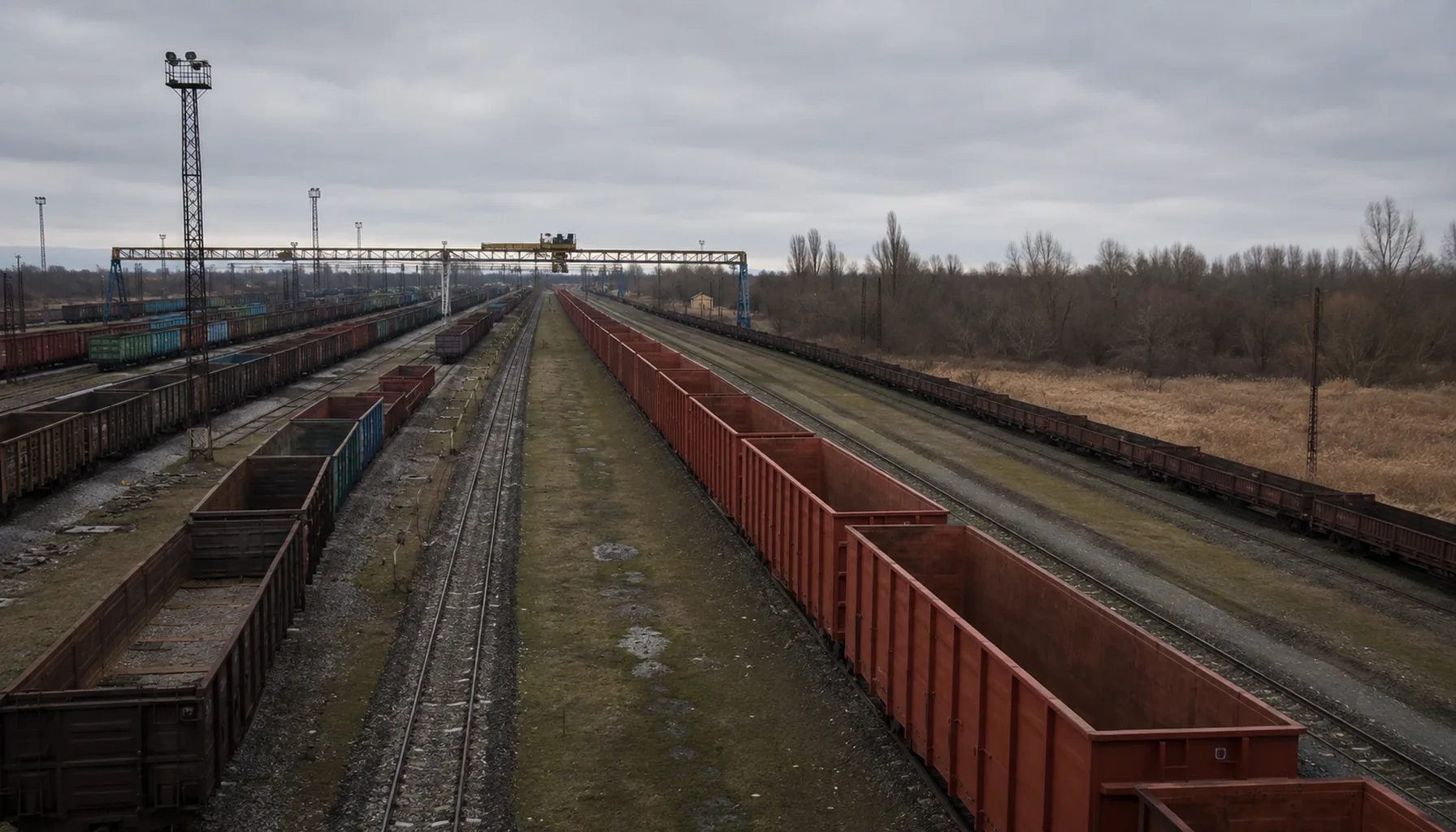
There is no museum here, no gallery and no old quarter, and the one genuinely remarkable thing in the town is off limits. The yard is working railway property behind fences, with no viewing point and no exhibition. What a traveller can actually see, from the platform or a road bridge, is the doubling of the tracks: a wider gauge running beside a narrower one, and rakes of Soviet-gauge wagons standing longer and higher than anything else on the network.Múzeum tu nie je, galéria ani staré jadro nie sú a jediná naozaj pozoruhodná vec v meste je neprístupná. Prekladisko je prevádzková železničná plocha za plotom, bez vyhliadky a bez expozície. Čo cestujúci naozaj uvidí z nástupišťa alebo z cestného mosta, je zdvojenie koľají: širší rozchod vedľa užšieho a súpravy širokorozchodných vozňov, ktoré stoja dlhšie a vyššie než čokoľvek iné na sieti.
The town's cultural institutions are those of a small municipality and we describe them as a category rather than name them, because premises and programmes change: a cultural centre with a hall, a library, school clubs and amateur groups. It is worth knowing that the first of them arrived with the town itself — when the transshipment point was founded on empty ground, it consisted of three wooden buildings serving as a dormitory, a shop and a room for showing films. Culture here began as one of the three things a workforce could not do without.Kultúrne inštitúcie sú tu tie, aké má malá obec, a radšej ich opíšeme ako kategóriu, než by sme ich menovali, lebo priestory a programy sa menia: kultúrne stredisko so sálou, knižnica, školské krúžky a ochotnícke súbory. Stojí za zmienku, že prvá z nich prišla spolu s mestom — keď na prázdnej pustatine založili prekladisko, tvorili ho tri drevené budovy: ubytovňa, obchod a miestnosť na premietanie filmov. Kultúra tu začala ako jedna z troch vecí, bez ktorých sa robotníci nezaobišli.
Almost every town on this site can point at a church, a square and a manor house. This one cannot, and the reason is worth spelling out: for most of its history there was no settlement here at all. In the 1790s a geographer described the place as a puszta — an outlying stretch of grazing and hayfield belonging to a village somewhere else. The name is usually first written down in 1828, and as late as 1910 the place was still counted as part of the village of Čierna: a few farm buildings, cattle and a great deal of standing water.Takmer každé mesto na tejto stránke vie ukázať kostol, námestie a kaštieľ. Toto nevie, a dôvod stojí za vysvetlenie: väčšinu svojich dejín tu nijaké sídlo nebolo. V deväťdesiatych rokoch osemnásteho storočia opísal geograf toto miesto ako pustatinu — odľahlý pás pasienkov a lúk patriaci obci kdesi inde. Meno sa zvyčajne prvý raz zapisuje roku 1828 a ešte roku 1910 sa miesto rátalo k obci Čierna: pár hospodárskych budov, dobytok a veľa stojatej vody.
The town was ordered into existence. A railway east across this plain reached Csap — today Chop, just over the border — in the early 1870s, but the quiet end of the line mattered to nobody until a frontier appeared beside it. Soviet track is 1520 mm apart and Czechoslovak track 1435 mm, too small a difference to see from a distance and far too large for a wheelset to bridge, so every wagon crossing had to be emptied and reloaded. A government resolution of 1946 founded a transshipment point on the empty ground, and the settlement beside the tracks was granted town status in 1969.Mesto vzniklo na príkaz. Železnica cez túto rovinu dorazila začiatkom sedemdesiatych rokov devätnásteho storočia do Čopu hneď za dnešnou hranicou, ale tichý koniec trate nikoho nezaujímal, kým sa vedľa neho neobjavila hranica. Sovietsky rozchod má 1520 mm, československý 1435 — rozdiel primalý, aby ho bolo z diaľky vidieť, a priveľký na to, aby ho preklenulo dvojkolesie, takže každý vozeň bolo treba vyložiť a naložiť znova. Vládne uznesenie z roku 1946 založilo na prázdnej pustatine prekladisko a osada pri koľajach dostala v roku 1969 štatút mesta.
So the fabric is post-war blocks, a station and kilometres of parallel sidings, and the building that matters most is an ordinary railway building beside the yard. Read as architecture it is nothing. Read as a document it is one of the more important buildings in the country, for the reason given below.Zástavbu teda tvoria povojnové bytovky, stanica a kilometre paralelných koľají a najdôležitejšou budovou je obyčajný železničný objekt pri prekladisku. Ako architektúra nie je ničím. Ako dokument je to jedna z najvýznamnejších budov v krajine, a to z dôvodu uvedeného nižšie.
In the spring of 1968 the Czechoslovak leadership under Alexander Dubček began lifting censorship and loosening party control — the reform experiment known as the Prague Spring. Moscow wanted it stopped, and from 29 July to 1 August the two leaderships met here, in a railway building beside the yard: almost the entire Soviet Politburo, the only time it ever met outside Soviet territory, facing the full Czechoslovak Presidium.Na jar 1968 začalo československé vedenie na čele s Alexandrom Dubčekom rušiť cenzúru a uvoľňovať stranícku kontrolu — reformný pokus známy ako Pražská jar. Moskva to chcela zastaviť a od 29. júla do 1. augusta sa obe vedenia stretli práve tu, v železničnej budove pri prekladisku: takmer celé sovietske politbyro, jediný raz, čo zasadalo mimo sovietskeho územia, oproti celému československému predsedníctvu.
The town was chosen because it stands on the border. By the accounts of those present the Soviet delegation came in each morning by special train from Chop and went back across the frontier every night, and the hardest arguing was done by two fours — Brezhnev, Kosygin, Podgorny and Suslov against Dubček, Svoboda, Černík and Smrkovský. Dubček promised to rein in the press and stay loyal to the Warsaw Pact; the Soviets promised to withdraw their troops.Mesto vybrali preto, že leží na hranici. Podľa svedectiev účastníkov prichádzala sovietska delegácia každé ráno osobitným vlakom z Čopu a každý večer sa vracala za hranicu, a najtvrdšie sa hádali dve štvorice — Brežnev, Kosygin, Podgornyj a Suslov proti Dubčekovi, Svobodovi, Černíkovi a Smrkovskému. Dubček sľúbil, že usmerní tlač a zostane verný Varšavskej zmluve; Sovieti sľúbili, že stiahnu vojská.
Two days later, on 3 August, the same men signed the Bratislava declaration and everybody announced that the crisis was over. On the night of 20 to 21 August the armies of five Warsaw Pact states crossed the borders anyway. The name of this small railway town has meant that meeting ever since, and it is the reason a place with no square and no church has a claim on the country's memory that most towns with both do not.O dva dni neskôr, 3. augusta, podpísali tí istí ľudia bratislavskú deklaráciu a všetci vyhlásili, že kríza sa skončila. V noci z 20. na 21. augusta prekročili hranice vojská piatich štátov Varšavskej zmluvy aj tak. Meno tohto malého železničného mesta odvtedy znamená práve to stretnutie, a preto má miesto bez námestia a bez kostola v pamäti krajiny nárok, aký nemá väčšina miest, ktoré majú oboje.
Sixteen videos for Culture in Čierna nad Tisou.Šestnásť videí — Kultúra v Čiernej nad Tisou.