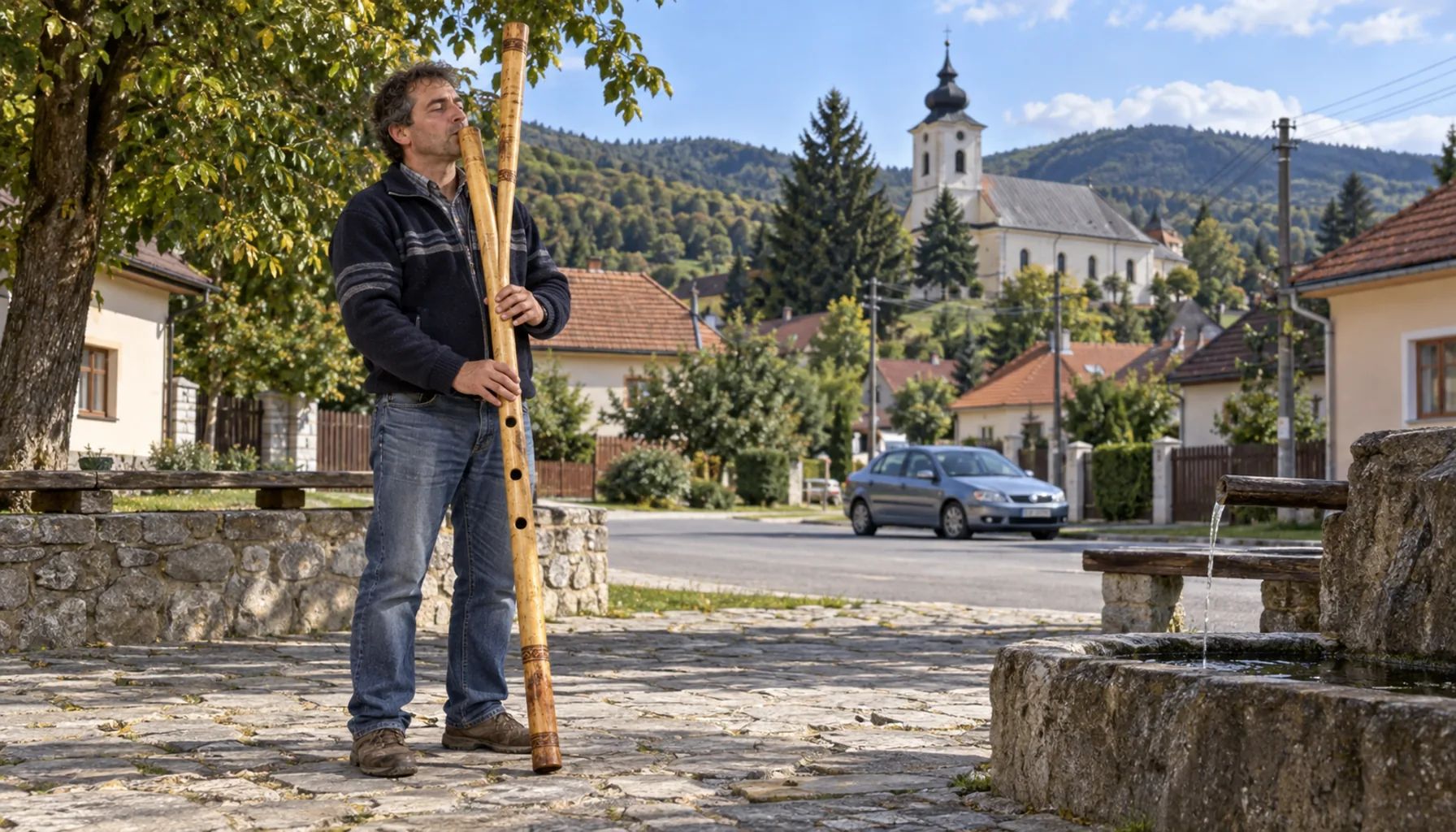
The fujara is a shepherd's overtone flute nearly as tall as the person playing it, hollowed from elder, with only three finger holes; instead of a scale it sounds the natural harmonic series, which is why it sounds like nothing else. Its home region is the Podpoľanie, and Očová is one of the few villages where it is still carved and not only played. In 2005 UNESCO proclaimed the fujara and its music a Masterpiece of the Oral and Intangible Heritage of Humanity, and in 2008 it was inscribed on the Representative List of the Intangible Cultural Heritage of Humanity. About 2,400 people live in Očová today; the makers work at home, to order, and the village's own summer festival is the reliable way to hear the instrument where it comes from.Fujara je pastierska prefukovacia píšťala takmer taká vysoká ako človek, ktorý na nej hrá, vydlabaná z bazy, len s tromi dierkami; namiesto stupnice znie prirodzený radu alikvotných tónov, a preto neznie ako nič iné. Jej domovom je Podpoľanie a Očová je jednou z mála obcí, kde sa fujara stále nielen hrá, ale aj vyrezáva. V roku 2005 vyhlásilo UNESCO fujaru a fujarovú hudbu za majstrovské dielo ústneho a nehmotného dedičstva ľudstva a v roku 2008 ju zapísalo do Reprezentatívneho zoznamu nehmotného kultúrneho dedičstva ľudstva. Dnes žije v Očovej okolo 2400 ľudí; výrobcovia pracujú doma a na objednávku a obecné letné slávnosti sú spoľahlivou príležitosťou počuť nástroj tam, odkiaľ pochádza.