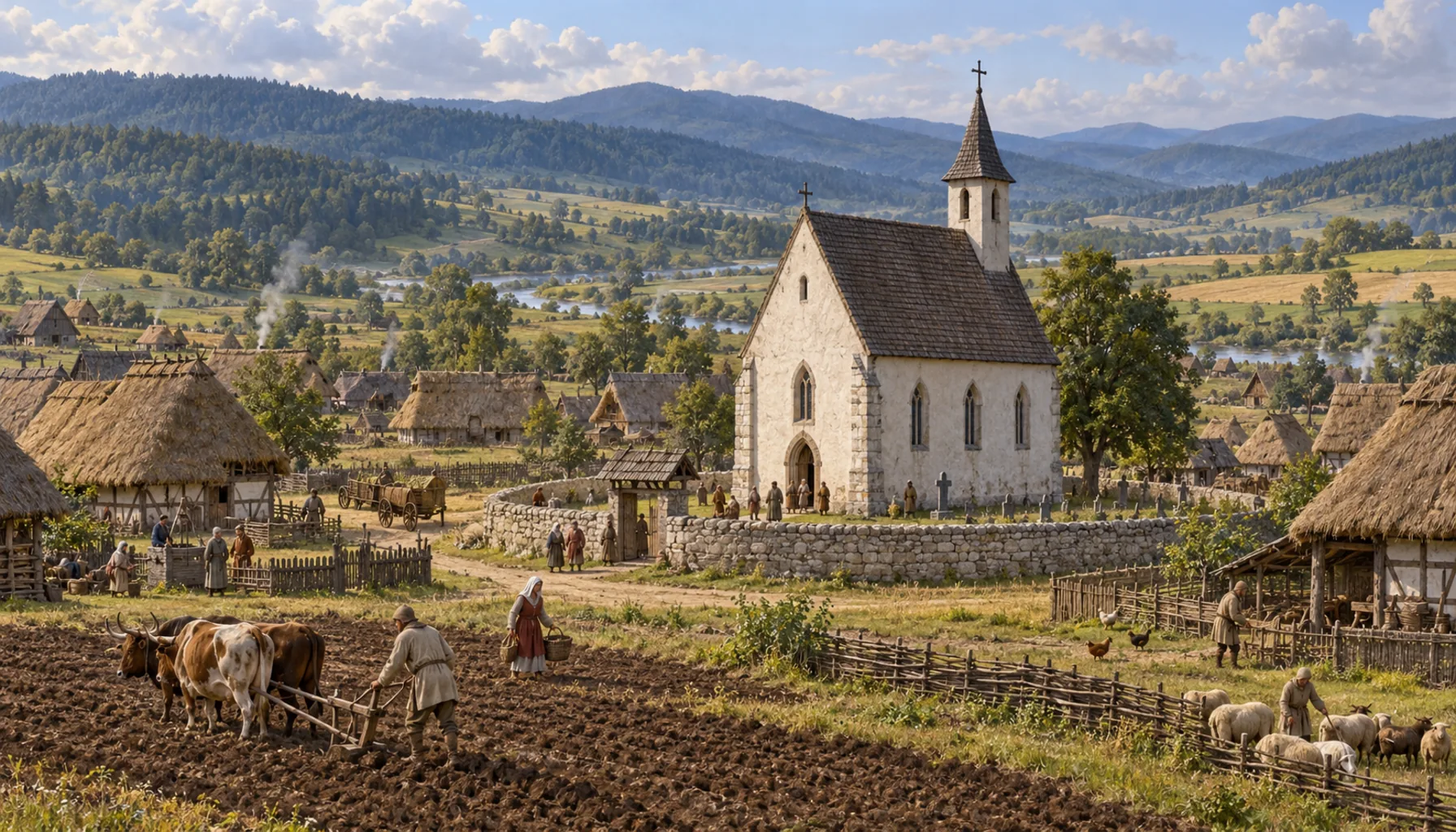
Očová's church was built early in the fourteenth century — a single-nave Gothic building, plain, the kind a farming village put up for itself. In the same century the king built the hunting castle of Vígľaš a few kilometres up the valley, and Očová became one of its subject villages. That meant the people here were serfs of the castle estate: they farmed and grazed, and they owed the lord labour, a share of what they produced and obedience. Sheep and cattle on the slopes of Poľana, timber off the forest, small fields on the valley floor — that was the living, and it stayed the living for five hundred years.Kostol v Očovej postavili na začiatku 14. storočia — jednoloďová gotická stavba, jednoduchá, aké si stavali roľnícke dediny samy. V tom istom storočí postavil kráľ pár kilometrov vyššie v doline poľovnícky hrad Vígľaš a Očová sa stala jednou z jeho poddanských dedín. Znamenalo to, že tunajší ľudia boli poddanými hradného panstva: gazdovali a pásli a zemepánovi dlhovali robotu, časť úrody a poslušnosť. Ovce a dobytok na svahoch Poľany, drevo z lesa, malé polia na dne doliny — z toho sa žilo a žilo sa tak päťsto rokov.