Banská Bystrica region · TownsBanskobystrický kraj · Mestá
ŽarnovicaŽarnovica
The district town where the Kľak valley comes down to the Hron, under the western wall of the Štiavnica Hills: a timber and market town below the ruin of Revište, with one of the last working gold mines in Europe in the hills behind it.Okresné mesto tam, kde Kľakovská dolina zostupuje k Hronu, pod západnou stenou Štiavnických vrchov: drevárske a trhové mesto pod zrúcaninou Revišťa, s jednou z posledných činných zlatých baní v Európe v kopcoch za sebou.
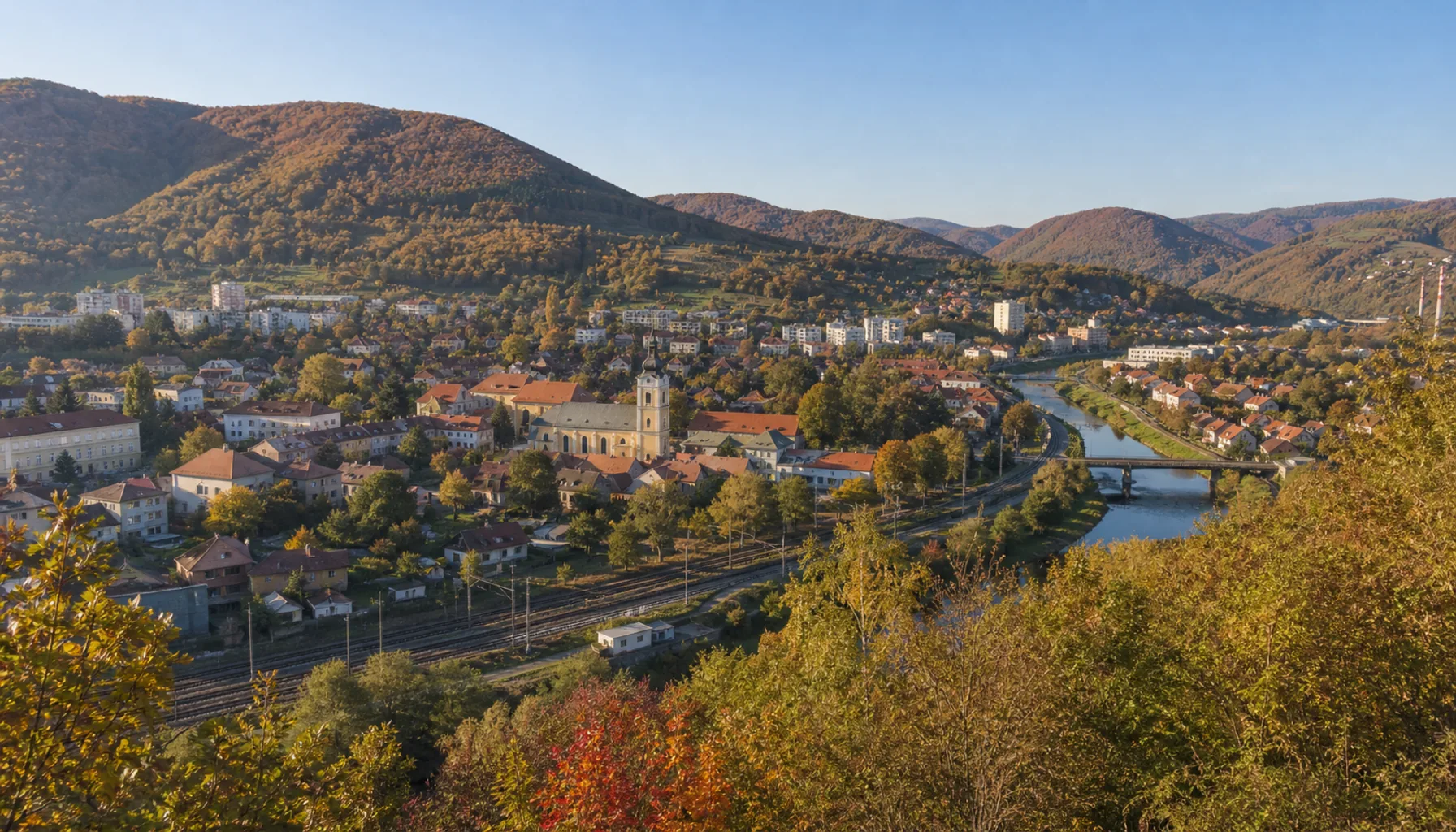
Žarnovica on the flat ground where the Kľak valley reaches the HronŽarnovica na rovine, kde Kľakovská dolina ústi k Hronu
Where it standsKde leží
Žarnovica lies on the Hron where the Kľak stream comes in from the north, between Žiar nad Hronom upstream and Nová Baňa downstream. The Štiavnica Hills close the valley to the east and south; north-west the ground rises into the Vtáčnik, and the Kľak valley runs up into it through some twenty kilometres of villages and forest.Žarnovica leží na Hrone tam, kde doň zo severu vteká Kľak, medzi Žiarom nad Hronom proti prúdu a Novou Baňou po prúde. Na východe a juhu uzatvárajú dolinu Štiavnické vrchy, na severozápade sa terén dvíha do Vtáčnika a Kľakovská dolina doň stúpa asi dvadsiatimi kilometrami dedín a lesa.
It is a small district seat: a few older streets along the through road, post-war housing behind them, and the works and the railway on the flat ground by the river.Je to malé okresné sídlo: pár starších ulíc pozdĺž prieťahu, za nimi povojnová zástavba a na rovine pri rieke závody a železnica.
The storyHistória
Žarnovica grew as a market and staging place on the Hron road, and what passed through it was what came down the valleys behind: ore and charcoal from the mining country, and above all timber from the forests of the Vtáčnik and the Štiavnica Hills. A manor house in the middle of the town, Renaissance in origin and much rebuilt since, is what the landowning families left behind.Žarnovica vyrástla ako trhové a zastávkové miesto na hronskej ceste a prechádzalo cez ňu to, čo schádzalo dolinami za ňou: ruda a drevené uhlie z banskej krajiny a predovšetkým drevo z lesov Vtáčnika a Štiavnických vrchov. Kaštieľ uprostred mesta, pôvodom renesančný a odvtedy mnohokrát prestavaný, je tým, čo po sebe zanechali zemepanské rody.
Revište, on its rock above the river a few kilometres upstream, was the castle of this stretch of the Hron. It watched the road, took its share of the metal going down it, changed hands repeatedly through the Ottoman wars and the uprisings, and was abandoned in the eighteenth century. It has been a ruin ever since — one of the more approachable ones in the country.Revište na skale nad riekou pár kilometrov proti prúdu bolo hradom tohto úseku Hrona. Strážilo cestu, bralo si podiel z kovu, ktorý po nej schádzal, počas tureckých vojen a povstaní opakovane menilo majiteľov a v osemnástom storočí ho opustili. Odvtedy je zrúcaninou — a patrí k tým prístupnejším v krajine.
The valley behind the town carries a much more recent memory. On 21 January 1945, in reprisal for partisan activity after the Slovak National Uprising, German units burned the villages of Ostrý Grúň and Kľak at the head of the Kľak valley and killed close to a hundred and fifty of their inhabitants, most of them women, children and the old. Memorials stand in both villages and the anniversary is still kept.Dolina za mestom nesie oveľa novšiu pamäť. 21. januára 1945 vypálili nemecké jednotky ako odvetu za partizánsku činnosť po Slovenskom národnom povstaní obce Ostrý Grúň a Kľak v závere Kľakovskej doliny a zabili takmer stopäťdesiat ich obyvateľov, väčšinou ženy, deti a starých ľudí. V oboch obciach stoja pamätníky a výročie sa pripomína dodnes.
What to seeČo vidieť
Revište is the obvious walk: twenty minutes up from the village of Revištské Podzámčie, and the walls, the tower and the long view down the Hron are the reward. It is a consolidated ruin rather than a furnished castle, and it is the better for being empty.Revište je jasnou voľbou na prechádzku: dvadsať minút hore z obce Revištské Podzámčie a odmenou sú múry, veža a dlhý výhľad dolu Hronom. Je to konzervovaná zrúcanina, nie zariadený hrad — a prázdnota mu prospieva.
Up the side valley towards Banská Štiavnica lies Hodruša-Hámre, a mining village strung along its stream for kilometres, its name recording the hammer mills that once worked here. The Rozália mine above it still produces gold, which makes it one of the last working gold mines in Europe, and the valley keeps its mining ponds, adits and the plain houses of a settlement that has done one thing for six hundred years.Bočnou dolinou smerom na Banskú Štiavnicu leží Hodruša-Hámre, banská obec natiahnutá pozdĺž potoka na celé kilometre, ktorej meno pripomína hámre, čo tu kedysi pracovali. Baňa Rozália nad ňou dodnes ťaží zlato, čo z nej robí jednu z posledných činných zlatých baní v Európe, a v doline zostali tajchy, štôlne a jednoduché domy osady, ktorá robí jednu a tú istú vec šesťsto rokov.
The Kľak valley is the other direction to take: a road that ends among the villages at its head, Ostrý Grúň and Kľak, with their memorials, the Vtáčnik ridge above them, and walking that almost nobody else is doing.Druhým smerom, ktorý sa oplatí, je Kľakovská dolina: cesta, ktorá končí medzi obcami v jej závere, Ostrým Grúňom a Kľakom, s pamätníkmi, s hrebeňom Vtáčnika nad nimi a s turistikou, ktorú tu takmer nikto iný nerobí.
Work and industryPráca a priemysel
Wood has been the town's industry for as long as there has been industry here — sawmilling, board and plywood, and the furniture trades that go with them — with engineering and light manufacturing on the same ground. Mining still employs people up the valley at Hodruša.Drevo je priemyslom mesta odvtedy, čo tu priemysel vôbec je — píly, dosky a preglejky a nábytkárske remeslá, ktoré k tomu patria — a na tej istej ploche stojí strojárska a ľahká výroba. Baníctvo dodnes zamestnáva ľudí hore v doline pri Hodruši.
Beyond that the district works elsewhere: the aluminium plants and industrial park at Žiar nad Hronom are a quarter of an hour upstream, and the expressway puts both Banská Bystrica and Nitra within commuting distance.Inak okres pracuje inde: hlinikárske závody a priemyselný park v Žiari nad Hronom sú štvrťhodinu proti prúdu a rýchlostná cesta dáva do dosahu dochádzky Banskú Bystricu aj Nitru.
Getting thereAko sa tam dostať
Trains on the Hron line between Zvolen and Levice stop at Žarnovica, and the R1 expressway runs past the town, which is the fastest way in by car from Nitra or Banská Bystrica. Buses run up the Kľak valley and over the hills to Hodruša-Hámre and Banská Štiavnica.Vlaky na hronskej trati medzi Zvolenom a Levicami v Žarnovici zastavujú a popri meste vedie rýchlostná cesta R1, ktorá je autom najrýchlejším príchodom z Nitry aj z Banskej Bystrice. Autobusy premávajú hore Kľakovskou dolinou a cez kopce do Hodruše-Hámrov a Banskej Štiavnice.
Explore ŽarnovicaObjavujte Žarnovica
Every part of this place with a page of its own.Každá časť tohto miesta, ktorá má vlastnú stránku.