Robbers, Rebels and a Lightning StrikeZbojníci, povstalci a úder blesku
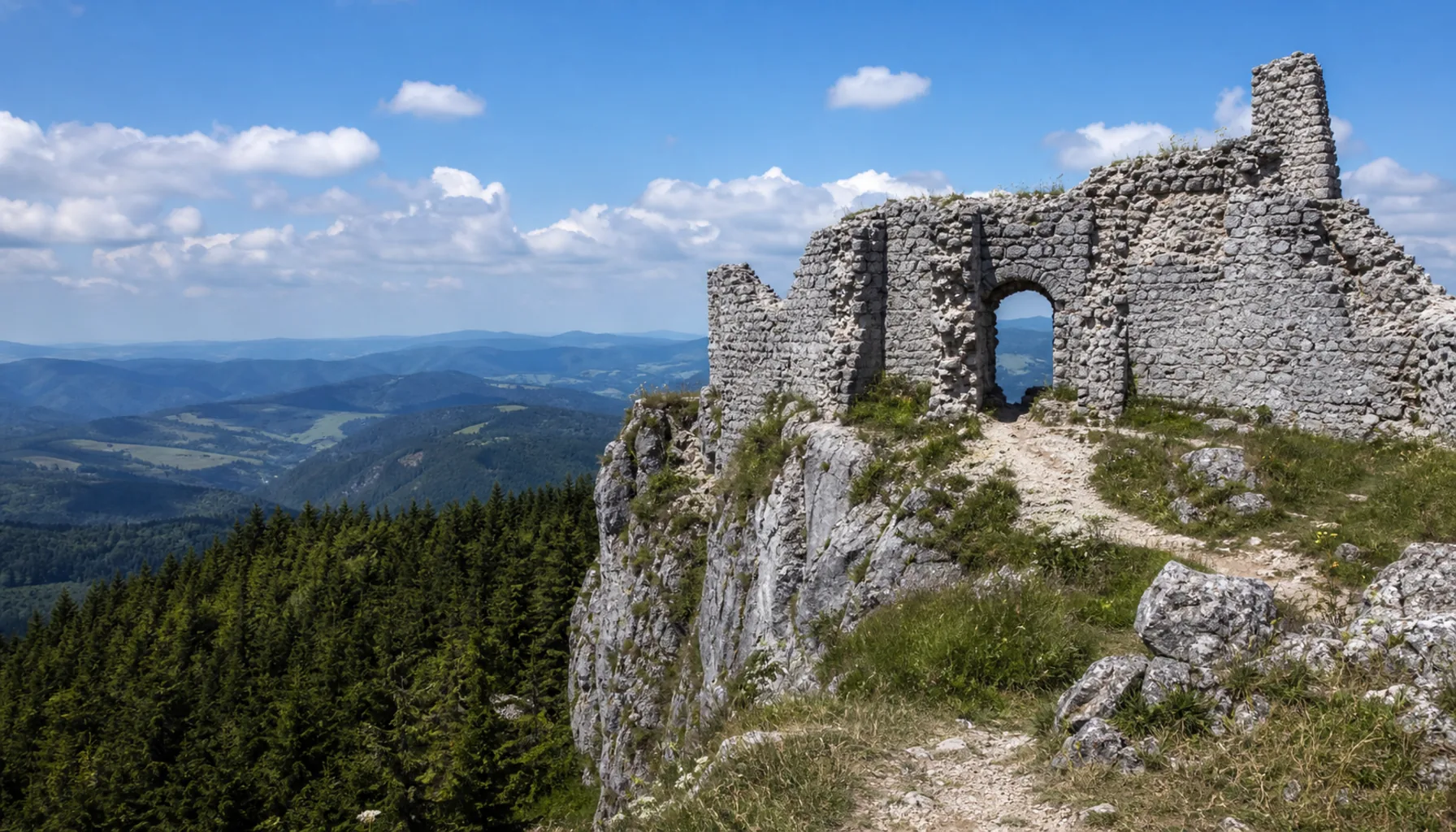
Muráň was built on the rock above the village of the same name in the thirteenth or fourteenth century, in the difficult upland where Gemer runs up into the Slovak Ore Mountains. Its position — very high, very defensible, and awkward to reach from anywhere — shaped its whole history. It was never a comfortable residence and never a busy administrative centre. It was a place you went to be hard to get at.Muránsky hrad postavili na skale nad rovnomennou obcou v trinástom až štrnástom storočí, v nehostinnom hornatom kraji, kde Gemer prechádza do Slovenského rudohoria. Jeho poloha — veľmi vysoko, veľmi dobre brániteľná a odkiaľkoľvek ťažko dostupná — určila celé jeho dejiny. Nikdy nebol pohodlným sídlom ani rušným správnym centrom. Bol miestom, kam sa človek utiahol, aby bol ťažko dosiahnuteľný.
In the sixteenth century that logic produced its most notorious owner. Matej Bašo held Muráň and used it as the base for years of raiding across Gemer, operating as a robber baron in the disorder of the Ottoman wars. In 1549 a royal army was finally sent against him; the castle was taken and Bašo was executed — a rare instance of the kingdom making the effort to reach up here.V šestnástom storočí táto logika splodila jeho najpovestnejšieho majiteľa. Matej Bašo držal Muráň a roky ho využíval ako základňu na nájazdy po celom Gemeri; v neporiadku osmanských vojen sa správal ako lúpežný rytier. V roku 1549 proti nemu napokon vyslali kráľovské vojsko; hrad dobyli a Bašu popravili — vzácny prípad, keď sa kráľovstvu oplatilo vystúpiť až sem hore.
The seventeenth century brought the castle its famous story — the night escalade of 1644 and the marriage that followed it — and then, later, the fall of the Wesselényi conspiracy against the Habsburgs, which cost the family the estate. Muráň’s end came in 1702, when fire, attributed to a lightning strike, destroyed it. Like Šariš fifteen years before, it was never rebuilt.Sedemnáste storočie prinieslo hradu jeho slávny príbeh — nočné prepadnutie v roku 1644 a sobáš, ktorý po ňom nasledoval — a neskôr pád vešeléniovského sprisahania proti Habsburgovcom, ktorý rodinu stál celé panstvo. Muráň skončil v roku 1702, keď ho zničil požiar pripisovaný úderu blesku. Rovnako ako Šariš pätnásť rokov predtým, ani on už nebol obnovený.