The Blue Stone on the BorderModrý kameň na hranici
Modrý Kameň — the blue stone — began as a watchpost on the ridge road through the hills of Novohrad, first recorded in the thirteenth century. It was never one of the kingdom’s great fortresses: a compact upper castle on the crown of the hill, a walled lower ward beneath it, enough to hold a garrison and collect a toll from whoever came along the road. For most of its life it belonged to the Balassa family, whose name runs through the history of this whole border country.Modrý Kameň sa začal ako strážnica pri hrebeňovej ceste cez novohradské kopce; prvé písomné zmienky pochádzajú z trinásteho storočia. Nikdy nepatril k veľkým pevnostiam kráľovstva: kompaktný horný hrad na temene kopca, opevnené dolné nádvorie pod ním — dosť na posádku a na výber mýta od každého, kto šiel po ceste. Po väčšinu svojich dejín patril rodu Balašovcov, ktorých meno sa tiahne dejinami celého tohto pohraničia.
Then the frontier arrived. Fiľakovo, away to the east, fell to the Ottomans in 1554, and with it the line of the war moved north into these hills. In 1575 a campaign out of Buda swept up Divín, Šomoška and Modrý Kameň in a single season. The castle became a Turkish garrison post and stayed one until the Christian counter-offensive of the early 1590s pushed the frontier back south again. What the sieges began, the anti-Habsburg risings of the seventeenth century finished: by the time the wars were over, the upper castle was a shell.Potom prišla hranica. Fiľakovo ďaleko na východe padlo Osmanom v roku 1554 a s ním sa čiara vojny posunula na sever do týchto kopcov. V roku 1575 pohltilo ťaženie z Budína v jedinej sezóne Divín, Šomošku aj Modrý Kameň. Hrad sa stal tureckou posádkovou pevnosťou a zostal ňou až do začiatku deväťdesiatych rokov šestnásteho storočia, keď kresťanská protiofenzíva vytlačila hranicu späť na juh. Čo začali obliehania, dokončili protihabsburské povstania sedemnásteho storočia: keď vojny utíchli, z horného hradu ostala len škrupina.
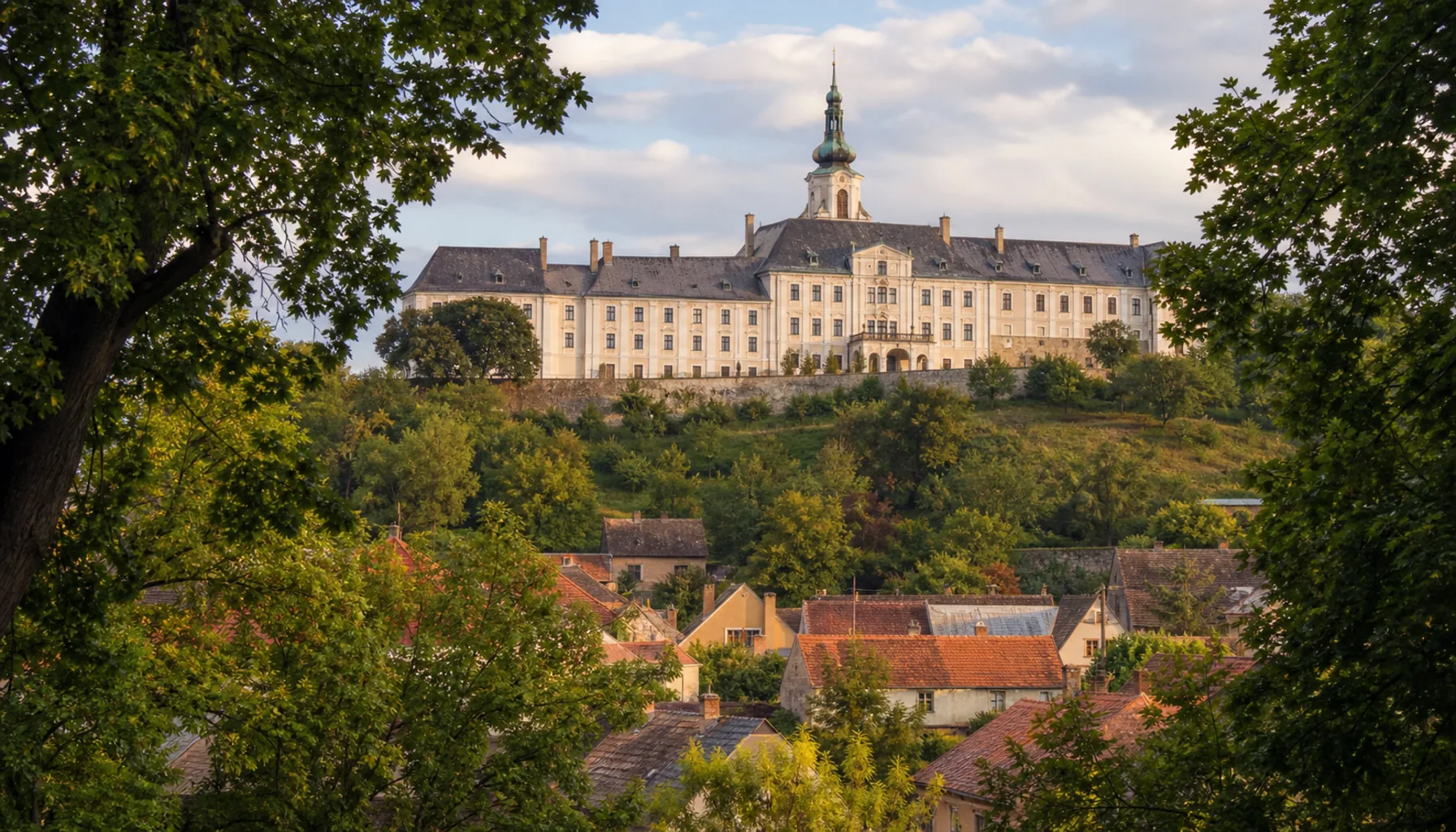
The mansion came afterwards. In the first half of the eighteenth century the Balassas built a baroque residence across the lower ward — a comfortable house with a chapel, raised on the footings of a fortress because there was no longer anything to defend against. That building is what you visit today, and since the closing years of the twentieth century it has held the Slovak National Museum’s Museum of Puppetry Cultures and Toys.Kaštieľ prišiel až potom. V prvej polovici osemnásteho storočia postavili Balašovci na dolnom nádvorí barokové sídlo — pohodlný dom s kaplnkou, vystavaný na základoch pevnosti, pretože už nebolo proti komu sa brániť. Práve túto budovu si dnes prezriete a od konca dvadsiateho storočia v nej sídli Múzeum bábkarských kultúr a hračiek Slovenského národného múzea.