The Summer the Frontier MovedLeto, keď sa pohla hranica
For twenty years after the fall of Fiľakovo the Novohrad castles lived on borrowed time. The Ottoman garrison at Fiľakovo raided north each season; the small Balassa strongholds behind it were undermanned, underpaid and increasingly alone. In 1575 the pretence ended. A campaign launched out of Buda took Divín, then Šomoška, then Modrý Kameň, and the whole chain of hill castles changed hands in a matter of weeks.Dvadsať rokov po páde Fiľakova žili novohradské hrady na vypožičaný čas. Osmanská posádka vo Fiľakove každú sezónu podnikala výpady na sever a malé balašovské pevnôstky za ňou boli slabo obsadené, zle platené a čoraz osamelejšie. V roku 1575 sa hra skončila. Ťaženie vypravené z Budína dobylo Divín, potom Šomošku a napokon Modrý Kameň — celá reťaz kopcových hradov zmenila majiteľa v priebehu niekoľkých týždňov.
The family that lost them had already given the frontier its poet. Bálint Balassi, of the same Balassa line, wrote the first great lyric poetry of the Hungarian language in the camps and garrisons of exactly this border war — soldiers’ songs, love songs, and hymns from a man who spent his life in the saddle between the two empires. He died in 1594 of wounds taken at the siege of Esztergom, on the other side of the same long war that took his family’s castles.Rod, ktorý ich stratil, dal tejto hranici už predtým jej básnika. Balint Balaša — z tej istej balašovskej vetvy — napísal prvú veľkú lyriku v maďarčine práve v táboroch a posádkach tejto pohraničnej vojny: vojenské piesne, ľúbostné verše a hymny muža, ktorý prežil život v sedle medzi dvoma ríšami. Zomrel v roku 1594 na zranenia utŕžené pri obliehaní Ostrihomu — na druhom konci tej istej dlhej vojny, ktorá jeho rodu vzala hrady.
Between 1575 and the early 1590s, the road below this hill was an Ottoman road.Od roku 1575 do začiatku deväťdesiatych rokov bola cesta pod týmto kopcom osmanskou cestou.
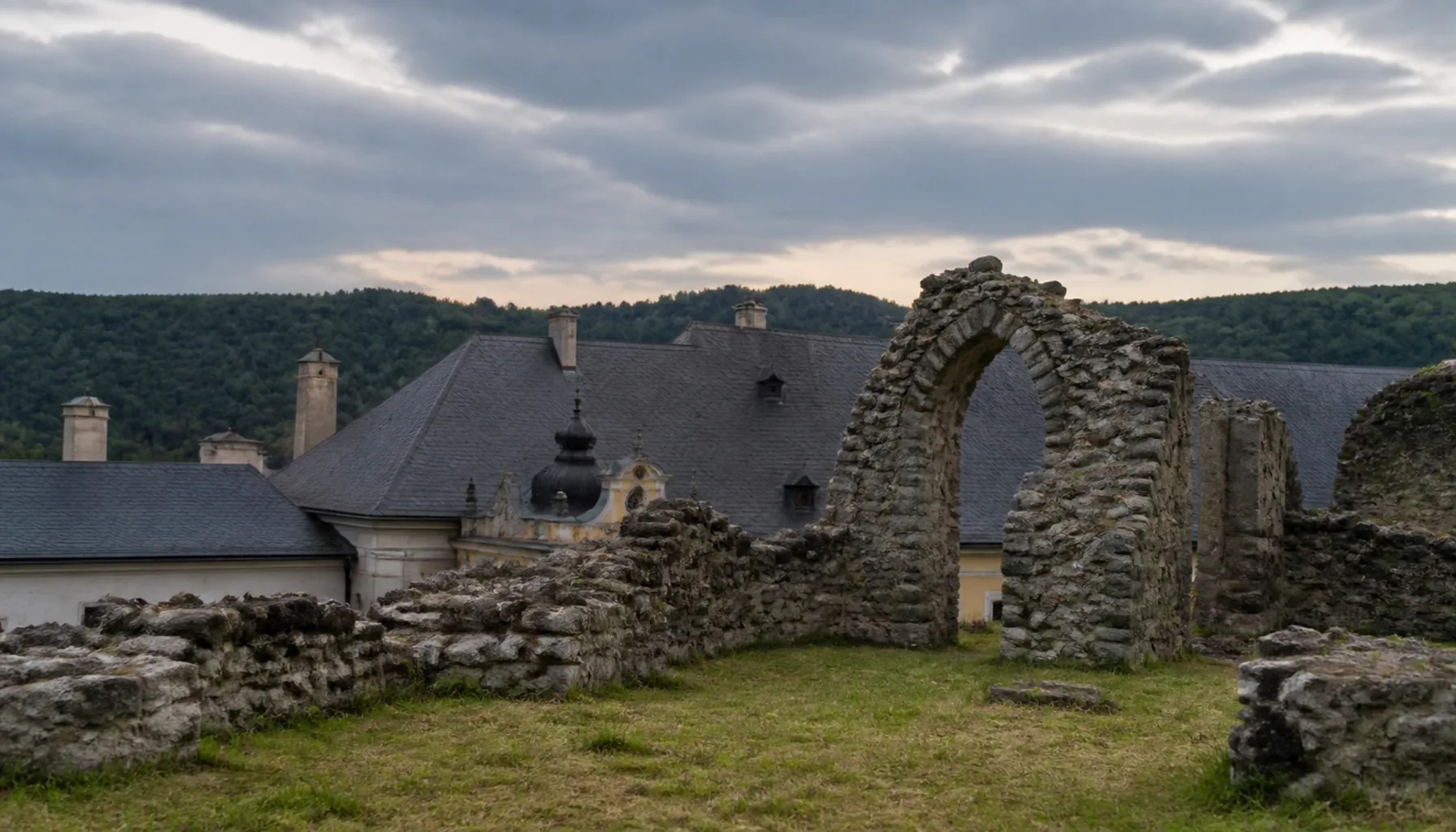
The reconquest, when it came, was not a rescue. Christian armies retook the Novohrad castles in the early 1590s and found them wrecked; the seventeenth century then put the whole region through the anti-Habsburg risings, and nobody rebuilt a hilltop fortress that no longer guarded anything. When the Balassas came back to Modrý Kameň, they came back to build a house.Znovudobytie, keď prišlo, nebolo záchranou. Kresťanské vojská získali novohradské hrady späť začiatkom deväťdesiatych rokov šestnásteho storočia a našli ich zdemolované; sedemnáste storočie potom prehnalo celý kraj protihabsburskými povstaniami a nikto už neobnovoval pevnosť na kopci, ktorá nemala čo strážiť. Keď sa Balašovci na Modrý Kameň vrátili, vrátili sa stavať dom.