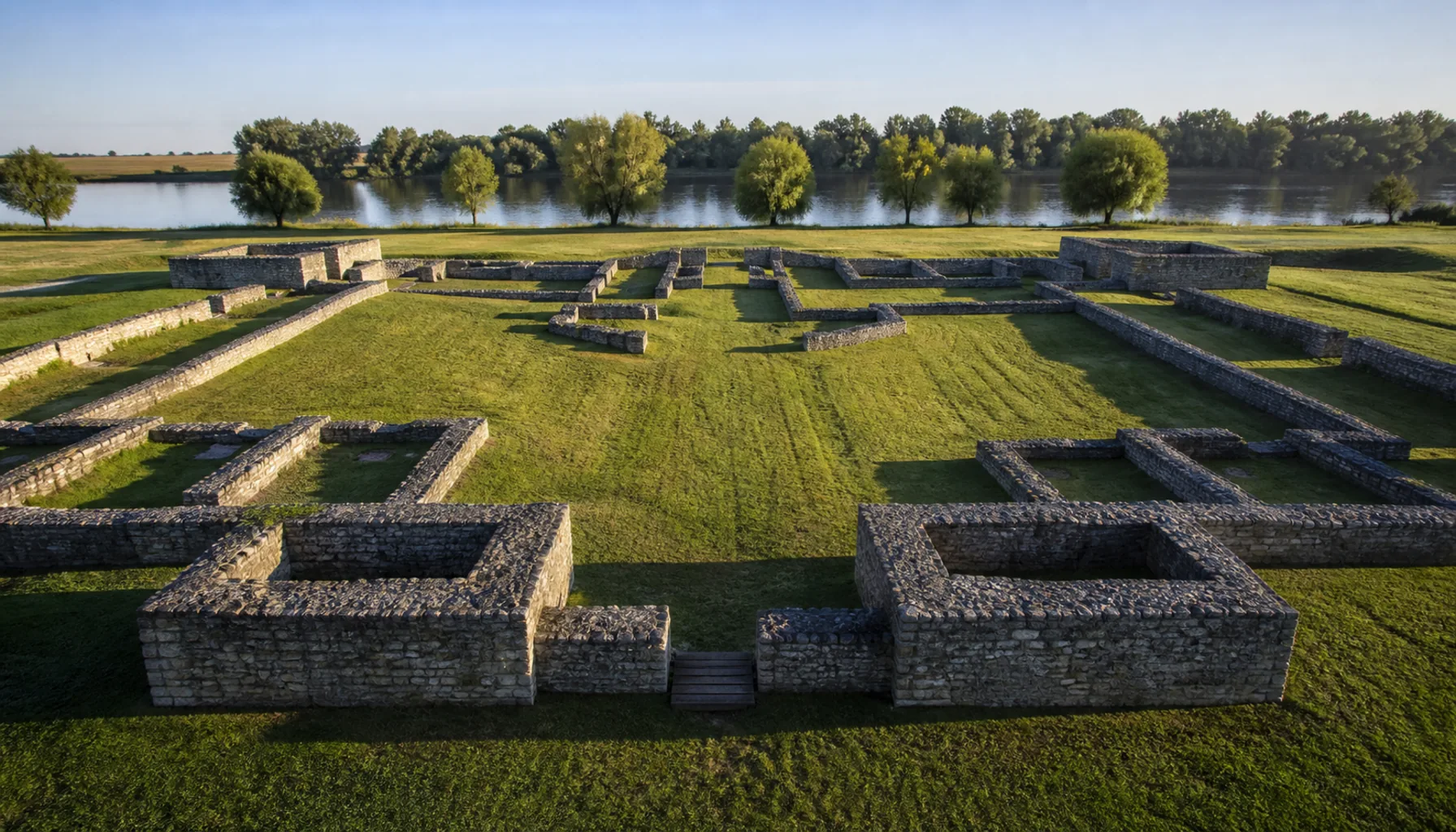
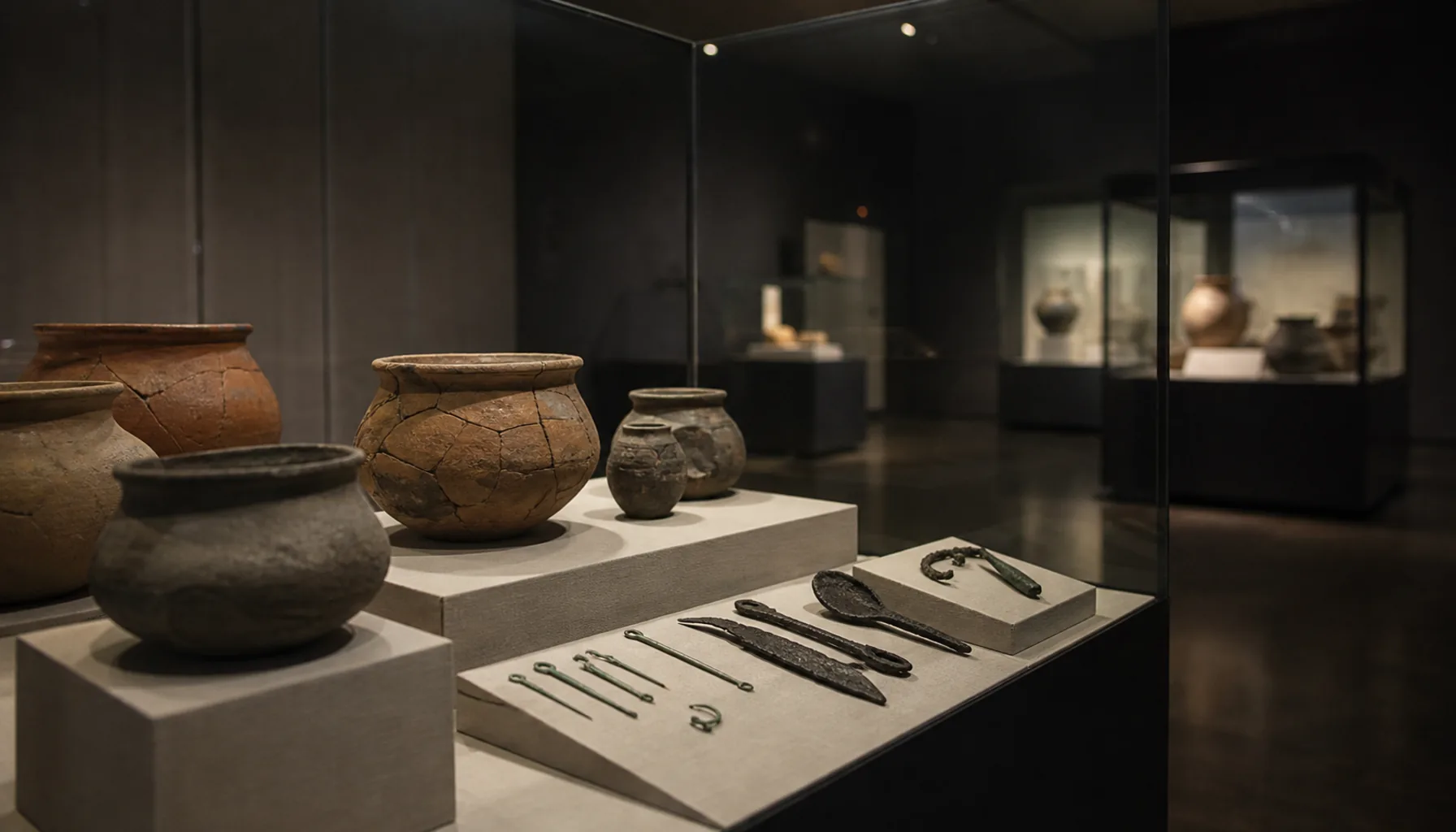
Slovakia has been farmed, fortified and fought over for seven thousand years, and almost none of that leaves a building standing. What survives is earthworks under forest, dark stains in a ploughed field, and a very great many objects in museum cases.Slovensko sa obrába, opevňuje a dobýva sedemtisíc rokov a takmer nič z toho po sebe nenechalo stojacu stavbu. Zostali valy pod lesom, tmavé škvrny v zoranom poli a veľmi veľa predmetov vo vitrínach múzeí.
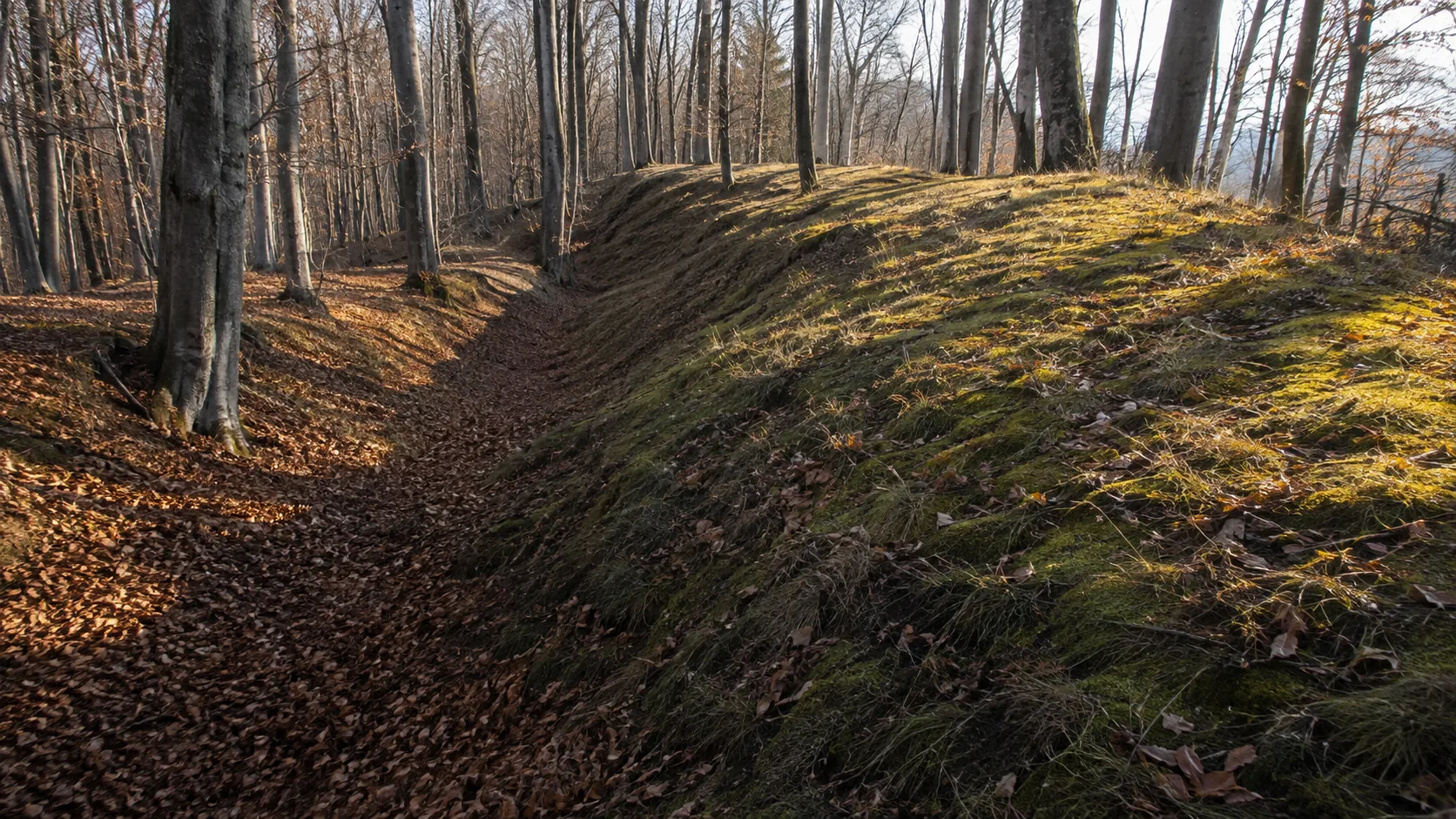
The earth rampart of a hillfort under bare beech woods in the Považský InovecVal hradiska pod holými bučinami v Považskom Inovci
Why the ground here is so fullPrečo je tu zem taká plná
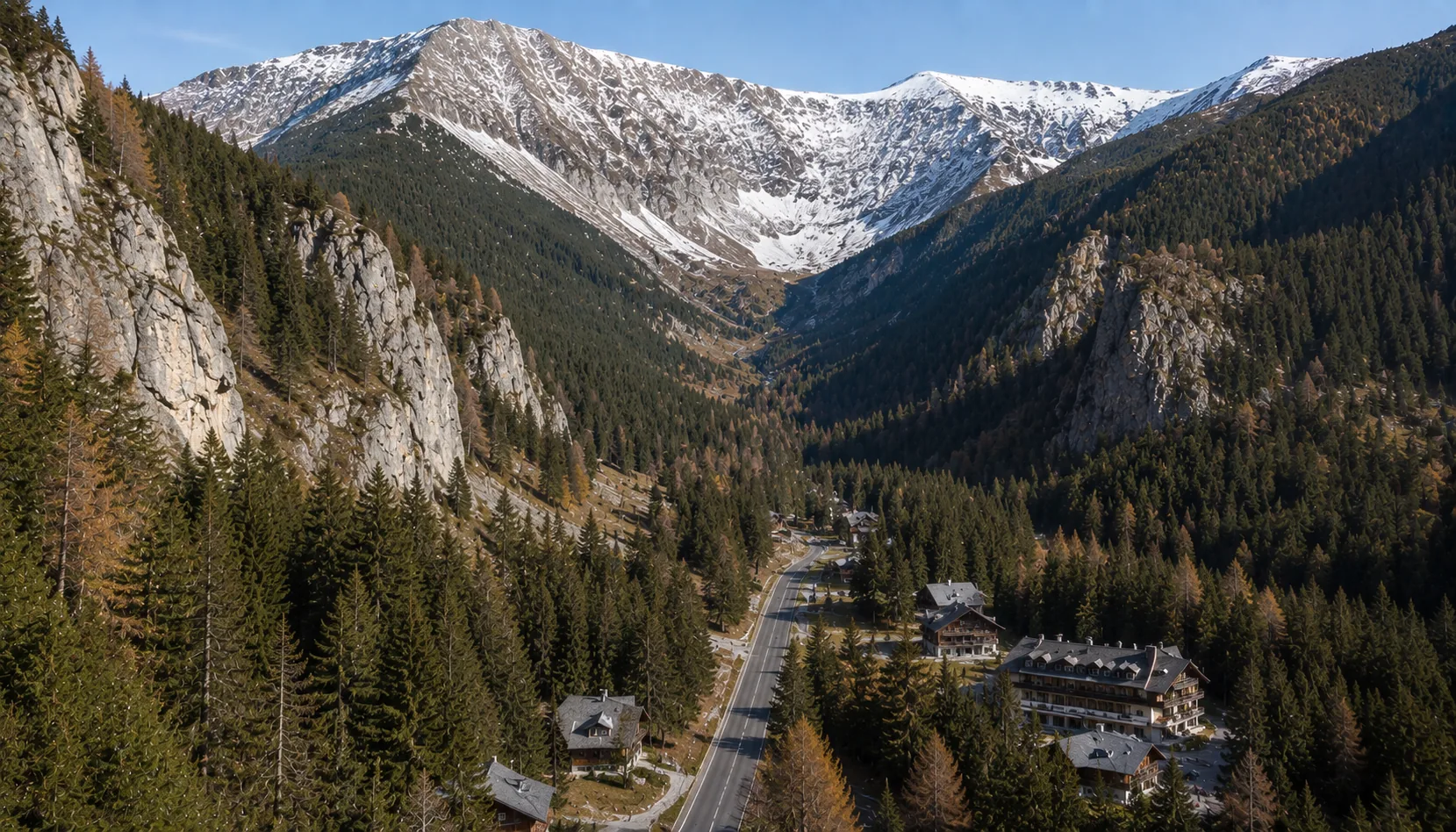
The Danubian Lowland in the south-west is warm, flat and deep-soiled, and it lies on the natural route between the middle Danube and the plains of northern Europe. Farming reached it early and never stopped. The passes through the Carpathians — the Váh valley, the Hron, the gap at Vlára, the Dukla in the north-east — carried people and metal in both directions for the next several thousand years.Podunajská nížina na juhozápade je teplá, rovinatá a s hlbokou pôdou a leží na prirodzenej ceste medzi stredným Dunajom a rovinami severnej Európy. Poľnohospodárstvo sem prišlo skoro a odvtedy sa už neprerušilo. Karpatské priechody — dolina Váhu, Hron, Vlársky priesmyk, na severovýchode Dukla — nosili ľudí a kov oboma smermi ďalšie tisícročia.
The mountains mattered as much as the lowland, because they had what the lowland did not: copper in the Ore Mountains and around Špania Dolina, gold and silver later, iron in a dozen valleys. From the Bronze Age onward raw metal moved south and finished goods and influence moved north, and both journeys are visible in the ground.Hory znamenali rovnako veľa ako nížina, lebo mali to, čo nížina nemala: meď v Slovenskom rudohorí a v okolí Španej Doliny, neskôr zlato a striebro a v desiatkach dolín železo. Od doby bronzovej putoval surový kov na juh a hotové výrobky aj vplyvy na sever — a obe cesty vidno v zemi.
For four centuries the Danube was also the northern edge of the Roman Empire, which means that for four centuries a literate state kept records about the people living here. It is the only period before the ninth century when anyone wrote anything down about this land at all.Štyri storočia bol Dunaj zároveň severným okrajom Rímskej ríše, takže štyri storočia si o tunajších ľuďoch viedol záznamy gramotný štát. Je to jediné obdobie pred deviatym storočím, keď o tejto krajine vôbec niekto niečo napísal.
What survives, and what does notČo sa zachovalo a čo nie
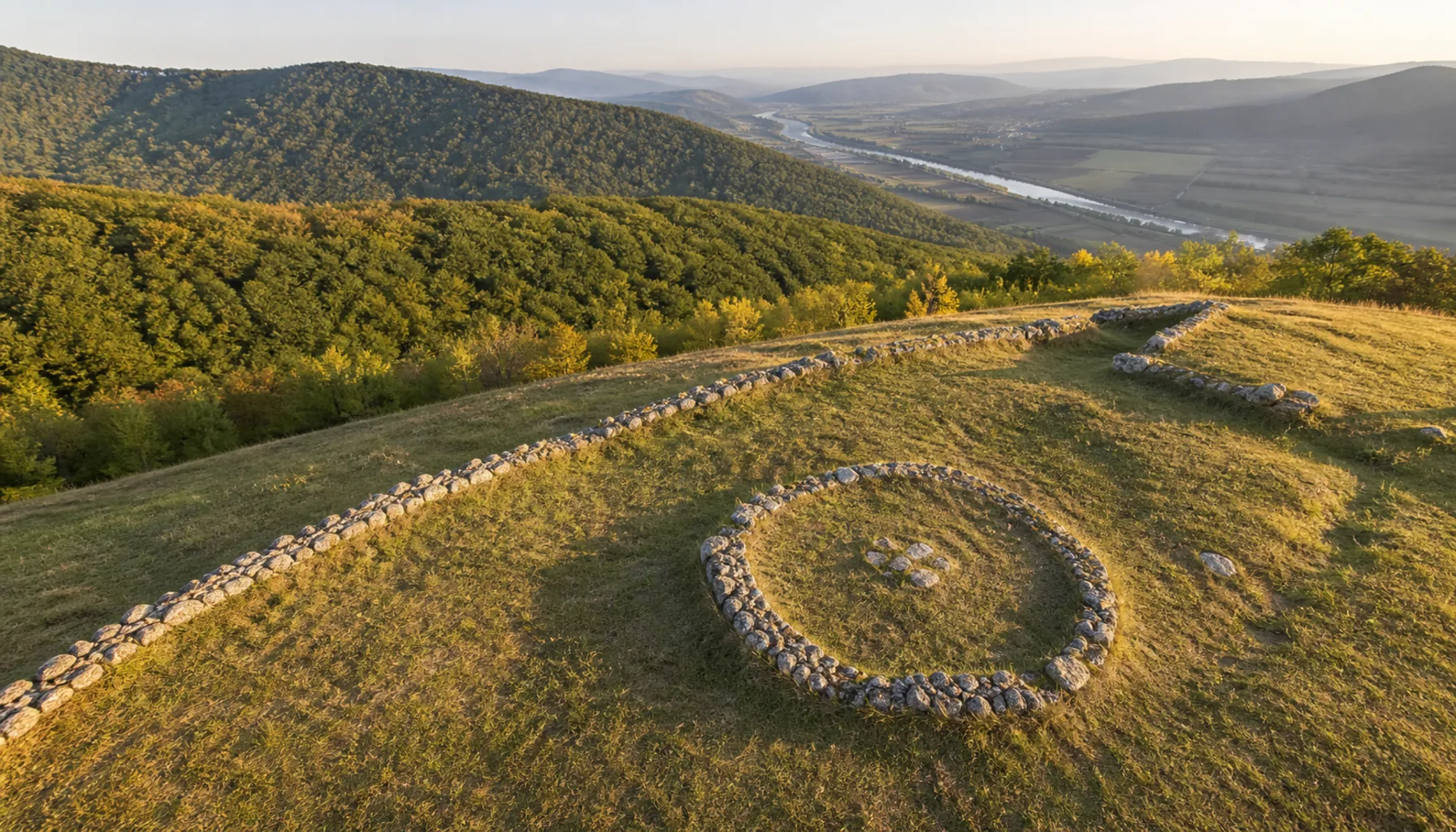
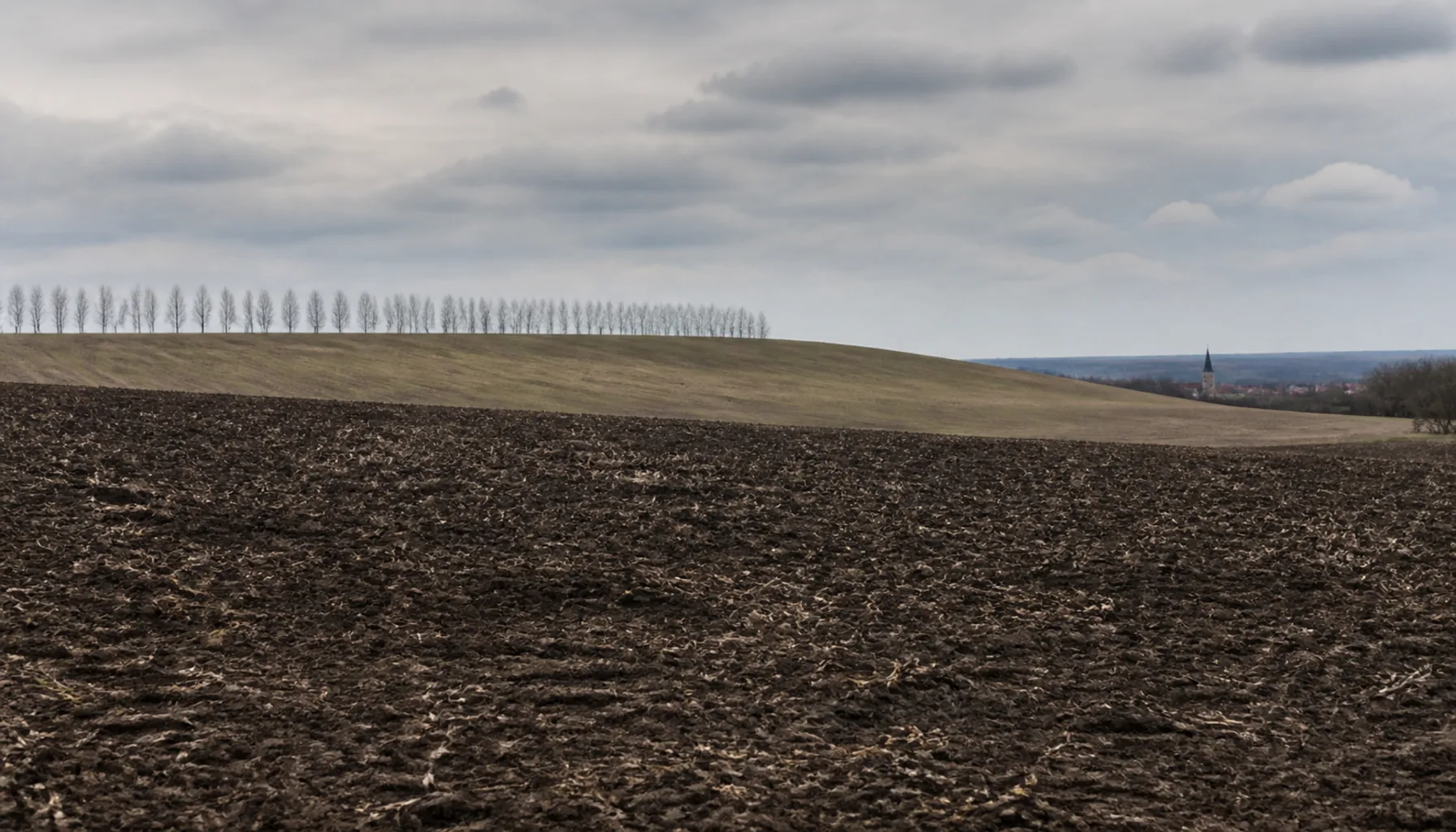
Almost nothing built before the Roman forts was made of stone. Houses were timber and daub, defences were earth banks with timber facing, and both rot. What is left of a hillfort is the shape of its rampart, usually softened into a wooded ridge and easy to walk past without noticing. What is left of a lowland village is a pattern of dark pits in the subsoil, visible only once the topsoil has been stripped away.Pred rímskymi pevnosťami sa tu z kameňa nestavalo takmer nič. Domy boli z dreva a hliny, opevnenia z hlinených valov s drevenou konštrukciou — a jedno aj druhé sa rozpadne. Z hradiska zostáva tvar valu, obyčajne zmäkčený do zalesneného hrebeňa, popri ktorom sa dá prejsť bez povšimnutia. Z nížinnej dediny zostáva sústava tmavých jám v podloží, viditeľná až po odstránení ornice.
That is why so much Slovak archaeology is rescue archaeology, done at speed in front of a motorway, a pipeline or an industrial park. Several of the most important sites in the country were found because something was about to be built on them, and a good deal of what is known about the lowlands comes from a few weeks of digging between the survey and the concrete.Práve preto je slovenská archeológia z veľkej časti záchranná — robí sa v zhone pred diaľnicou, plynovodom alebo priemyselným parkom. Viaceré z najdôležitejších lokalít v krajine sa našli len preto, že sa na nich malo stavať, a nemalá časť poznatkov o nížinách pochádza z niekoľkých týždňov výskumu medzi prieskumom a betónom.
Aerial photography and geophysics changed the picture again. A magnetometer walked across a stubble field can map ditches, pits and post-holes without a single spade going in, and several large prehistoric sites in the Nitra region are now known in far more detail on paper than they have ever been excavated.Letecké snímkovanie a geofyzika obraz opäť zmenili. Magnetometer prenesený po strnisku dokáže zmapovať priekopy, jamy aj kolové jamky bez jediného vrypu rýľom a viaceré veľké praveké lokality v Ponitrí sú dnes na papieri známe oveľa podrobnejšie, než boli kedy odkryté.
Who digs, and where the finds goKto kope a kam idú nálezy
The Archaeological Institute of the Slovak Academy of Sciences has sat in Nitra since the 1950s, which is a piece of luck for this site: the national research body for the subject works out of the city these pages are written in, a short drive from some of the richest ground in the country. University departments in Bratislava, Nitra and Trnava dig as well, and every kraj museum runs its own fieldwork.Archeologický ústav Slovenskej akadémie vied sídli v Nitre od päťdesiatych rokov, čo je pre túto stránku šťastná zhoda: celoštátne vedecké pracovisko odboru pracuje z mesta, v ktorom tieto stránky vznikajú, kúsok cesty od najbohatšej pôdy v krajine. Kopú aj univerzitné katedry v Bratislave, Nitre a Trnave a vlastný terénny výskum robí každé krajské múzeum.
Finds do not stay on site. By law they belong to the state, and they end up in museum stores and — a small fraction of them — in display cases: the Archaeological Museum of the Slovak National Museum in Bratislava for the national collection, the regional museums for what came out of their own districts. Going to the site and going to the objects are two separate trips, and the second is usually the more rewarding.Nálezy na mieste nezostávajú. Podľa zákona patria štátu a končia v múzejných depozitároch a malým zlomkom vo vitrínach: celoštátnu zbierku spravuje Archeologické múzeum Slovenského národného múzea v Bratislave, to, čo sa našlo v okrese, regionálne múzeum. Návšteva lokality a návšteva nálezov sú dve rôzne cesty a tá druhá býva zaujímavejšia.
How to read a disagreementAko čítať spor
Archaeology is an argument as much as a record, and this is a subject where the honest answer is often that nobody knows. A rampart can be dated to within a century or two; the people who built it can almost never be given a name. Attaching a site to a named ruler or a recorded event usually means going well beyond what the evidence carries — and it is done constantly, on information boards as much as in books.Archeológia je nielen záznam, ale aj spor, a v tejto téme býva čestnou odpoveďou, že to nikto nevie. Val sa dá datovať s presnosťou na storočie či dve; ľuďom, ktorí ho postavili, sa meno prisúdiť takmer nikdy nedá. Priradiť lokalitu ku konkrétnemu panovníkovi alebo k zaznamenanej udalosti obyčajne znamená ísť ďaleko za to, čo pramene unesú — a robí sa to neustále, na informačných tabuliach rovnako ako v knihách.
The chapters here keep to that line. They run roughly in order of time, from the first farmers on the lowland to the ninth century, and they close with a practical one, because an archaeological site is not a castle and it is worth knowing in advance what is and is not standing when you get there. Where dating or identification is contested, it is said so.Kapitoly tejto časti sa tejto zásady držia. Idú zhruba v poradí času, od prvých roľníkov na nížine po deviate storočie, a končia praktickou, lebo archeologická lokalita nie je hrad a oplatí sa vopred vedieť, čo na nej po príchode stojí a čo nie. Kde je datovanie alebo stotožnenie sporné, je to povedané.